Logical Brain Teasers to Boost Your Child's Coding Skills
Think coding is just screens? Think again. These brain teasers help kids build the logic and problem-solving skills of a programmer—no computer required. 🧠🚀
Can you crack this robot's code? This brain teaser challenges you to trace the robot's path step by step to figure out which direction it's facing at the end. It's a fun way to practice sequencing and directional logic.
Think logically! Every problem follows a rule. This teaser asks you to observe how numbers change and identify the hidden pattern, a core skill for debugging and logical reasoning.
Can you spot the pattern in this number sequence? Take a moment to think before you find the answer. This kind of pattern recognition is fundamental to coding and data analysis.
Time for a brain teaser! This post is designed to get your child's cognitive gears turning with a fun, visual puzzle that requires logical thinking to solve.
Here is another brain teaser to challenge your family. These puzzles are a great way to spend quality time together while building essential problem-solving skills.
Brain Teaser: I'm a sequence of instructions that can be executed by a computer. What am I? This riddle helps build essential tech vocabulary in a fun, interactive way.
Brain Teaser: I'm a language that computers understand, consisting of ones and zeros. What am I? Another fun riddle to teach kids about the concept of binary code.
Brain Teaser: I'm the brain of a computer, managing memory and tasks. What am I? This question encourages kids to think about the different components of a computer and their functions.
Brain Teaser: I'm a method of organizing and storing data in a tree-like structure. What am I? This puzzle introduces a more advanced data structure concept in a simple, accessible format.
Brain Teaser: I'm a data structure that follows the First In, First Out (FIFO) principle. What am I? This riddle uses a real-world analogy of a queue to explain a computer science concept.
About Brain Teasers & Puzzles
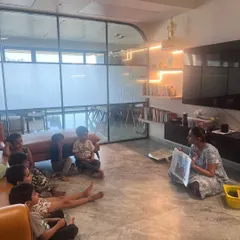
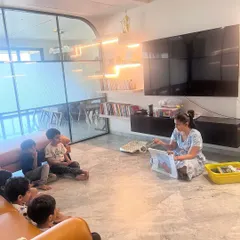
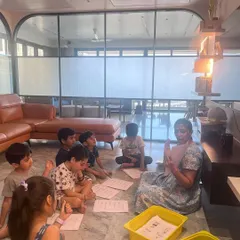
In my workshops, we don't just solve these puzzles on paper. We use physical floor grids and logic games to teach kids how to trace algorithms and debug errors in real-time. This is the 'computational thinking' layer that separates mere screen-time from actual skill-building for ages 5 to 12.
Why Logic Matters More Than Syntax
Most people think coding is about memorizing Python or Java syntax, but the real work happens in the brain before a student touches a keyboard. By solving these brain teasers—whether it's cracking a pattern sequence or tracing a robot's path on a grid—children are practicing the exact same logic required for software engineering.
What We Teach Through Puzzles
- Sequencing: Learning that order matters, just like in an algorithm.
- Pattern Recognition: Spotting repetitions, which is the foundation for writing 'loops' in any programming language.
- Debugging: Using 'mystery' games to find errors in a logical flow, which teaches resilience and analytical thinking.
- Binary Logic: Understanding that all complex computer data is actually built from simple 0s and 1s.
Screen-Free Learning in Mumbai
These puzzles are a snapshot of my methodology. Whether I am conducting workshops at homes in Mumbai or at public centers, my goal is to strip away the digital distractions and focus on the mechanics of problem-solving.
If you want your child to understand how to break down big, intimidating problems into small, manageable steps, these exercises are the perfect starting point. When they are ready to move from puzzles to hands-on robotics or coding, they will already have the mental framework to succeed. ✨
Similar work from other experts
Browse through Curated picks from other experts on mytribe
Coding Without Screens: Logic & Robotics for Kids
 6
6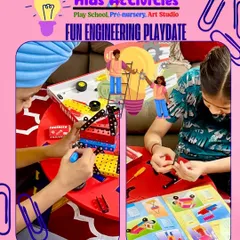
Brain-Boosting Activities and Logic Games for Kids in Vikhroli
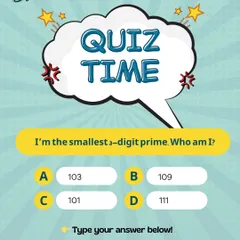
Brain-Boosting Math Challenges for Kids
 34
34
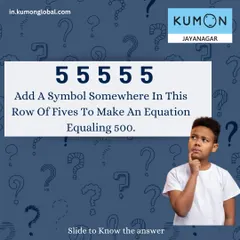

Fun Math Challenges & Brain Teasers
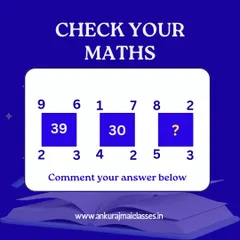
Math Brain Teasers and Logic Puzzles
Why Coding is a Superpower for Kids
More from Screen-Free Computational Thinking Workshops by Code-Riite
More services by Code-Riite