Unplugged Coding Activities for Kids
Discover how we teach logic and computational thinking without a single screen. We use puzzles, origami, and games to help children understand how technology actually works.
Origami is a fantastic unplugged activity for teaching computational thinking. This infographic shows how folding paper develops skills like algorithmic thinking, pattern recognition, spatial visualization, and logical reasoning.
Welcome to the Origami Coding Adventure! This series of posts shows how I turn the art of paper folding into a coding quest, where kids learn to follow sequential steps and debug their creations.
Step 1 of our origami activity: Gather your materials. Just like in coding, preparation is key. We use simple items like colored paper and markers to begin our adventure.
Step 2: Fold your origami creature. This step is all about following a precise algorithm. Each fold is a command that transforms a 2D sheet of paper into a 3D object.
Step 3: Draw a path. Using a grid, children design a path for their creature. This introduces the concept of coordinates and planning a sequence of movements.
Step 4: Code your creature. Kids use command cards like "move forward" and "turn left" to write a program that guides their origami animal along the path they drew.
Step 5: Debug and improve. If the creature doesn't follow the path correctly, it's time to debug! This teaches kids to analyze their code, find errors, and fix them, a crucial part of programming.
This image introduces another one of my favorite unplugged activities: a sensory safari. Using materials like sand, beans, or rice, children can go on an imaginative adventure that also teaches valuable skills.
Step 1 of the sensory safari: Let's dive in! We start by gathering our supplies, like a plastic bin, sensory treasures, and small toys. This step involves planning and resource management.
Step 2: Pick your potion! Children choose their sensory material, whether it's shimmering sand, bouncing beans, or dancing rice. This choice allows for creative expression within the activity.
About Unplugged Learning Activities
Our unplugged workshops treat coding as a mental exercise rather than a software tool. When your child folds paper for origami algorithms or navigates a floor grid, they learn to think in sequences and debug errors, building the exact logic required for programming before they ever touch a keyboard.
Most coding programs for children jump straight to block-based software, but this often skips the foundational logic. At Code-Riite, we prioritize the thinking behind the code.
Our approach focuses on computational thinking:
- Decomposition: Breaking complex problems into smaller, manageable steps.
- Pattern Recognition: Spotting repetitions in origami folds or Sudoku grids.
- Algorithmic Thinking: Designing step-by-step instructions for physical movement.
- Debugging: Analyzing why a path or fold did not work and finding a solution.
We conduct these workshops across the Mumbai Metropolitan Area and at our center in Colaba. Whether we are using binary bracelets to understand data representation or using grid-based mazes to learn spatial commands, children gain a deep understanding of logic. These activities remove the distraction of bright screens and replace them with tactile, collaborative play. By the time a child moves to actual programming, they already understand variables, loops, and conditions because they have lived them on a floor mat. This method builds confidence and critical thinking, ensuring technology becomes a tool they control, rather than a system they simply click through.
Similar work from other experts
Browse through Curated picks from other experts on mytribe
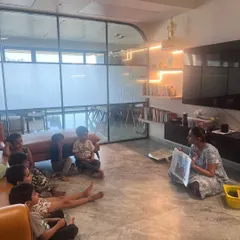
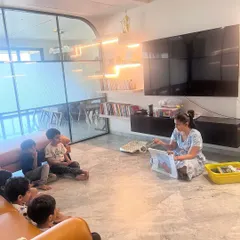
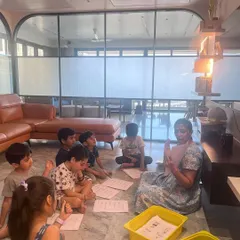
Coding Without Screens: Logic & Robotics for Kids
 4
4


STEM, Robotics, and Coding Classes for Kids
 15
15
Hands-On STEM & Science Projects for Kids
 26
26
Understanding the World of Tech: Robotics and Coding Basics for Kids
Hands-on Coding Classes for Kids and Teens
 63
63
Interactive Math & STEM Workshops
More from Screen-Free Computational Thinking Workshops by Code-Riite
More services by Code-Riite