Data-Driven Sports Injury Rehabilitation
We move past basic pain relief to rebuild your structural resilience. Our phased rehabilitation protocols combine physiotherapy and strength science to get you game-ready, not just recovered.
This "before" image shows significant quadriceps atrophy following an ACL and meniscus injury. This muscle loss is a common consequence of such injuries and is the starting point for our targeted rehabilitation process.
This "after" image demonstrates successful quad hypertrophy following our structured rehabilitation program. Through progressive resistance training and functional drills, we were able to reverse the muscle atrophy and rebuild the strength needed for this Taekwondo athlete to return to her sport.
This is our late-stage hamstring rehabilitation protocol. After a strain, the goal is to gradually rebuild the muscle's capacity to handle load. We use exercises like the Nordic hamstring curl and single-leg bridges to reintroduce strengthening in a controlled, pain-free manner.
For mid to late-stage ankle sprain rehabilitation, we move beyond basic mobility. This routine focuses on building strength, balance, and the ability to produce and absorb force, using exercises like weighted split squats and single-leg balance drills to prepare the ankle for dynamic movements.
Frozen shoulder, or adhesive capsulitis, requires a careful and consistent approach. This video outlines our recommended exercises for the early "freezing" phase, focusing on gentle, pain-free mobility and activation with tools like weighted dowels and light bands to gradually restore range of motion.
In Phase 2 of our frozen shoulder rehab, the focus shifts to building controlled strength alongside mobility. This routine includes wall slides to improve overhead mechanics and kettlebell stability raises to activate the rotator cuff and improve motor control.
Adductor and groin rehabilitation is more than just squeezing a ball. In the mid-stage of recovery, we focus on progressively loading the adductors with exercises that challenge strength and control in both the frontal and lateral planes, preparing the athlete for game demands.
To keep a fast bowler's knees healthy, we target the supporting musculature. This video demonstrates two key drills: the banded VMO knee extension to activate the inner quad muscle, and single-leg isometric extensions to build stability and endurance around the knee joint.
SI joint pain often stems from instability around the pelvis. Our approach is to strengthen the supporting structures. This routine includes exercises like hip hikes and glute bridges to improve core control and glute activation, providing relief through stability.
Shin splints are a common frustration for runners. Our recovery plan includes strengthening the tibialis anterior muscle, improving calf flexibility, and incorporating low-impact plyometrics like single-leg jumps to build tissue resilience and prevent recurrence.
About Injury-Specific Rehabilitation
We do not rely on guesswork or static timeframes. Every injury, whether it is a complex ACL tear or chronic shin splints, is treated through a data-backed process. By using force plate analysis and strength dynamometry, we identify your specific movement leaks and asymmetry, ensuring your return-to-sport plan is built on objective evidence rather than subjective feeling.
Our Evidence-Based Approach
Recovery is a predictable process when managed correctly. At Athletes Lab, we structure rehabilitation into clearly defined phases to ensure your tissues heal correctly and your strength capacity exceeds pre-injury levels.
Phase 1: Pain Control & Mobility Restoration We begin by calming active symptoms using hands-on manual therapy, while simultaneously introducing early-stage neuromuscular activation. The focus here is protecting healing tissue while preventing the muscle atrophy often caused by complete rest.
Phase 2: Strength & Neuromuscular Control Once pain is managed, we initiate progressive loading. Using tools like velocity-based training sensors and resistance bands, we restore muscle firing patterns. We don't just treat the injury site, we treat the entire kinetic chain to eliminate the compensations that likely caused the injury in the first place.
Phase 3: Functional Return to Sport This is where we bridge the gap between 'healthy' and 'athlete'. We integrate plyometrics, change-of-direction drills, and sport-specific loading. We test your vertical leap, sprint mechanics, and force production against your healthy side, ensuring you have the explosive power required for your specific discipline—be it cricket, running, or contact sports.
We document every step of this journey with digital data, providing you with a clear roadmap of your progress and the milestones required for a safe, confident return to the field.
Similar work from other experts
Browse through Curated picks from other experts on mytribe
ACL & Lower Limb Recovery Rehabilitation
Athlete Recovery & Peak Performance Programs
Expert Knee, Ankle & Post-Fracture Rehabilitation
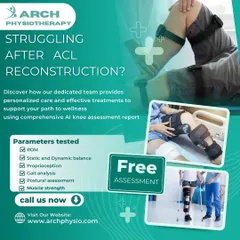
Specialized Knee Rehabilitation and ACL Recovery
Sports Injury Rehabilitation & Performance Enhancement
Injury Rehabilitation & Pain-Free Strength
More from Injury Prevention & Rehabilitation by Athletes Lab
More services by Athletes Lab