Navigating the Divorce Process: Mutual and Contested Options
Divorce is a major life decision, and the legal path you choose changes everything. Whether you are aiming for a quick mutual consent settlement or preparing for a contested battle, understanding the specific procedures is the first step.
Many people think a mutual consent divorce is instant, but that's not true. I walk you through the actual process, which involves a joint petition, a first motion, a mandatory six-month cooling-off period for reconsideration, and a final second motion before the court grants the divorce decree.
"Mere divorce case mein kitna time lagega?" This is a common question. I explain that while there is no fixed timeline, contested cases can take two to three years. However, if an amicable settlement is reached through mediation, the entire process can be completed in just three to four months.
Under Hindu Law, there are seven main grounds for seeking a divorce. I provide an overview of each, including adultery, cruelty, desertion, mental disorder, conversion to another religion, if a spouse has not been heard from for seven years, and venereal disease.
Cruelty is the most common ground for divorce, but what does it legally mean? I discuss a Supreme Court judgment that defines cruelty, explaining that it can be physical, mental, or financial and depends entirely on the specific facts and circumstances of your case.
Here is a legal hack for a quicker divorce process. Instead of filing for divorce directly, you can file a Section 9 petition for Restitution of Conjugal Rights. If your spouse refuses to return after the court order, you can file for divorce after one year on that basis, which can expedite the final decree.
What is an ex-parte divorce? This happens when one party files for divorce and the other party fails to appear in court despite receiving summons. I explain how the court can proceed to grant a divorce decree based only on the petitioner's evidence in such a scenario.
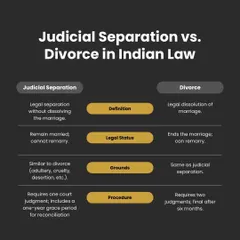
If you and your spouse need a break but are not ready for a divorce, judicial separation is a legal option. I explain how it allows you to live separately while remaining legally married, giving you time to decide on the future of your relationship without the finality of a divorce.
If your marriage was based on fraud, such as your partner hiding their real age, qualifications, or a serious disease, you can file for an annulment. I explain how an annulment petition under Section 12 of the Hindu Marriage Act declares the marriage null and void, so you avoid the "divorcee" tag.
Can you get married again while your divorce case is still pending? The answer is a clear no. I explain that remarrying before the court grants a final divorce decree is illegal and constitutes bigamy under Section 494 of the IPC (now Section 82 of BNS), which can lead to imprisonment.
A client once asked if we could get a divorce over WhatsApp. Let me be very clear: online or WhatsApp divorces have no legal validity in India. A valid divorce can only be granted by a court through a proper legal petition and decree.
About The Path to Divorce: Mutual, Contested & Other Options
Many clients ask me, 'Can we just WhatsApp each other and get divorced?' Let me be very clear: online or digital divorces have zero legal validity in India. A valid divorce can only be granted by a court through a proper petition and final decree. If you are separating, do not rely on informal agreements made over text or private messaging. Skipping the formal legal process doesn't end your marriage—it just leaves you legally trapped while you think you are free. You need a structured legal approach to ensure you aren't held liable for future claims.
Mutual Consent vs. Contested Divorce
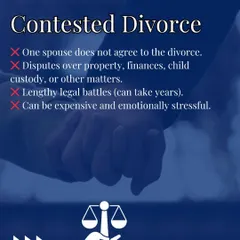
The choice between mutual consent and contested litigation dictates the timeline and the emotional toll of your separation.
- Mutual Consent Divorce: This is the most efficient path. It involves a joint petition based on an MOU (Memorandum of Understanding) that covers asset division, alimony, and custody. Once filed, we navigate the First and Second Motion hearings.
- Contested Litigation: If mediation fails and there is no agreement, we must file a contested petition. This process is time-consuming and requires strong evidence-based arguments, from proving cruelty to handling maintenance claims.
Can You Divorce Without a Marriage Certificate?
This is a common worry. While registering your marriage is always advisable for legal clarity, not having a certificate does not stop you from filing for divorce. We can use alternate proofs like wedding cards, photographs, or witness statements to establish the marital status in court.
Alternatives to Immediate Divorce
If you are not ready for the finality of divorce but need legal distance, consider:
- Judicial Separation: This allows you to live apart legally without ending the marriage. It provides time to reflect or seek reconciliation without the stigma or finality of a divorce decree.
- Annulment: If your marriage was based on fraud—such as hidden critical facts about age, health, or qualifications—an annulment under Section 12 of the Hindu Marriage Act can declare the marriage void from the beginning.
Legal Hacks for Your Case
If you are facing a deadlock, filing a petition for Restitution of Conjugal Rights (Section 9) can sometimes act as a strategic move. If the spouse refuses to comply with the court order, it builds a stronger ground for a divorce petition later. Every case has a different narrative; your strategy must be tailored to the specific facts of your situation, not general templates.
Similar work from other experts
Browse through Curated picks from other experts on mytribe
 8
8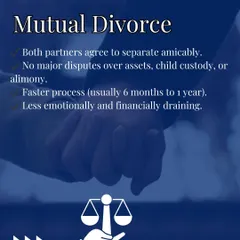
Navigating the Divorce Process in India
Navigating the Divorce Process: From Filing to Decree

Navigating Divorce & Separation
Divorce Legal Advice: Mutual, Contested & Ex-Parte
Legal Guidance for Divorce, Separation & Annulment
Divorce and Separation: Legal Facts and Procedures
More from Family & Matrimonial Law by Neha Gund Jetwani
More services by Neha Gund Jetwani