Divorce Legal Advice: Mutual, Contested & Ex-Parte
Getting a divorce is rarely simple, but understanding your rights shouldn't be confusing. Whether you are looking for a mutual consent divorce or dealing with a contested case, I help you cut through the legal jargon and find a clear way forward.
An ex-parte divorce, or a one-sided divorce, is possible if your spouse is served a court notice but fails to appear. I explain the procedure under Order 9 Rule 6 of the CPC, which allows the court to proceed with the case and grant a valid divorce decree in their absence.
The Supreme Court has clarified that couples can get a valid divorce outside of the court system if their religion's customs and traditions allow for it. This is a significant ruling under the Hindu Marriage Act that provides an alternative to court proceedings for some couples seeking a mutual divorce.
If you are an NRI or married to one, it is important to know that foreign courts do not have the power to nullify a marriage solemnized in India. The Supreme Court has ruled that divorce proceedings must be adjudicated by Indian district courts, ensuring the case is handled under our laws.
Following the landmark Joseph Shine vs Union of India judgment, adultery is no longer a criminal offense under Section 497 of the IPC. However, it remains a valid and strong ground for filing for a contested divorce in family court.
The Supreme Court has the power under Article 142 to waive the mandatory six-month waiting period for a mutual consent divorce. This can significantly speed up the process for couples who have already reached an amicable settlement and wish to move on.
This post provides a clear, detailed list of the legal grounds available for filing for divorce in India. These include cruelty, adultery, desertion for at least two years, conversion to another religion, mental disorder, and incurable diseases.
The Hindu Marriage Act provides multiple grounds on which a spouse can file for a contested divorce. This infographic highlights the diversity of these grounds, reflecting the complexities of marital relationships and the legal provisions designed to address them.
About Divorce Explained: Mutual, Contested & One-Sided
You do not necessarily need to live apart for years to file for mutual consent divorce. Recent Delhi High Court rulings have clarified that couples can proceed with mutual separation even while residing in the same house. During our initial assessment at my Dwarka Court chamber, I help you determine if your specific situation qualifies for these updated procedures, saving you unnecessary wait times and legal roadblocks.
Navigating the legal maze of marriage dissolution requires understanding your specific path. Whether you are filing for mutual consent, contesting a petition, or dealing with a spouse who refuses to participate, clarity is your strongest tool.
Mutual Consent Divorce
This is the most straightforward route, provided both partners agree on terms like alimony, child custody, and asset division. The core of this process is drafting a precise Memorandum of Understanding (MOU). This document ensures that all future disputes are minimized. If time is a factor, we can apply under Article 142 to request the Supreme Court to waive the mandatory six-month cooling-off period.
Contested & One-Sided (Ex-Parte) Divorce
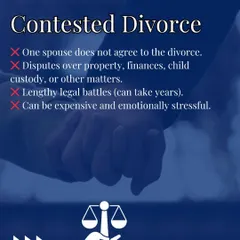
When consensus is impossible, a contested petition is the next step. We build your case on grounds like cruelty, desertion, or adultery.
- Cruelty: It is important to remember that cruelty is not just physical. It covers mental distress that makes continuing the marriage impossible.
- Ex-Parte Divorce: Many clients ask if they can divorce without the other partner's cooperation. If your spouse has been served a court notice but consistently refuses to appear, the court can proceed with an ex-parte decree under Order 9 Rule 6 of the CPC.
Critical Considerations
- Evidence Matters: Whether it is WhatsApp chats, medical records, or location data, gathering admissible evidence early is essential. I guide you on how to preserve this data so it remains valid in family court.
- NRI Divorces: Foreign court decrees do not automatically nullify an Indian marriage. Always adjudicate through Indian District Courts to ensure your decree is valid within the country.
Every family law case has unique emotional and legal variables. During my initial consultation at the Dwarka Court complex, we will evaluate your case merit, discuss potential timelines, and create a roadmap that protects your interests.
Similar work from other experts
Browse through Curated picks from other experts on mytribe

Divorce and Separation: Finding a Path Forward
 8
8
Navigating the Divorce Process in India
 6
6


Divorce and Legal Separation Support in Delhi NCR
Navigating the Divorce Process: From Filing to Decree
 13
13

Divorce and Separation Legal Services in Delhi
 8
8


Legal Strategy & Guidance for Divorce Proceedings
More from Family Law & Divorce by Sushant Tripathi
More services by Sushant Tripathi