Legal Rights in Live-In Relationships in Delhi
Live-in relationships are legal in India, but the legal reality is more complex than just sharing a home. Know your rights and risks before your relationship faces legal scrutiny.
What are the legal rights of partners in a live-in relationship? I explain how the Domestic Violence Act recognizes such relationships, granting female partners rights similar to a wife, including the right to claim maintenance and file a DV case.
In this discussion, we explore the legal consequences of live-in relationships. While they are legalized, a female partner can still file for maintenance, domestic violence, and even a rape case based on a false promise to marry if the relationship ends.
Myth: Living together for unmarried couples is illegal in India. Fact: Not at all! This graphic busts the myth, clarifying that there is no law criminalizing cohabitation for consenting adults.
Let's address the common misconception about live-in relationships being illegal in India. This graphic series breaks down the myth and uncovers the reality of your rights.
Legal Insight: Living together is a personal choice, and Indian law respects an individual's right to privacy and freedom. The law does not interfere as long as the relationship is consensual and between adults.
Your Right: Individuals have the right to make decisions about their relationships and living arrangements without fear of legal repercussions. The law focuses on protecting personal freedoms.
A new law, Section 69 of the Bharatiya Nyaya Sanhita (BNS), addresses the issue of having sexual intercourse on a false promise to marry. This graphic explains the legal definition and its serious consequences.
About Legal Rights in Live-In Relationships
Living together is a personal choice, but do not ignore the legal implications if your relationship ends. If your situation is recognized as being 'in the nature of marriage'—based on duration, shared household, and social recognition—you can fall under the Domestic Violence Act. This means you can face maintenance claims, protection orders, or legal disputes just as you would in a formal marriage. Understanding these liabilities early is the only way to protect yourself.
The Legal Reality of Cohabitation
Many believe that because there is no marriage certificate, the law does not apply. This is a dangerous misconception. Indian courts, particularly in Delhi, examine the substance of your relationship rather than just the label. If you have lived together, pooled resources, and presented yourselves as a couple to society, you are effectively in a 'relationship in the nature of marriage.'
Maintenance and the DV Act
Under the Protection of Women from Domestic Violence Act, 2005, female partners can claim maintenance, seek residence orders, and file for protection against abuse. Courts do not require a marriage certificate to grant these reliefs. If you are a male partner, you need to understand that simply ending the relationship does not absolve you of these liabilities if a case is filed.
False Promises and BNS Section 69
The legal landscape recently shifted with the implementation of Section 69 of the Bharatiya Nyaya Sanhita. If a partner engages in sexual relations based on a promise of marriage that they never intended to keep, this can now be legally framed as a criminal offense. This is a high-risk area. If your breakup happens after a long-term commitment that included a promise to marry, you may face serious criminal allegations.
Protecting Your Interests
- Documentation: If you want to clarify your rights, a written agreement is better than nothing, though it does not override statutory rights.
- Evidence: WhatsApp chats, social media interaction, and bank transaction history become the primary evidence in these disputes. How you communicate today determines how you defend yourself tomorrow.
- Child Custody: Regardless of the parents' marital status, the child's welfare is the court's priority. Children born from live-in relationships have legitimate status and inheritance rights, which complicates custodial battles significantly.
I handle these cases regularly in Delhi courts, and the most common mistake is waiting until the legal notice arrives before getting clarity on your position.
Similar work from other experts
Browse through Curated picks from other experts on mytribe
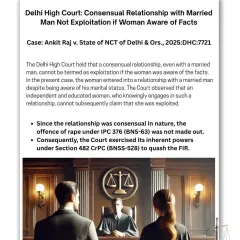
Navigating Modern Relationships & Legal Realities in India
 6
6


Rights in Live-In and Other Relationships in Delhi
Legal Rights in Modern Relationships and Marriage
Rishton Mein Kanooni Uljhane: Know Your Rights

Legal Guidance for Modern Relationships
Modern Relationships & Marriage Law: Know Your Rights
More from Family & Matrimonial Law by Neha Gund Jetwani
More services by Neha Gund Jetwani