Avoiding Financial Traps in Real Estate Transactions
Real estate investments often come with hidden financial risks. From unfair forfeiture clauses to misleading assured return schemes, I explain how to spot these traps before you lose your hard-earned money.
Understanding the rules around the forfeiture of earnest money can save you from losing a significant amount. I explain the legal precedents that establish a builder can only deduct a reasonable amount, which the NCDRC has clarified is typically 10% of the total consideration.
If you cancel a flat booking in an under-construction project, how much can the builder legally deduct? I discuss a Supreme Court ruling that capped the forfeiture amount at 10% of the basic sale price, declaring that one-sided agreements allowing for higher deductions are unfair.
A possession letter should not ambush you with unexpected costs. The Supreme Court has repeatedly stated that all components of a property's cost must be transparently disclosed upfront. I explain how you can challenge hidden charges that are sprung on you at the last minute.
Are you being asked to pay massive transfer charges when buying a property from a previous allottee? I explain a recent NCDRC judgment which states that you are not bound to pay arbitrary or excessive transfer charges demanded by a builder.
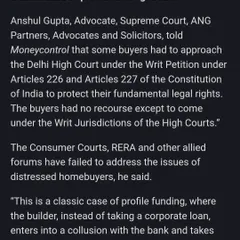
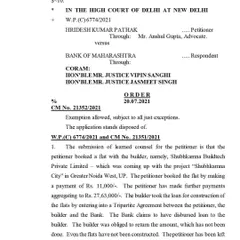
Subvention schemes, where builders promise to pay your EMIs, have left many homebuyers in distress. I explain a recent Supreme Court order providing interim relief to buyers and how RERA authorities are directing builders to refund the entire amount with interest in cases of default.
Be cautious of commercial projects that promise "assured returns" or "guaranteed rental income." I explain this common scam where builders stop paying after a few months and discuss the legal remedies available, including filing a complaint with RERA and initiating a criminal complaint for fraud.
Even if a developer promised you assured returns before the BUDS Act came into force, they are still obligated to honor that agreement. I explain a recent Haryana RERA judgment that clarifies this, ensuring that legitimate business transactions are protected.
Paying more than two lakhs in cash for a property transaction is a direct violation of the Income Tax Act. I explain a Supreme Court directive that requires courts and sub-registrars to report such transactions to the Income Tax Department.
Understanding stamp duty is essential when buying property in India. It is a mandatory tax paid to the state government to legally register your property documents and establish legal ownership.
Stamp duty is a tax paid by homebuyers under the Indian Stamp Duty Act, 1899. This payment is what makes your property registration complete and legally valid.
About Financial Traps in Real Estate
Many homebuyers are surprised to learn that builders often try to forfeit 20 percent or more of the property value upon cancellation. The Supreme Court has repeatedly clarified that 10 percent is the reasonable limit. If your builder-buyer agreement demands higher forfeiture, that clause is likely unfair and can be challenged in consumer court.
Recognizing Predatory Clauses
Builders often include one-sided penalty clauses in their agreements. Whether it is arbitrary transfer charges or hidden maintenance fees, these additions can drain your finances. My focus is on reviewing your agreement to flag these clauses before you sign.
The Reality of Assured Returns
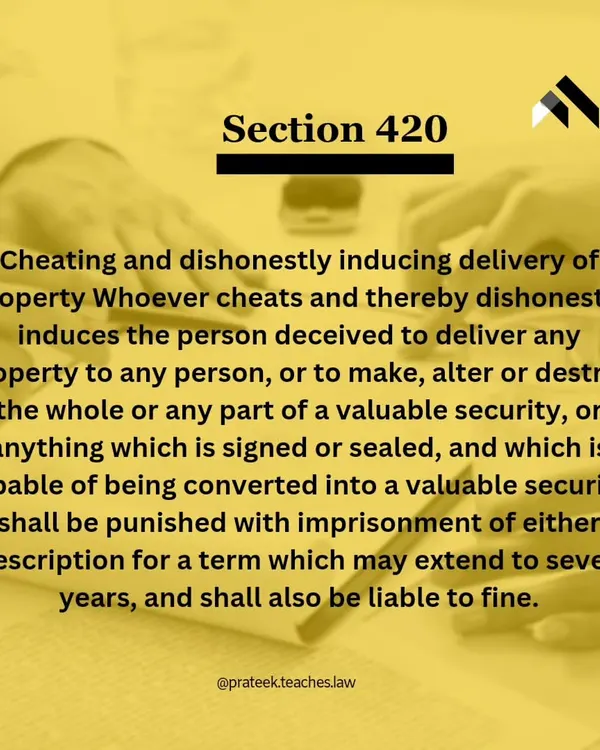
Commercial projects frequently promise 'assured returns' or 'guaranteed rental income.' In many cases, these are unregulated deposit schemes that stop paying after a few months. If you have invested in such a scheme and stopped receiving payments, you have legal remedies under the RERA Act and can even file for fraud if there is malicious intent.
Your Legal Remedies
- RERA Authority: For delayed possession or default on promised returns, you can approach the local RERA authority to obtain a recovery certificate.
- Consumer Court: If you face unfair trade practices, such as hidden charges sprung on you at the possession stage, the consumer court offers a platform to contest these demands.
- Criminal Complaint: In extreme cases, where builders have abandoned projects or misused funds, filing a criminal complaint is a step that can force accountability.
Why Prevention Matters
An ounce of prevention is worth a pound of cure. A thorough title search and contract review might take time, but they prevent years of litigation. If you feel like your deal is 'too good to be true,' it often is. Do not sign until you have had an independent legal professional review the documents.
Similar work from other experts
Browse through Curated picks from other experts on mytribe
Buying, Selling & Property Ownership Advice
Legal Help for Trapped Homebuyers in Subvention Schemes
Property Law Explained: Protect Your Rights and Assets
 6
6


Property and Financial Dispute Resolution
Property Law: Secure Your Assets
 7
7

Financial Crimes and Fraud: Understanding Your Legal Options
More from Property & Real Estate Law by Abhishek Tiwari
More services by Abhishek Tiwari