Building Strength: Arm Balances & Inversions
Going upside down is about shifting your perspective. We use safe, incremental drills to build the core and upper body strength needed to approach inversions with confidence, no matter your starting point.
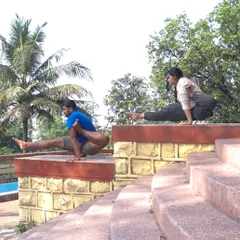
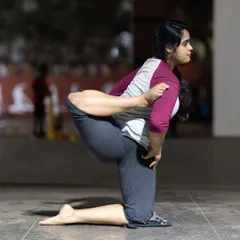
Finding my balance in Parsva Bakasana, or side crow. This pose is a great way to build wrist and core strength, and we break it down into manageable steps in class.
A close-up of the side crow pose, showing the engagement of the core and the placement of hands. Arm balancing is one of my favorite ways to practice focus and strength.
This video shows the transition from a standing pose into an arm balance. We work on mobility and strength together to make these flows feel graceful and accessible.
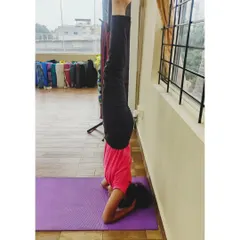
This is one of my favorite drills for strengthening the core, shoulders, and triceps. It involves transitioning from Bakasana (crow pose) into a headstand and back, building immense control.
A smooth transition from crow pose to tripod headstand and back again. This sequence demonstrates the integration of strength, balance, and breath control that we cultivate in Hatha yoga.
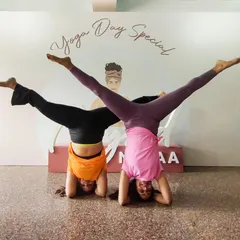
This flow shows how we can move between different inversions and arm balances. Yoga is not just about holding a pose, but also about the mindful movement between them.
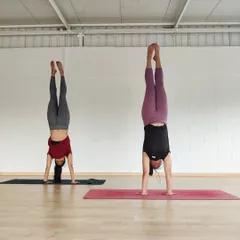
Back to handstand practice. Adho Mukha Vrksasana, or handstand, requires patience and consistent practice. It's a journey of overcoming fear and trusting your body's strength.
A handstand practice moment. The feeling of balancing on your hands is incredibly empowering. We use the wall and other props to build confidence for this pose.
Handstanding at my new place. It feels so good to find your balance, no matter where you are. This pose is a testament to what consistent practice can achieve.
Another handstand moment. I love how inversions shift your perspective, both literally and figuratively. They teach you to see the world from a different angle.
About Building Strength: Arm Balances & Inversions
Inversions aren't about brute force. In my classes, I use wall ropes and specific, step-by-step drills—like transitioning from Bakasana (crow pose) to tripod headstand—to help you build the necessary shoulder stability and core control safely. We work on the foundation first so that when you finally lift your feet off the ground, your body is ready.
Many people think arm balances are only for those who are naturally athletic. That was not my story, and it doesn't have to be yours either. Years ago, I struggled with these poses. The strength you see in these photos didn't appear overnight; it came from years of consistent, mindful practice on the mat.
When we practice poses like Adho Mukha Vrksasana (handstand) or Pincha Mayurasana (forearm stand) in the studio, we don't just jump into the final shape. We break it down. We use blocks to elevate the ground, straps to keep elbows aligned, and wall-mounted ropes for spinal traction. This makes the biomechanics accessible even if you are just starting out.
If you are joining for 1-on-1 sessions, we focus on these specific movements for rehabilitative strength or to master advanced skills like acro-transitions. For group sessions at our Sanpada and Seawoods locations, we emphasize the flow—learning how to move between poses is often where the real core work happens.
Remember that the goal of these inversions is not just the pose itself. It is about steadying the mind. When you are upside down, your mind has no choice but to be present. That stillness you find in the air is exactly what carries over into your day-to-day life.
Similar work from other experts
Browse through Curated picks from other experts on mytribe
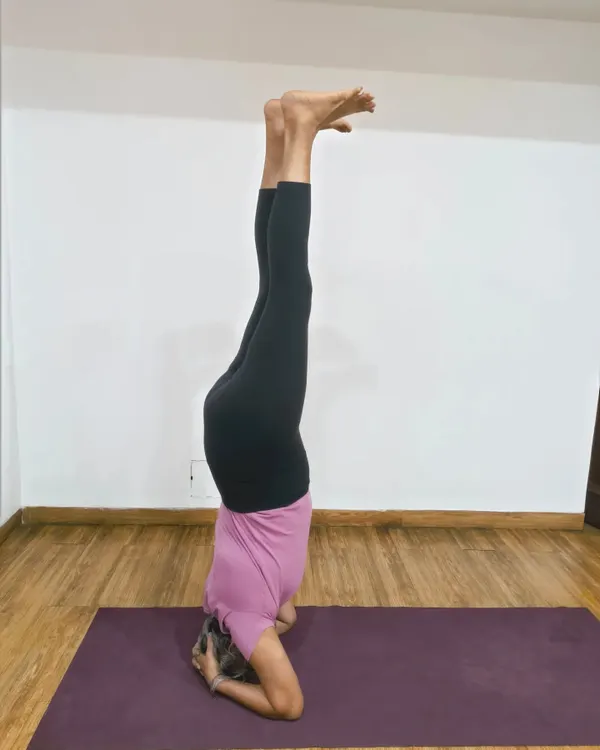 17
17
Finding Balance: Inversions and Arm Balances
Building Strength with Advanced Inversions and Arm Balances
Mastering Handstands & Arm Balances: Alignment-Based Yoga
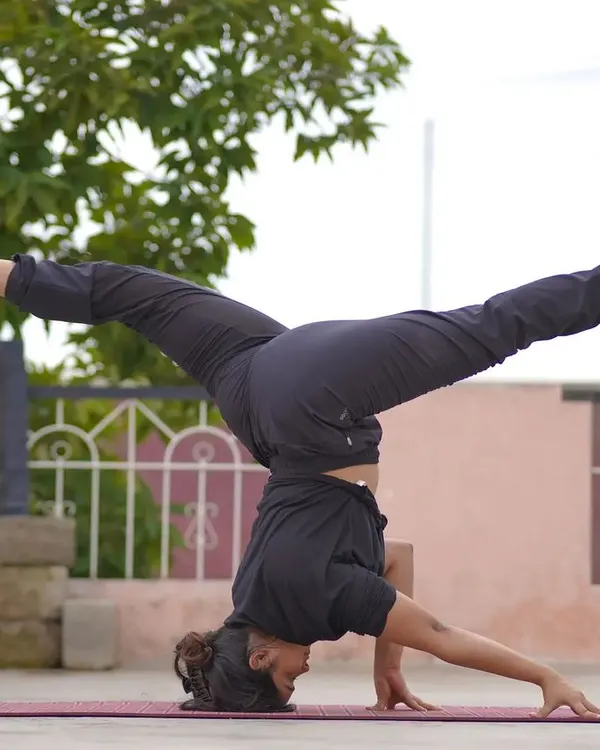 7
7
Inversions & Arm Balance Yoga for Real Bodies
Master Advanced Arm Balances & Inversions in Bengaluru
Build Core Strength & Master Inversions
More from Yoga Instruction (Hatha Yoga) by Sushmita Mukhia
More services by Sushmita Mukhia