Golden Hour and Moody Wildlife Photography
Wildlife photography is rarely about the perfect click; it is about finding that fleeting moment when the light hits the water and the world goes silent. Here is my perspective on Navi Mumbai’s magic hour.
A Black-winged Stilt stands on its impossibly thin legs, its reflection captured in the glittering water. The golden bokeh of the sunrise turns the water's surface into a carpet of light.
A cormorant perches on a rock, its silhouette stark against the warm, foggy glow of sunrise. The scene is calm and meditative, a perfect moment of solitude.
If only I could ask Alexa to keep the golden hour on forever. This video is a compilation of magical moments when the light is perfect and Navi Mumbai's wildlife puts on a show.
A Great Egret stands tall against a fiery orange sunrise, its white feathers catching the light. The misty background and perfect reflection create a powerful and atmospheric image.
A lone wader is reduced to a simple silhouette against a dreamy, blue-toned background. This minimalist and moody shot proves that sometimes the quietest moments are the most powerful.
A Black-winged Stilt is perfectly reflected in the water, with the sparkling bokeh of the sunrise creating a magical effect. This is urban wildlife at its most beautiful.
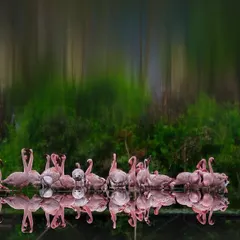
I positioned myself against the sun to capture this footage of flamingos in the golden hour. The technique creates a mesmerizing shimmer and beautiful bokeh around the birds.
A Black-winged Stilt wades through water that has turned to liquid gold by the rising sun. The beautiful bokeh and reflection make this a classic golden hour shot.
An egret carefully hunts in the shallow water, which is sparkling with the golden light of dawn. The bokeh effect in the background adds a touch of magic to the scene.
A Siberian Stonechat perches on the dark earth, its small form silhouetted against a backdrop of warm, golden light. The contrast creates a dramatic and moody portrait.
About Golden Hour & Moody Light
Getting that golden glow isn't about luck. I often start my day hours before sunrise, scouting for the exact angle where the sun hits the water. When you see that liquid gold bokeh in my shots, it's usually because I’ve positioned myself low, at eye level with the birds, to turn the background into a soft, glowing canvas. It takes patience to wait for the light to settle, but that is the only way to get those moody, silhouette-heavy frames.
Chasing the golden hour in Navi Mumbai’s wetlands requires more than a good camera. You need to understand the tide. If the water level is wrong, you are just standing on mud far from your subject. I spend time checking tide tables for places like TS Chanakya before I even pack my bag.
Once on-field, the real work starts. To get that signature moody light, I do not just shoot at the bird; I shoot towards the sun. This backlighting creates the silhouettes you see in my work. It is tricky because the camera’s metering wants to brighten the scene, so I use exposure compensation to keep the shadows deep and the highlights rich.
Why do I do this? Because wildlife photography can get clinical. People often just want a sharp, bright photo of a bird. But I look for the mood—the feeling of a cold morning, the warmth of the first sun, the solitude of a lone egret. Whether I am using my Nikon Z8 or Z50, the goal is always the same: to turn a simple bird sighting into a piece of art that makes you feel the silence of the wetland.
If you want to try this, it is not about expensive gear. It is about finding that one patch of water that catches the light and waiting for the right subject to step into it. That is where the magic happens.
Similar work from other experts
Browse through Curated picks from other experts on mytribe
 13
13
Golden Hour Photography and Wildlife Silhouettes
 15
15
The Art of Light: Silhouettes & Golden Hour Fine Art
 12
12
Silhouettes & Monochrome Wildlife Photography
 4
4
Artistic Nature Photography: Capturing the Soul of the Wild
 19
19
Creative Wildlife Photography: Mastering Light and Mood
 8
8
Featured Wildlife Photography Highlights
More from Wildlife Photography by Tushar Tandel
More services by Tushar Tandel