Partner & AcroYoga: Building Trust Through Movement
Explore the art of connection. These sessions focus on trust, communication, and mutual support to help you move, stretch, and find balance together.
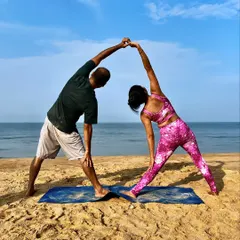
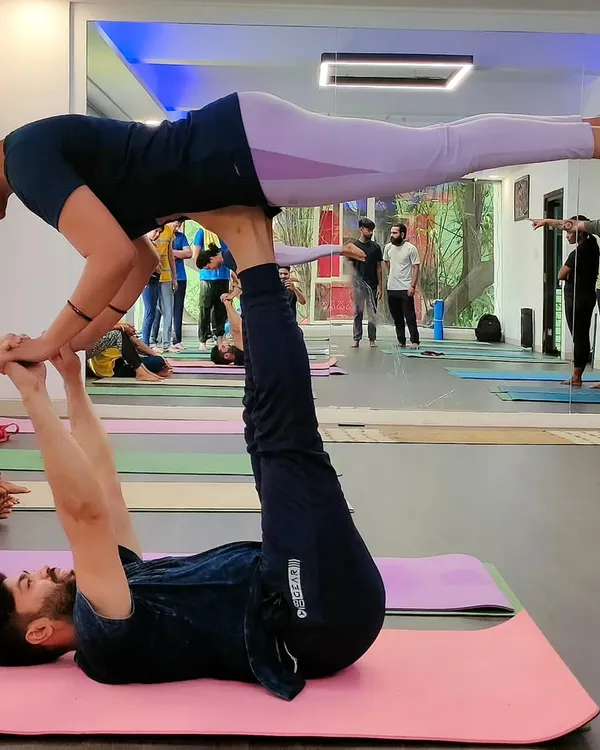
This is what faith looks like in AcroYoga. As the base, I'm supporting my partner in a deep backbend, a variation of Urdhva Dhanurasana. It requires stability from me and trust from him.
This is what faith looks like in AcroYoga. As the base, I'm supporting my partner in a deep backbend, a variation of Urdhva Dhanurasana. It requires stability from me and trust from him.
Exploring a different variation from the same base position. This one-legged extension challenges our balance and communication even more. A nearby dog seems unimpressed.
Exploring a different variation from the same base position. This one-legged extension challenges our balance and communication even more. A nearby dog seems unimpressed.
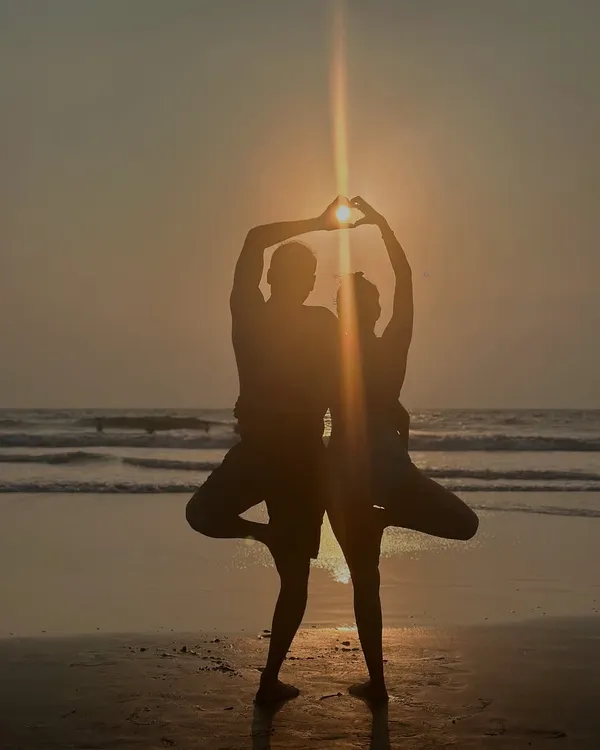
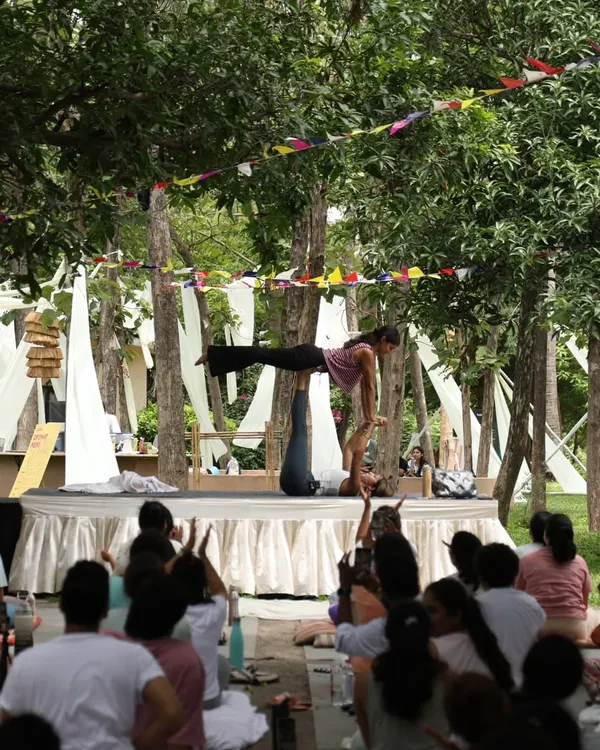
A classic partner pose that looks like we're floating. This requires immense core strength and counter-balance from both of us. It’s a great exercise in mutual support.
A classic partner pose that looks like we're floating. This requires immense core strength and counter-balance from both of us. It’s a great exercise in mutual support.
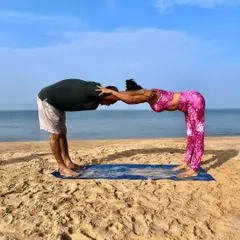
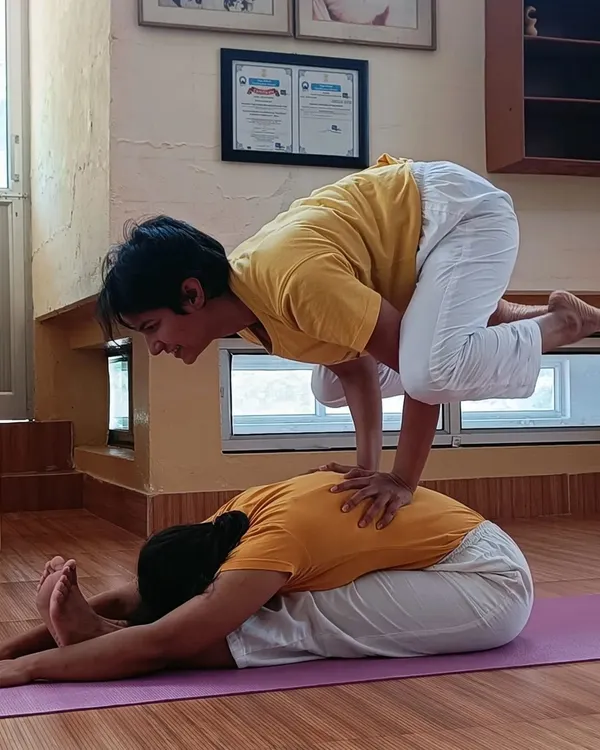
This is an assisted backbend, a preparation for Kapotasana (Pigeon Pose). I'm helping my student open her thoracic spine by providing stable support, allowing her to relax into the stretch.
This is an assisted backbend, a preparation for Kapotasana (Pigeon Pose). I'm helping my student open her thoracic spine by providing stable support, allowing her to relax into the stretch.
This is an assisted backbend, a preparation for Kapotasana (Pigeon Pose). I'm helping my student open her thoracic spine by providing stable support, allowing her to relax into the stretch.
This is an assisted backbend, a preparation for Kapotasana (Pigeon Pose). I'm helping my student open her thoracic spine by providing stable support, allowing her to relax into the stretch.
About Partner & AcroYoga: Play and Connection
Partner yoga is not just about cool shapes. It is about learning to communicate without words. Whether we are balancing in an AcroYoga pose or assisting each other into a deep Kapotasana stretch, the focus is always on mutual support and recognizing the shift in sensation as you learn to trust your partner’s weight.
When you practice alone, you are the only one holding the space. When you bring a partner into the mix, that dynamic shifts completely. AcroYoga and partner-based flows are really a conversation between two bodies. It requires you to listen to your partner's cues, adapt to their balance, and let go of the need for absolute control.
Why Partner Yoga?
- Trust and Communication: You cannot force a pose with a partner. You have to communicate, understand their limits, and build the confidence to support one another.
- Deeper Access: Using a partner for assisted stretches, like Kapotasana, allows for a deeper thoracic opening that is often difficult to achieve alone. With steady support, your muscles can relax into the release.
- Playful Movement: AcroYoga isn't always serious. There will be wobbles, maybe some laughter, and plenty of opportunities to try things that feel a bit outside your comfort zone.
My Approach in Bengaluru
I treat these sessions as a collaborative experiment. We work on the foundations of core strength and counter-balance in outdoor settings like Cubbon Park, or we use props and tactile feedback at my studio in Malleshwaram. Whether you are working on your first lift or refining your alignment, the goal is the same: to show up, breathe, and enjoy the ride. Come ready to move, listen, and connect.
Similar work from other experts
Browse through Curated picks from other experts on mytribe
 8
8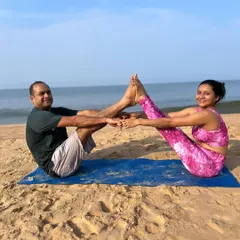
Partner Yoga Classes in Bengaluru: Connect and Play
 17
17
Partner and Acro Yoga Classes in Brookefield
Acro & Partner Yoga Classes in Bengaluru
Partner Yoga & Acro Flow Coaching
 5
5Partner and Acro Yoga for Strength and Connection
 10
10
Acro Yoga in Bengaluru: Build Trust and Connection
More from Multi-Style Yoga Instruction by Rakshith Setty
More services by Rakshith Setty