Raga Riyāz: Mastering Classical Sitar Techniques
Explore the subtle nuances of alap, jod, and taankari. These sessions are where we find our sound, working through ragas like Bihag and Marwa to build a solid, clean foundation for your practice.
A short taan progression in Raag Bihag. We will learn how to build speed and clarity in these intricate melodic passages.
Exploring the Jod section in Raag Jinjhoti. This part of a raga performance builds a rhythmic pulse after the free-flowing alap.
A short alap, or opening improvisation, in Raag Rageshree. This is where we introduce the mood and key phrases of the raga.
Here is an alap in Raag Vrindavani Sarang, a beautiful melody often associated with the afternoon.
Practicing taankari, or fast melodic runs, in Raag Desh. This technique adds excitement and virtuosity to a performance.
This is a bandish, a fixed composition, in Raag Marwa. Learning compositions is key to understanding a raga's structure and provides a framework for improvisation.
A brief exploration of Raag Purya, an evening raga with a deep and contemplative mood.
About Raga Riyāz: A Deep Dive into Classical Sitar
Learning the sitar isn't just about reading swaralipi (notation). Whether we are working on your finger strength for fast taankari or spending an hour just getting the tuning of your taraf strings right, my focus is on the mechanics. If you aren't willing to put in the time for daily riyaaz, this path will be difficult, but if you are, we can build a sound that truly resonates.
Building Your Foundation
The sitar is a demanding instrument. In our sessions, I focus on the basics that many beginners overlook—posture (how you sit for a baithak), the correct angle of the mizrab (plectrum) on the strings, and the tension of the sympathetic strings (taraf). You cannot fake a good sound on the sitar; it comes from clean strokes and patience.
Why Raga Riyāz Matters
We don't just learn songs; we explore the soul of the raga. We will start with the alap (opening improvisation) to understand the mood, move into the jod to establish a rhythmic pulse, and eventually tackle the taankari (fast melodic runs) to build virtuosity. We will work on:
- Right-hand technique: Mastering the Da, Ra, and Dir patterns for clarity.
- Raga Structure: Moving through the scales of ragas like Yaman, Bhupali, and Purya.
- Ear Training: Learning to listen to the micro-tones that define Hindustani classical music.
Can We Mix Styles?
While this cluster focuses on classical training, I am completely open to adapting these techniques to film music. If your goal is to play a soulful instrumental cover of a Bollywood track, we will use the same fundamental classical techniques to get you there. Music is about connection, whether it is an ancient raga or a modern melody. If you are serious, let's get started.
Similar work from other experts
Browse through Curated picks from other experts on mytribe
Sitar Riyaaz and Technique Demonstrations
Mastering Indian Classical Raags: Sitar Classes with Hardik Verma
Exploring Indian Ragas: Solo Sitar Recitals
Learning Sitar: The Guru-Shishya Parampara
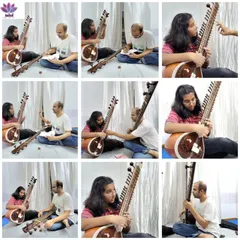
Sitar Classes & Classical Music Performances
Sitar and Surbahar Practice Sessions
More from Sitar Lessons by Arjun Anand
More services by Arjun Anand