Climate-Responsive and Sustainable Architecture
We believe a building's design should be its first line of defense against the climate. Through solar studies and passive cooling, we create spaces that perform as well as they look.
Energy efficiency is a critical part of our design process. We employ strategies like passive cooling, climate-responsive facades, and sustainable material choices to reduce a building's energy consumption and environmental impact.
A solar study diagram for the Aspire School project. We use digital simulations like this to analyze the sun's path and design buildings that maximize natural light in winter and minimize heat gain in summer.
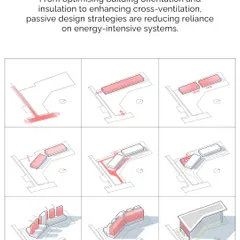
The design process for Aspire School began with analyzing the site. This diagram shows the first step in planning the building's layout to optimize its relationship with the surrounding environment and climate.
This diagram illustrates how we determined the building footprint on the site for Aspire School, considering setbacks and orientation to maximize passive design benefits.
Fenestration, or the arrangement of windows, is key to our climate-responsive strategy. This diagram shows how we planned the window placement at Aspire School to facilitate cross-ventilation and deep daylight penetration.
We prioritize low-impact, high-performance materials. This image showcases acetylated wood, a durable, moisture-resistant material with a lower carbon footprint that we use as an alternative to conventional options.
Our blog, "Beyond Steel & Cement," explores the use of sustainable materials in modern architecture. We believe integrating innovative solutions like AAC blocks and green pavers is essential for building a greener future.
In an interview, we discussed how lessons from India's traditional architecture can inform modern heat-resilient design. Integrating traditional wisdom with new technology is key to creating sustainable urban habitats.
About Climate-Responsive & Sustainable Design
We do not just add green features; we simulate the environment first. For projects like the Aspire School, we ran solar path studies and tested ventilation models before finalizing the building footprint. This ensures that features like courtyards and fenestrations actually provide cooling, rather than just acting as aesthetic elements.
Sustainability is not an afterthought in our studio. It is the framework for every decision we make. When we approach a new site, we look at solar orientation, wind patterns, and local material availability before a single wall is drawn.
Our Approach to Climate-Responsive Design
- Passive Cooling: We prioritize natural ventilation and shading to minimize reliance on artificial cooling. By using intermittent courtyards and cross-ventilation, we keep interior temperatures comfortable even during peak summer months.
- Solar Studies: Every project undergoes digital light simulation. We analyze the sun's path to determine how deep daylight should penetrate into classrooms or offices, ensuring glare-free, well-lit spaces that reduce electricity usage.
- Materiality: We advocate for low-impact, high-performance materials. Whether it is using acetylated wood for durability or AAC blocks for thermal insulation, our material choices focus on longevity and a lower carbon footprint.
From Sketch to Structure
Our process is highly iterative. We move from hand-sketched concepts and physical massing models to advanced digital simulations. This allows us to test how a facade will handle the Indian sun or how a building's volume will affect the microclimate of a site. By combining traditional passive design wisdom with modern modeling tools, we build habitats that are resilient, energy-efficient, and comfortable for the people who inhabit them. We design not just for the present, but for the long-term health of the environment.
Similar work from other experts
Browse through Curated picks from other experts on mytribe
 8
8
Sustainable and Climate-Responsive Architectural Design
 10
10
Climate-Responsive Architecture and Passive Design
 23
23
Our Sustainable Design Philosophy: Creating Future-Ready Architecture
Net-Zero & Climate-Responsive Homes
 18
18
Climate-Responsive & Sustainable Facades
 22
22
Sustainable Commercial & Office Architecture
More from Institutional Architecture by Team3