Shaping Future Architects Through Design Mentorship
Teaching is a responsibility to continue the architectural conversation. I engage with students in urban design studios and workshops, tackling real-world challenges from historic forts to busy bazaars.
A video showing the process of an urban design studio, from initial site analysis and sketches to student reviews. This is where theoretical knowledge meets practical application, mentoring the next generation of city makers.
The poster for an expert class I conducted, titled "A Place for All | A place for some". This theme is central to my teaching on public architecture, exploring how to design spaces that serve both the collective and the individual.
In deep discussion with students and fellow faculty at SEED Kochi. These intense review sessions are crucial for challenging students to think critically about their design proposals and the context they are working in.
A review session where students present their work. My role as a mentor is to listen, question, and guide them in developing their architectural voice and understanding of urban complexities.
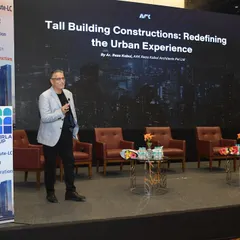
Presenting at a "seed scape" event. Sharing my own journey and projects is part of the teaching process, offering students a real world perspective on the practice of architecture.
An outdoor review space constructed with bamboo at SEED Kochi. The learning environment itself can be an object of design and inspiration, demonstrating principles of temporary and sustainable structures.
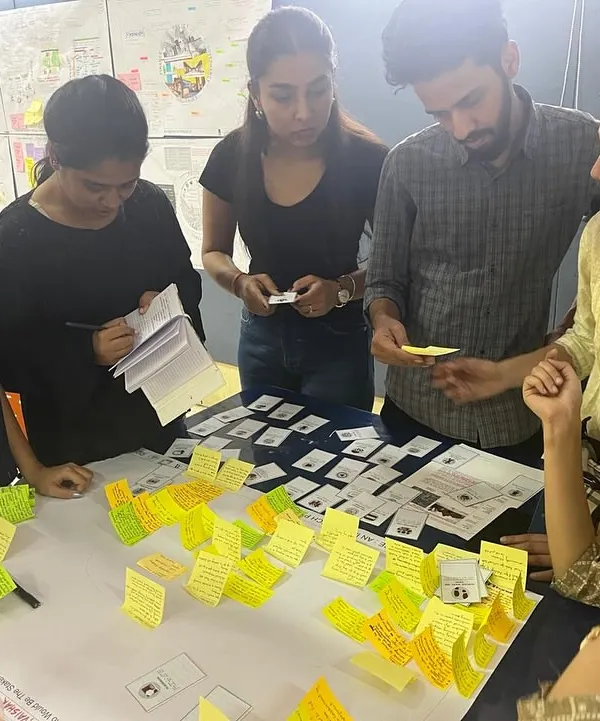
A fellow architect and mentor examines a student's detailed urban analysis board. Peer review and collaborative critique are fundamental aspects of architectural education that I actively foster.
Intricate architectural models created by students for an urban design project. These models are essential tools for understanding scale, form, and the spatial relationships within a complex urban site.
A student presents their design proposal during a design charette at CARE School of Architecture. These intensive workshops are designed to stimulate creative thinking and rapid problem solving.
A senior architect shares his insights during a student presentation. Bringing diverse professional voices into the academic studio enriches the learning experience for everyone involved.
About Shaping Future Architects
My design studios go beyond standard pedagogy. We treat the city as our classroom, often focusing on complex sites like historic canal edges or bustling bazaar districts. I encourage students to move past simple digital drawings, pushing them to explore materiality through hands-on metal etching or large-scale physical modeling to truly understand the spatial relationships we study.
Architecture is never a solitary pursuit. In my teaching, I aim to foster a space for debate and rigorous questioning. When I collaborate with students at institutions like SEED Kochi or the CARE School of Architecture, we do not just design buildings. We analyze the socio-political context of the site, be it a colonial precinct or an old city bazaar.
My sessions, often themed around 'A Place for All,' focus on the choreography of space. We start with site topography and historical mapping, moving into conceptual master plans that prioritize pedestrian circulation and passive cooling. I believe that students must understand the reason behind every wall and corridor.
The studio environment often mirrors professional practice. I bring in peer reviewers and practicing architects to critique proposals, ensuring the dialogue remains grounded in real-world challenges. Whether it is an urban design studio or a workshop on drawing and printmaking, the goal remains the same: to equip the next generation of architects with the tools to listen to the city before they draw upon it. We discuss material palettes, from exposed concrete to local granite, and debate the merits of adaptive reuse over new construction. This process is about refining one's architectural voice, balancing artistic ambition with the pragmatic requirements of a project.
Similar work from other experts
Browse through Curated picks from other experts on mytribe
 18
18
Education and Mentorship in Heritage Conservation
Advancing Architectural Thought and Mentorship
 23
23
Architectural Lectures, Juries & Academic Engagement
 7
7
Architectural Insights, Awards, and Industry Contributions
 12
12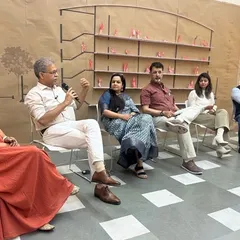
Our Team and Architectural Thought Leadership
 7
7
Community and Pro-Bono Architectural Work
More from Public Architecture & Urban Design by Soumitro Ghosh
More services by Soumitro Ghosh