Architecture as Urban Conversation and Storytelling
My work is a dialogue between architecture and the city. From cultural landmarks to mobile classrooms, I design spaces that hold memory and purpose.
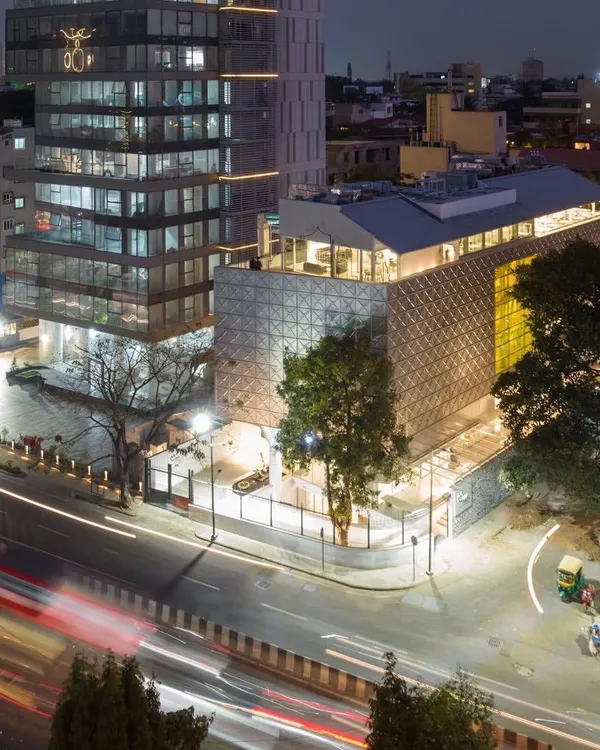
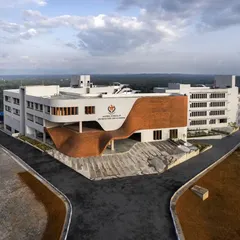
The Museum of Art & Photography in Bengaluru, seen here at dusk, is designed as a cultural beacon for the city. My goal was to create a public space that is both a repository for art and an active participant in the urban conversation.
This is the "Wonder on Wheels" project, where we converted a public bus into a mobile classroom for the Anganwadi initiative. It is a testament to my belief that thoughtful design can create significant impact even on a small scale through adaptive reuse.
The journey of a project begins with a line, a sketch, a thought. This collection of process drawings and student reviews from an urban design studio shows the intellectual exploration and collaborative effort behind shaping public spaces.
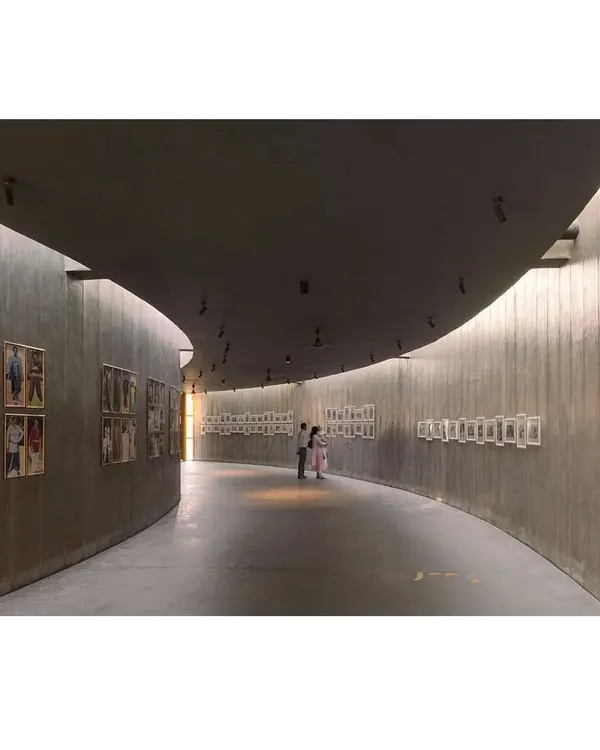
Leading a walkthrough at the Museum of Art & Photography allows me to share the narrative behind the design. I believe a building is not complete until it is experienced and understood by the people it serves.
Inspiration is often found in the everyday fabric of a city. Observing a flower vendor in Tiruchirappalli is a reminder that public spaces are a choreography of human activity, a core principle in my urban design work.
A moment of profound learning and exchange with my mentor, the late B.V. Doshi. His influence on my understanding of architecture as a social and cultural practice is immeasurable, and I strive to carry that legacy forward.
A quiet moment of reflection. My work is a constant balance between the intellectual and the intuitive, seeking to create spaces that resonate with memory and purpose.
About Featured
In every project, from the Museum of Art & Photography to our urban master planning, I focus on the choreography of space. Architecture is not merely about erecting structures. It is about creating an active conversation with the city, ensuring that every gallery, staircase, or transit space serves a specific purpose in the user's daily life.
My practice is rooted in the belief that the most sustainable building is the one already standing. This commitment to adaptive reuse, seen in our approach to revitalizing public spaces, is not just a technical choice but a social one. When we transformed a public bus into the 'Wonder on Wheels' classroom, the goal was to prove that design could reach where it is needed most, regardless of scale.
Design as Social Responsibility
I view my role as an architect through the lens of responsibility to Bengaluru and its people. Whether designing the Museum of Art & Photography (MAP) or working on urban design studios with students, the priority is always the same: creating environments that are inclusive and accessible. We collaborate extensively with artists, thinkers, and fellow architects to ensure that our projects are multidimensional and rich in narrative.
Mentorship and Legacy
Learning is a lifelong process. My time spent in dialogue with mentors like the late B.V. Doshi continues to shape my understanding of architecture as a cultural practice. These exchanges are not just academic exercises; they inform the material palette and structural integrity of everything I build, from cultural institutions to small-scale furniture design.
Our Approach to Projects
We do not provide one-size-fits-all solutions. Our work begins with deep site investigation, topographical analysis, and an inclusivity audit. By prioritizing barrier-free movement and passive cooling orientation, we ensure that our buildings perform well and feel rooted in their specific context. If you are looking to embark on a project that values historical context, material honesty, and thoughtful urban integration, I am here to explore those possibilities with you.
Similar work from other experts
Browse through Curated picks from other experts on mytribe
 8
8
Featured Architectural Projects and Design Philosophy
 7
7
Our Featured Architectural Projects
 8
8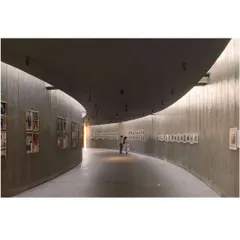
Public & Cultural Architecture
 8
8
Featured Work: Narrative Architecture and Landscape Design
 8
8
Our Featured Architectural Projects & Design Portfolio
 7
7
Featured Projects: Our Approach to Architecture
More from Public Architecture & Urban Design by Soumitro Ghosh
More services by Soumitro Ghosh