Exploring AI and Future Technology for Kids
We help children go beyond using technology to actually understanding how it works. Our AI workshops break down complex concepts like machine learning and voice automation into simple, hands-on learning experiences.
We believe in technology for good. Artificial Intelligence offers powerful tools for creating customized educational experiences, particularly for children with learning disabilities, making learning more accessible and effective for everyone.
Did you know the first humanoid social robot, Sophia, was activated in 2016? We use fascinating facts like this to inspire our students and connect their learning to groundbreaking advancements in the real world.
The robot Sophia is a prime example of applied Artificial Intelligence. It uses complex AI to process language, mimic human expressions, and interact with people, showcasing the potential of the technologies our students are learning.
Today's voice and home assistants are a part of daily life, running our homes on auto. We teach the principles behind this technology, preparing students to create the next generation of smart devices and automated systems.
The history of technology is inspiring. The first voice assistant, Simon, was created by IBM in 1994, laying the groundwork for the AI-powered assistants we use today. Understanding this history provides context for future innovation.
What language do robots speak? They understand the language of code. We teach students various programming languages, giving them the ability to instruct robots and computers to perform complex, human-like tasks.
About Exploring AI and Future Technology
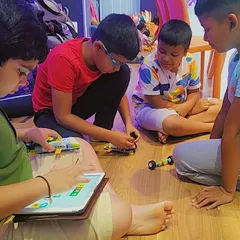
We do not teach AI as abstract theory. Kids in our sessions work with sensors, motors, and block-based programming to build projects that mimic real-world automation, such as smart home devices or voice-controlled gadgets. This bridges the gap between seeing a machine and understanding the code that gives it intelligence.
Understanding the building blocks of the future starts early. At our Sector 56 studio, we guide students aged 5 to 18 through a structured progression, starting from basic mechanical logic and moving into complex Python-based AI integration.
Our curriculum focuses on:
- Sensor Logic: Learning how machines perceive their environment using distance, force, and color sensors.
- Voice & Automation: Deciphering how assistants like Alexa or Siri function and building custom logic that mimics this behavior.
- Hands-on Coding: Transitioning from drag-and-drop interfaces to professional languages like Python, used in real-world machine learning applications.
- Real-World Problem Solving: Tackling challenges like creating smart dustbins or obstacle-avoiding robots.
We believe that when a child understands that a robot is not magic, but a set of instructions, they become creators instead of consumers. Our mentors provide the technical debugging support required to move from a prototype to a fully functional project, ensuring every student builds confidence alongside their code. We keep our environment open and interactive, moving at a pace that suits the individual child, whether they are just starting their journey with LEGO or moving into competitive programming.
Similar work from other experts
Browse through Curated picks from other experts on mytribe
 26
26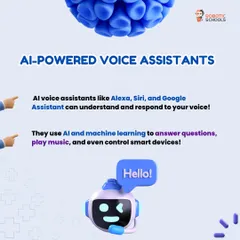
Understanding the World of Tech: Robotics and Coding Basics for Kids
Coding, Robotics, and AI Classes for Kids
 27
27
Hands-on Tech Courses and Robotics Programs
Robotics & Coding Classes for Kids
Advanced Robotics & AI Explorers for Students
Robotics and Coding Classes for Kids
More from Robotics for Kids by RoboGenius
More services by RoboGenius