Inside the World of ISRO & Space Exploration
Ever wondered what actually happens at ISRO? We have brought in experts from the space agency to break down the physics, the fuel, and the grit behind India’s moon missions. Dive into the tech behind the stars.
How did Chandrayaan-3 land so safely on a surface full of craters? ISRO Scientist Mr. Shiju G. Thomas explains the hazard mapping process, where the lander's onboard computer had a pre-loaded map of safe and unsafe zones to choose the perfect landing spot.
Why did ISRO target the Moon's South Pole? Mr. Shiju G. Thomas explains that some craters in this region are in permanent shadow, meaning they could hold water ice and secrets of the solar system's evolution that haven't seen sunlight in billions of years.
ISRO Scientist Mr. Shiju G. Thomas explains the concept of a lunar day. Because the moon rotates so slowly, one "day" on the moon lasts for about 14 Earth days, followed by 14 Earth days of night.
Did you know the Moon has a North and South Pole, just like Earth? ISRO's Mr. Shiju G. Thomas breaks down the basics of the Earth-Moon system, including the Moon's elliptical orbit and how its distance from us changes.
What kind of fuel powers a rocket like the LVM3 that launched Chandrayaan-3? Mr. Shiju Thomas explains the different types, from the solid fuel in the side boosters to the liquid and cryogenic stages in the core.
What does it take to become an astronaut? ISRO Deputy Project Director Mr. Chiranjeevi Phanindra explains the key qualities: a spirit of adventure, perfect health, technical skill, and most importantly, scientific curiosity.
What does launch feel like for an astronaut? Mr. Chiranjeevi Phanindra describes the intense G-forces, which can feel like three people standing on your chest, and the rigorous training required to withstand it.
How do astronauts eat in space? Mr. Chiranjeevi Phanindra explains that food is often dehydrated and eaten from pouches. Because weightlessness dulls taste buds, astronauts often prefer extra spicy foods.
How do astronauts prepare for their journey? This video shows the intensive training they undergo, from practicing spacewalks underwater to simulate weightlessness to centrifuge training for high G-forces.
How do astronauts manage daily chores in zero gravity? Mr. Chiranjeevi Phanindra gives us a glimpse into the unique challenges and solutions for personal hygiene and daily routines aboard a space station.
About Inside the World of ISRO & Space Exploration
This isn't just theory from a textbook. We invite active ISRO scientists and aerospace engineers—including experts from VSSC and Skyroot—to walk your child through the real-world math and logic of space missions. Whether it is decoding how a rover maps a hazard or understanding the chemistry of cryogenic fuel, your kid gets the actual engineering perspective, not a watered-down version.
Space exploration is the ultimate sandbox for science. When your child understands how an ISRO scientist maps the lunar surface or why a rocket needs different fuel stages, they aren't just memorizing facts. They are learning to think like an engineer.
Why Space Tech Matters for Your Kid
We connect the dots between 'cool' space news and real engineering skills. We don't just talk about Chandrayaan-3 landing; we show the hazard mapping logic that made it possible. We don't just say rockets go up; we explain the aerodynamics and propulsion systems.
Frequently Asked Questions
Is this too complex for an 8-year-old? Nope. We take complex topics like orbital mechanics or cryogenic fuel and break them down using analogies your kid gets. It is about building curiosity, not loading them with jargon.
Who are the speakers? We feature experts from VSSC, ISRO, and aerospace startups like Skyroot. These are people actually building the future, sharing their process directly with students.
Does this lead to robotics? Absolutely. Understanding how a lunar lander operates informs how to build obstacle-avoiding robots. It is the same logic: sensors, code, and physical reaction. We translate these high-level space concepts into tangible projects your kid can build in our 1-on-1 sessions. If your child wants to move from just watching space videos to building their own satellite prototypes, this is their starting line.
Similar work from other experts
Browse through Curated picks from other experts on mytribe

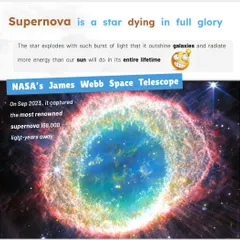
Journey into Space: Astronomy and Rocketry for Kids
 30
30
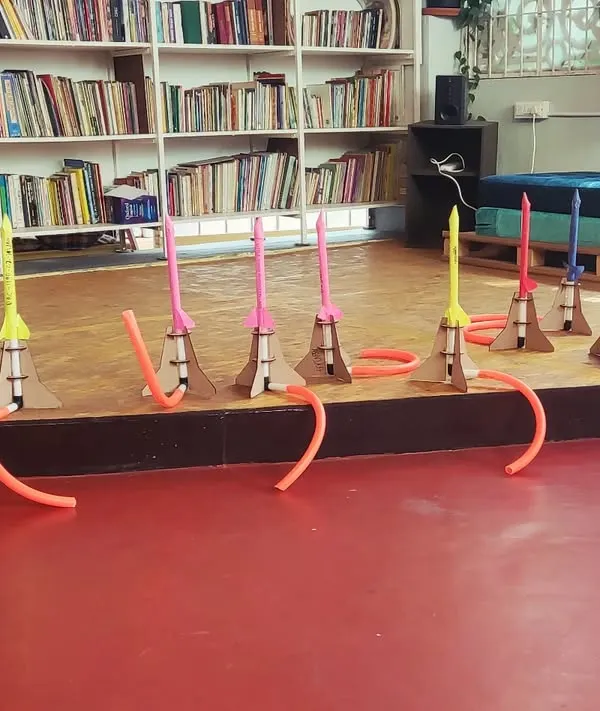
Aeronautics & Rocketry Workshops for Kids

Hands-on Paleontology and Rocket Science Workshops for Kids
 7
7
Our Featured Robotics & Coding Projects
Interactive Learning Through Stories and Science
First Steps in Robotics and Engineering for Kids
More from Online Robotics & Coding Classes for Kids by Playto Labs