Debates and Media Appearances on Law and Dharma
I do not treat media appearances as platforms for soundbites. These discussions are where I dismantle colonial narratives surrounding our Constitution, Dharma, and the civilizational survival of Bharat.
My podcast with Smita Prakash for ANI on Sanatana Dharma and South India politics reached two million views in a month. This indicates a significant public interest in understanding the truth behind Dravidianist rhetoric.
My conversation with The Lallantop on 'India Arthath Bharat' crossed one million views in two weeks. The engagement shows that a detailed, nuanced discussion on secularism, the Constitution, and the British Raj is welcome.
Acknowledging the viewership for my interview on The Lallantop. The high engagement demonstrates the power of reaching new audiences on different platforms.
The Lallantop's post about my episode on their show 'Kitabwala'. We had an extensive discussion on the British assault on our culture and the foundational meaning of secularism.
My conversation with RJ Raunac on his podcast, where we covered a wide range of topics including Hindutva, the free temple movement, and the position of Muslims in India.
A podcast with Sushant Sinha where we discussed the existential question: "The Hindu will survive, but how?". We explored the threats to Bharat and the path forward.
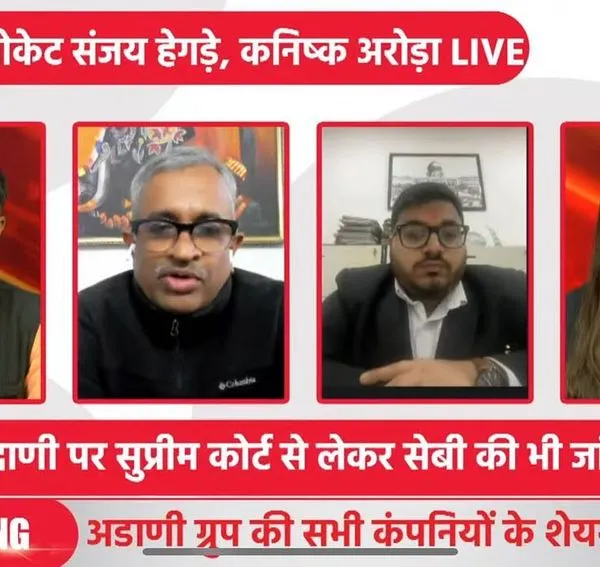
A screenshot from my appearance on CNN News18, where I participated in a fiery discussion on the assault on Hindu identity and critiqued India's approach to secularism.
An exclusive debate with T.V. Mohandas Pai on the sidelines of the Stanford India Conference, where we discussed the critical question of whether India should go to war with Pakistan.
A link to my talk in Mangaluru on "Civilisation, Constitution & the myth of Secularism". This is a core theme of my work, and I elaborate on it in detail here.
The view count for my ANI podcast on the Places of Worship Act climbing to over 300,000 views in a single day. The public response underscores the importance of this issue.
About In the Media: Debates & Discussions
In my media engagements, I consistently move away from the superficial debate formats that characterize mainstream news. Whether I am analyzing the legal intricacies of the Places of Worship Act on national television or discussing constitutional history on long-form podcasts, I prioritize archival facts and legal precedents over emotional appeals. My goal is to provide a framework for the audience to understand why certain policies and narratives were designed to weaken our identity, and why they must be challenged.
When I participate in debates and interviews, I operate with a singular focus: decolonising the Indian mind. The media landscape often incentivizes shallow, 'balanced' reporting that equates fundamentally different civilizational stances. I refuse to play by those rules.
My approach in these forums is consistent:
- Methodical Deconstruction: I do not react to headlines; I examine their origins. By tracing concepts like 'secularism' back to their colonial import, I show how these ideas were historically used to alienate Hindus from their own tradition.
- Civilizational Litigation: I bring the same rigor to public discourse that I apply in the Supreme Court. My aim is to force viewers to confront the reality that our legal framework requires a civilizational relook, not merely a political one.
- Hard Truths: In conversations on platforms like The Lallantop or ANI, I address uncomfortable realities—such as the structural disadvantages faced by Dharmic traditions—without the typical mainstream filters. If you listen closely, you will find that these discussions are not just about the current moment, but about the long-term survival of Bharat.
These appearances are an extension of my work in 'India that is Bharat' and 'India, Bharat and Pakistan'. They serve as a vital medium to reach the public, bypassing traditional gatekeepers to articulate a Dharmic framework for our future. Whether it is the free temple movement or the critique of the Dravidianist narrative, the strategy remains the same: identify the root cause, present the evidence, and articulate the path forward with absolute clarity.
Similar work from other experts
Browse through Curated picks from other experts on mytribe
 4
4
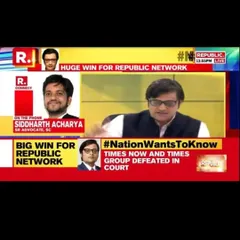
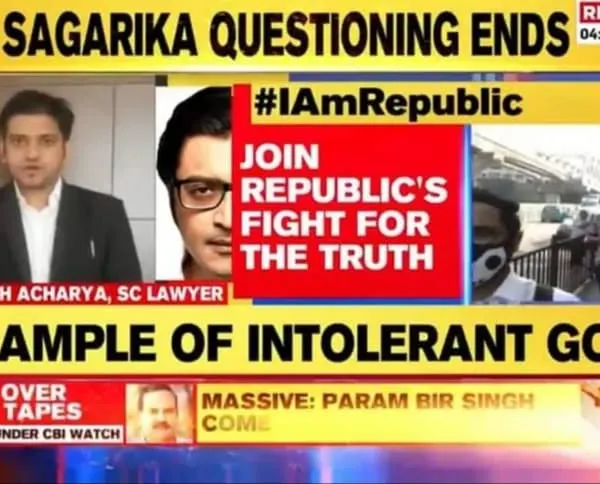
Legal Commentary and Media Appearances
Legal Commentary & Expert Analysis on National Debates
 6
6
Media Appearances & Legal Analysis
 7
7
Legal Commentary & Media Appearances
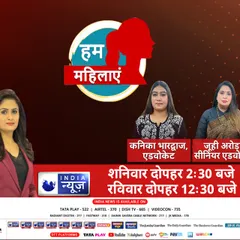
Legal Expert Commentary & Media Appearances
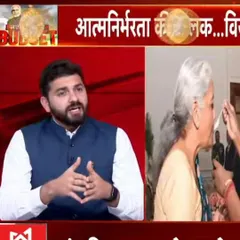
Expert Legal Analysis and TV News Commentary
More from Writing & Thought Leadership by J. Sai Deepak
More services by J. Sai Deepak