Understanding The Montessori Philosophy
Montessori is not just a school method; it is a way of living. We help you move beyond the books and understand the science of child development through observation.
This diagram illustrates the three-year cycle in a Montessori environment. We group children in mixed-age classrooms (3-6 years) to foster mentorship and a community of learners, allowing each child to progress at their own pace through exploration, experimentation, and consolidation.
Did you know a child's brain forms up to 700 new neural connections per second before the age of five? This is why the early years are so critical. Our method is designed to provide rich experiences that support this incredible period of brain development.
Dr. Montessori taught that a self-sufficient child reflects human dignity. When a child learns to dress themselves or tie their own shoes, they experience a profound sense of joy and achievement that comes from true independence.
Dr. Montessori often said that she did not invent a method, but rather she studied the child and expressed what the child gave her. This principle of scientific observation and following the child's natural development is at the heart of everything we do.
"Whoever touches the life of the child touches the most sensitive point of a whole." We take this responsibility seriously, knowing that our work with children has roots in the past and climbs towards the infinite future.
We believe every child is an artist. Our role is not to teach them how to create, but to provide them with the freedom and the tools to express themselves, preserving the innate creativity that all children are born with.
A child who learns to act for themselves and govern their own will grows into a confident and capable adult. Our entire approach is built on fostering this inner discipline and independence from a very young age.
About The Montessori Philosophy
At IMTC Gurgaon, we don't just teach the philosophy; we help you decode your child’s behavior. Most parents come to us feeling a bit lost, but they leave as 'aware mothers' who understand why their child needs freedom, structure, and most importantly, observation. It’s not about following a rigid manual; it’s about hum bachchon ki zarurat ko samajhna (understanding what the child needs) so you can create a space at home where they can thrive on their own.
The Montessori Approach
Dr. Maria Montessori did not invent a system; she observed children and expressed what they taught her. At IMTC, we follow this legacy. Our work focuses on three pillars:
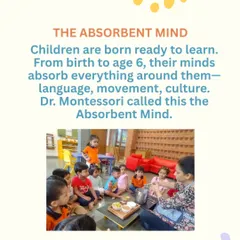
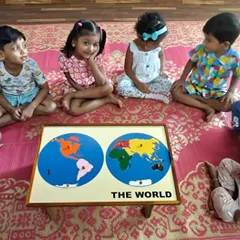
- The Three-Year Cycle: In a 3-6 year environment, we group children together. This mixed-age setting allows for peer mentorship. A three-year-old learns by watching, a four-year-old experiments, and a five-year-old consolidates their knowledge by teaching others. It creates a community where children progress at their own pace.
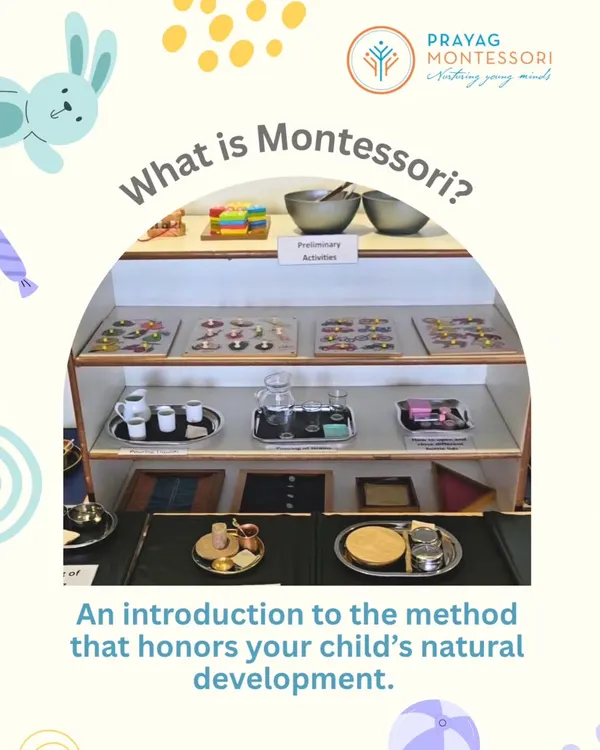
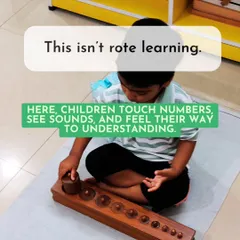
- Brain Development: Before age five, a child’s brain forms 700 new neural connections per second. This is why our philosophy emphasizes providing a rich, sensory-driven environment early on. We don't just talk about concepts; we use materials like the Pink Tower or Sandpaper Letters to let children touch and feel their learning.
- Independence and Dignity: 'Any child who is self-sufficient... reflects in his joy and sense of achievement the image of human dignity.' When we teach a child to dress themselves or manage their own snacks, we are building their self-worth.
Putting Philosophy into Practice
We often hear parents asking, 'How do I apply this at home?' Our philosophy isn't limited to the classroom. It's about letting children make mistakes, giving them 'freedom within limits,' and resisting the urge to intervene when they are struggling with a puzzle or a zipper. If you want to move from theory to reality, we invite you to our live webinars where our directors, Nandini and Daisy, demonstrate these techniques using actual Montessori materials.
Similar work from other experts
Browse through Curated picks from other experts on mytribe
 10
10
The Montessori Philosophy: How We Nurture Young Minds
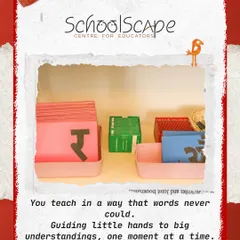
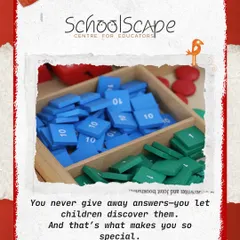
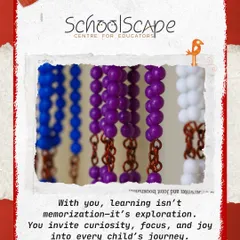
Exploring the Montessori Philosophy in Action
 9
9

Our Montessori Philosophy: Nurturing Inner Development
 61
61
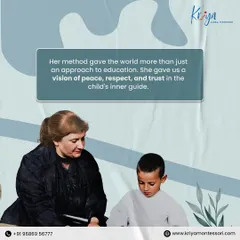
Understanding the Montessori Philosophy for Parents
 79
79
Our Core Montessori Principles and Teaching Approach
A Glimpse Into Our Montessori House of Children
More from Introductory Montessori Workshops & Webinars by Indian Montessori Training Centre
More services by Indian Montessori Training Centre