Crate & Muzzle Training for Dogs
Crate and muzzle training are not about restriction. They are essential safety skills that help your dog stay calm during vet visits, travel, and daily handling.
Muzzle training should be a positive experience. Here, I'm conditioning Logan the Rottweiler to voluntarily put his nose into the muzzle for a reward. This makes the process stress-free.
Under my guidance, Kobe the American Pitbull is learning to accept the muzzle from his owner. It's important for owners to be part of the training process to build a strong, trusting relationship.
This Indie dog is learning to associate the muzzle with positive things. My goal is for every dog to be comfortable and relaxed while wearing a muzzle when needed.
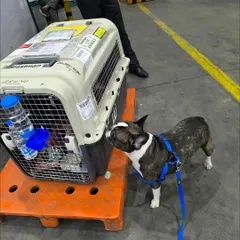
This Belgian Malinois is practicing entering the travel crate. This skill is essential for safe transportation and helps the dog feel secure when traveling or at the vet.
Jack the Belgian Malinois is calm and relaxed in his crate. A well-trained dog understands that the crate is a safe space, which is very helpful for management and peace of mind.
About Essential Skills: Crate & Muzzle Confidence
Most pet parents think a muzzle is only for aggressive dogs, but it is an essential safety tool for every pup to accept. Whether for emergency vet visits or safe travel, I teach your dog to voluntarily place their nose inside using positive reinforcement. By making this a game with treats and markers, your dog learns to view the muzzle as a positive association rather than a restriction.
Crate training is often misunderstood as confinement, but when done right, it creates a personal den for your dog. A dog that is crate-confident is a dog that can settle down quickly, preventing separation anxiety and helping with potty protocols. My method focuses on building a secure, calm space where your pet feels safe to rest.
We practice in real-world scenarios, not just inside a controlled training room. I work with you to ensure your dog accepts the crate and the muzzle, teaching them to stay relaxed even when distractions are high. This is about building communication between you and your canine.
We start with basic luring mechanics to transition into command positions without force. For muzzle training, we work on desensitizing paws, ears, and mouth handling, which helps during future vet visits or grooming sessions. This is about being proactive, not reactive. By the time we are done, you will have a dog that can handle a muzzle calmly, making travel and necessary health checks stress-free for both of you.
Similar work from other experts
Browse through Curated picks from other experts on mytribe
Crate Training for Stress-Free Pet Travel
Mastering Essential Commands for Your Dog
Puppy Essentials: Build a Bond, Not Just Obedience
Stress-Free Dog Grooming & Vet Visits
Dog Training Methods That Build Real Trust
Essential Skills for a Well-Mannered Dog
More from Obedience & Manners Training by The Gaurav Dog Trainer
More services by The Gaurav Dog Trainer