Defending Against False Matrimonial & 498A Allegations
Don't let panic dictate your legal strategy. I help you break down false matrimonial claims using evidence and Supreme Court precedents to secure your rights in Delhi courts.
It has become a practice to make vague and unprovable allegations against the husband and his family in matrimonial cases. I explain a Supreme Court ruling which holds that filing an FIR with such allegations is an abuse of the process of law, and the wife cannot expect relief from the court.
The Supreme Court has clarified that filing an FIR under Section 498A with vague and omnibus allegations against a husband and his in-laws constitutes an abuse of criminal law. This ruling is a crucial tool in defending against unsubstantiated dowry and cruelty claims.
In 498A cases, there is a tendency to implicate even distant relatives of the husband. The Supreme Court has cautioned lower courts to be careful and ensure that relatives are not over-implicated based on general and exaggerated allegations without specific evidence.
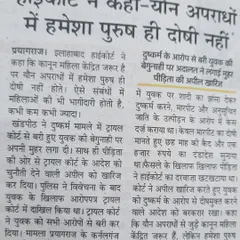
If your wife has filed false criminal cases against you and you can prove the allegations are fake, the Delhi High Court has ruled that this itself amounts to cruelty. This gives you a direct and strong ground to file for divorce. The truth is your greatest weapon.
In a significant judgment, the Delhi High Court acknowledged that husbands can also be victims of cruelty in a marriage. In a case where a wife threw boiling water mixed with chili powder on her husband, the court denied her anticipatory bail, highlighting that cruelty is not gender-specific.
It is a sad reality that sometimes a consensual relationship is twisted into a false rape case after a breakup. I discuss a Supreme Court judgment on this issue, explaining how courts can see through false allegations when the evidence shows a history of consensual encounters.
The Supreme Court has made it clear that a mere breakup of a consensual relationship between two adults cannot be the basis for initiating criminal proceedings. A relationship that was consensual cannot be given the color of criminality just because it did not lead to marriage.
The Karnataka High Court made a powerful statement: "A man is a man, an act is an act, rape is a rape." While not criminalizing marital rape, the court refused to drop rape charges filed by a wife against her husband, stating that the protection of marriage cannot be used to shield someone from such a heinous charge.
If a wife commits suicide within seven years of marriage, the law presumes that the husband or his family may have abetted it. However, I explain that the Supreme Court requires concrete evidence of cruelty just before the incident. This presumption cannot be invoked without proof.
The Supreme Court has ruled on what constitutes abetment of suicide. In one case, it was held that a mother telling her son's lover to end her life if she can't live without him does not amount to abetment, as it requires a positive act that pushes the person to the edge.
About Defense in Matrimonial & Family Cases
The most dangerous trap in 498A cases is believing that every allegation against you needs a long, drawn-out explanation. It doesn't. If the FIR is full of vague, omnibus allegations—things like 'harassment for dowry' without dates, amounts, or specific incidents—that is your first point of attack. Courts are increasingly rejecting FIRs that lack specific evidence, and identifying this gap early is often the difference between dragging a case for years and getting the relief you need.
Reality vs. The 'Bhram' (Misconception)
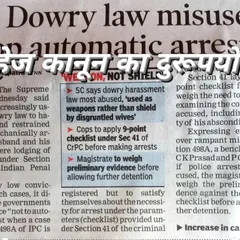
Matrimonial law in India is often misused. I see clients every day who are paralyzed by the fear of Section 498A or false rape allegations. The first thing I tell them is this: Law is not a tool for intimidation, and it doesn't work on emotions; it works on documents and evidence.
Why Evidence is Your Only Friend
When you are fighting false allegations, you aren't just fighting an opponent; you are fighting a narrative.
- The Vague FIR Trap: Many FIRs rely on general statements. If a complaint says 'they harassed me for dowry' but fails to mention when, where, or how, it is legally weak. I help clients challenge these by highlighting the lack of 'cogent evidence.'
- Cruelty isn't Gender-Specific: We have seen recent landmark judgments from the Delhi High Court acknowledging that husbands can also be victims of cruelty. Whether it is physical aggression or psychological manipulation, if you have proof, the law is ready to listen.
- Consensual vs. Criminal: In cases involving breakups, we often see consensual relationships twisted into criminal complaints. I scrutinize call logs, chat histories, and meeting timelines to show that a relationship that was voluntary cannot be turned into a crime just because it ended.
The Strategy: Defense Over Panic
My approach is straightforward:
- Assessment: We review your FIR or notice for specific gaps.
- Evidence Gathering: We collect proof that counters the complainant's claims.
- Application of Precedents: We utilize Supreme Court rulings (like those protecting against over-implication of distant relatives) to argue for quashing or bail.
Legal trouble is stressful, but it is solvable. Stop guessing and start building a structured defense.
Similar work from other experts
Browse through Curated picks from other experts on mytribe
 5
5Legal Defense Against False Dowry and Rape Charges
Defending Against False Matrimonial Cases
Defending Against False Matrimonial Allegations
 9
9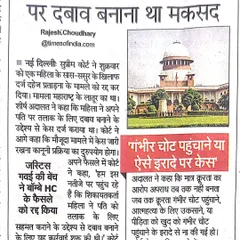
Legal Defense for False 498A and Matrimonial Cases
Matrimonial Legal Defense and 498A Support
Defending Against False Cases & Misuse of Law
More from Criminal Defense by Karan Sharma