Projects in Action: Our Young Innovators' Showcase
See how kids turn logic into motion. At Genius Labs, we don't just teach theory—we build earthquake simulators, robotic arms, and AI-powered helpers that actually work.
A student explains the function of a gyro sensor, which is the "brain" inside the LEGO Spike hub. He's learning about yaw, pitch, and roll angles and how to use this data to program his robot for a tug-of-war competition.
An 8-year-old student, Reyansh, completes the "Robotic Bikes and Stunts" challenge. He built a robotic bike, coded it to move, and plotted its potential energy graph as it navigated a custom-built ramp.
A student's imagination turns a windmill design challenge into a unique creation. After building a gear train, she is now programming it to work with a pressure sensor, transforming a simple windmill into a smart, responsive machine.
This is an activity card for our earthquake simulator project. It outlines the coding challenges, such as programming different earthquake intensities, and the learning outcomes, like designing earthquake-proof structures.
These are the detailed instructions for the SPIKE Prime Earthquake Simulator. Students follow steps to build the simulator, create different building designs, and then program the shaking platform to test which structure topples first.
Before building, we investigate the science. This presentation for the earthquake simulator project covers the Earth's structure and tectonic plates, giving students the scientific context for the engineering challenge they are about to tackle.
Students are fully engaged in the "Build, Test, and Simulate" day for the earthquake simulator project. They are using LEGO kits to construct their simulators and buildings, getting ready to test their designs.
The earthquake simulator in action. A student tests her LEGO building design against the shaking platform she built and coded, observing how different structures hold up under the simulated stress.
A group of students watches as their programmed robot draws patterns on a large whiteboard. They are learning that the robot's "hub" is its brain, like a CPU, and that it follows the exact Python script they wrote for it.
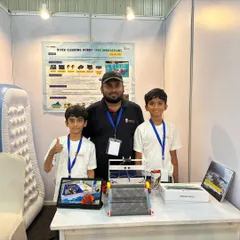
Two students test their creation on a ramp. This is a crucial part of the engineering process: building a prototype, testing its performance, and then going back to make improvements, like making it run faster.
About Projects in Action: Our Young Innovators' Showcase
Walk into our lab and you won't see silent, textbook learning. You’ll see motors running, code being debugged, and kids troubleshooting why their robot won't move. Galti hoti hai—mistakes happen—and that is exactly the point. When your child builds an earthquake simulator or a robotic grabber here, they learn how to fix bugs and iterate designs, just like real engineers. They aren't just watching a demo; they are holding the hardware and making the logic work themselves.
At Genius Labs, we believe that what the hands do, the mind remembers. Our curriculum, designed by IIT and IIM graduates, moves far beyond screen-based theory. Whether it’s a LEGO robotics summer camp or an intensive coding bootcamp in our Sector 98 or Sector 116 centers, the focus remains the same: practical, hands-on creation.
Kids start by asking questions, not just following manuals. For example, in our earthquake simulator module, students don't just build a structure; they research tectonic plates, write Python scripts to vary the shaking intensity, and then test their building designs to see which one stands the longest. It is about understanding the 'why' behind the engineering.
We use premium tools like LEGO SPIKE kits, Arduino, and MacBooks to ensure the kids are working with industry-standard hardware. A typical session involves:
- Conceptualizing: Defining the project goal.
- Building: Constructing the chassis or model using gears, sensors, and motors.
- Programming: Writing the logic to control speed, sensors, and reactions.
- Testing: Running the model, debugging the code, and improving the design.
This process builds grit. When a student builds an AI weather forecaster or an obstacle-avoiding car, they face real constraints like weight, friction, and battery life. Learning to navigate these problems is where the real growth happens. We keep batch sizes small, usually 1:4 or 1:5, so our mentors can guide, not lecture. If you're looking for a place where your child can turn their interest in tech into real-world skills, come by for a session.
Similar work from other experts
Browse through Curated picks from other experts on mytribe
 5
5
Student Robotics Projects and Coding Innovations
 14
14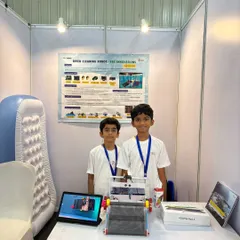
Student Robotics Projects: From Idea to Working Robot
Robotics Projects and STEM Builds for Kids in Delhi
Student Inventions: From Code to Creation
Hands-On Robotics and Coding Projects
Our Young Innovators in Action
More from STEM Workshops & Camps by GeniusLabs
More services by GeniusLabs