Game Development & Animation Coding Workshops for Kids
Why just play games when you can build them? We help kids turn screen time into creation time, teaching them the logic behind every move, jump, and score using Scratch and Python.
A student explains his "jumping game" built in Scratch, where a dog has to jump over buildings. He's learning to code game logic, like setting win conditions and adding sound effects for different actions.
A student is coding a project with two motors, learning to set power levels and rotations. When it doesn't work, I guide him to debug by looking at his coding blocks, a crucial skill for any programmer.
A student is challenged to create the illusion of a square by lighting up only one LED and moving it very quickly. This teaches him about programming with delays and creating visual effects with code.
A student uses a 3D printer pen to create game elements for a bowling game. Then, we move to the coding phase, where he learns to program the motor to strike the pins, connecting his physical creation to a digital action.
A student is learning to code a balloon-popping game, where different colored balloons have different scores. This introduces concepts like variables and conditional logic, which are fundamental to game development.
A student is building an "apple catcher" game in Scratch. He's learning the step-by-step process of coding, from making the apple fall to making the bowl move and disappear the apple upon contact.
This graphic explains why learning Scratch is so valuable. It's a free tool developed by MIT that allows kids to develop games, strengthen their algorithm and critical thinking, and practice coding at home.
From platform games to interactive stories, students can develop a wide range of projects using Python, Scratch, Roblox, and HTML. With guidance from our IIT-IIM faculty, they learn the tools used by professional game developers.
A student works on his "Subway Surfer" style game, adding more types of obstacles. This is part of the iterative process of game design, where we start with a basic concept and continuously add new features and challenges.
A student explains the "animal alarm" prototype he coded. He's learning to use light sensors as triggers and program different light patterns and sounds. Another student is designing his own snake sprite for a classic snake game.
About Code & Create: Game Development & Animation
It is not just about drag-and-drop code blocks. We get kids to think about the algorithm behind the game—why the character jumps, how the score increments, or why an obstacle appears. If a student hits a bug in their 'Jumping Game', we don't fix it for them. We ask them to trace the logic. By the time they finish, they aren't just consumers of digital media; they are the creators who understand the mechanics of what is happening on the screen.
Turning Screen Time into Learning Time
At our innovation center in Noida, we see a lot of kids who love gaming. We simply channel that passion into production. We use Scratch and Python to introduce fundamental programming concepts—loops, conditionals, variables, and coordinate geometry—all through the lens of game design and animation.
How We Teach
We keep our classes hands-on and small (typically 1:4 or 1:5 ratio). Our curriculum, designed by IIT and IIM alumni, focuses on:
- Logic Building: Understanding the 'why' before the 'how'.
- Project-Based Learning: Every student works on real projects, from interactive 'Apple Catcher' games to constellation animations and maze runners.
- Debugging: We treat errors as learning opportunities. When a code breaks, we guide the student to identify the issue, encouraging grit and critical thinking.
Why Choose Our Program?
- Mentorship: You are not just getting a teacher; you are getting guidance from professionals who understand the real-world application of these skills.
- Beyond Theory: We move from the screen to the real world. Many of our game projects interface with physical hardware, like sensors and motors, helping kids bridge the gap between digital code and physical reality.
- Flexible Pathways: Whether your child is a complete beginner or looking to advance their coding skills, we have modules that cater to their specific pace.
We focus on the process. A child who learns to debug their own 'Balloon Math' game today is learning how to approach problems in life tomorrow.
Similar work from other experts
Browse through Curated picks from other experts on mytribe
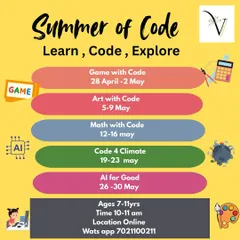
Coding & App Development Classes for Kids
Digital Creators: Fun Coding & Game Design for Kids
Coding & Future Tech Skills for Kids
Student Coding Projects: App Development & Games
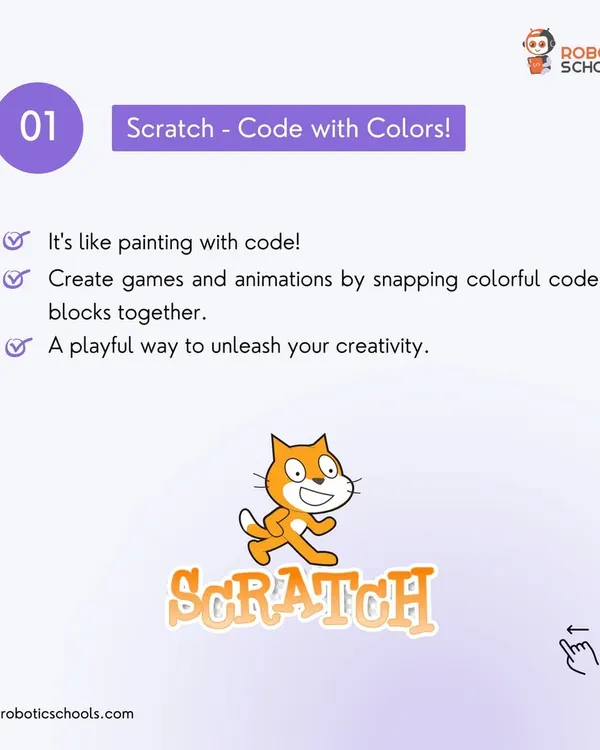 5
5
Coding Classes for Kids: Start Your Coding Journey
AI-Powered Games & Apps Development for Kids
More from STEM Workshops & Camps by GeniusLabs
More services by GeniusLabs