My Coaching Philosophy: Science for the Cricket Pitch
Training isn't just about heavy lifting. It is about bridging the gap between the gym and the field using evidence-based sports science.
In this podcast, I discuss the secret to Virat Kohli's incredible fitness and longevity. It comes down to a disciplined mindset and the willingness to make sacrifices with diet and lifestyle, which is a lesson for every aspiring athlete.
Education never stops. Here I am at a BCCI - ASCA (Australian Strength and Conditioning Association) course, constantly updating my knowledge to bring the latest in sport science to my athletes.
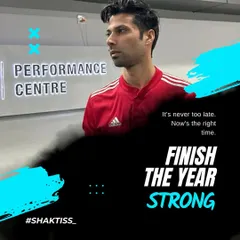
Posing with plyometric boxes at a high-performance coaching course. Investing in my own education ensures that the training programs I design are based on the most current and effective methods.
Another great learning opportunity at the National Cricket Academy. I believe in learning from the best in the field to continuously improve my skills as a strength and conditioning coach.
A throwback to where my strength and conditioning journey began, at Leipzig University in Germany. This experience laid the foundation for my scientific approach to athletic training.
Performing drills on the track at Leipzig University. My international education in sport science gave me a deep understanding of the principles of high-performance training.
About My Coaching Philosophy
My approach is simple: if a drill does not directly improve your hitting velocity or your fielding speed, we do not do it. Whether you are working on rotational power or injury prevention, every session is measured and tracked, ensuring that the work you put in at the gym shows up clearly on the ground.
My coaching philosophy is rooted in one question: how does this movement translate to the cricket pitch?
I treat every athlete as a system that needs specific tuning. My training, which draws on my background in sports science from Leipzig University and my ongoing work with the BCCI and ASCA, is never about random weight lifting. It is about understanding the human body's anatomy, focusing on rotational power, and building a neuro-motor connection that keeps you fast and injury-free.
Why Evidence-Based Training Matters
Many cricketers spend hours in the gym but do not see results on the field. That happens when the training is disconnected from the sport.
- Rotational Power: We focus on the sling systems in the body. I use cable wood chops, medicine ball throws, and landmine rotations to help you generate more force when batting or bowling.
- Neuro-Centric Approach: We do not just train muscles. We train the brain to communicate better with those muscles. This is key for injury prevention and improving your reaction time on the field.
- Performance Testing: I do not guess; I measure. We use speed, power, and agility assessments to prove that the work we are doing is actually making you a better athlete.
It takes discipline. Like I always say, everyone loves butter chicken, but an athlete has to make compromises. That mindset is what separates someone who just trains from someone who actually competes at the top level.
Similar work from other experts
Browse through Curated picks from other experts on mytribe
 18
18
My Own Training Philosophy and Discipline
 8
8
My Coaching Philosophy: Science Over Fads
The Grind: My Coaching Philosophy
The Coach’s Playbook: Sports Science & Performance Insights
 4
4


Cricket Coaching Philosophy and Tactical Team Strategy
 12
12
The Science of Strength & Conditioning
More from Strength & Conditioning for Cricketers by Gaurav Kaushik
More services by Gaurav Kaushik