Wella Color Formulas: Reds, Coppers & Violets
Creating vibrant reds and coppers isn't just about picking a shade; it's about mastering the underlying pigment. Here, I break down the exact Wella formulas, mixing ratios, and techniques you need for consistent, stunning results on every client.
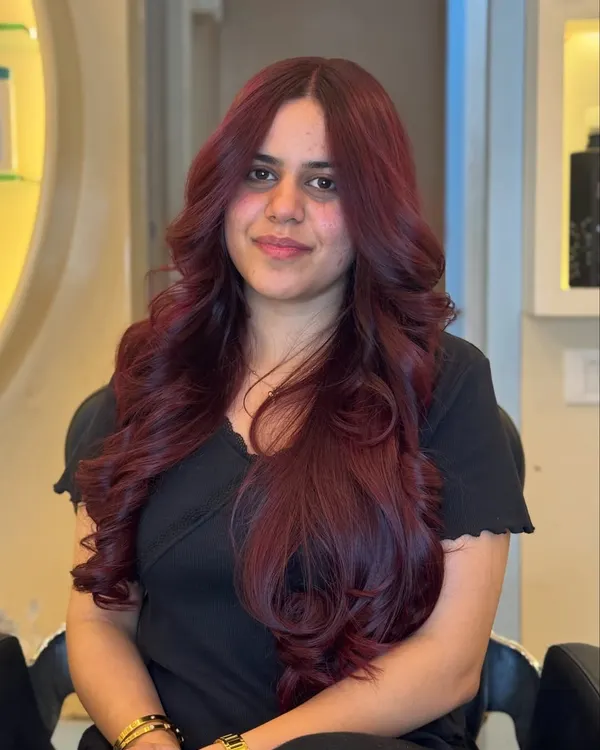
The final result of a rich, velvety Merlot hair color. This blend of deep red, plum, and burgundy tones is bold and sophisticated.
A side view of the Merlot hair, showing how the vibrant red highlights catch the light against the darker base.
Step One for the Merlot hair color. I started with a balayage using Blondorplex to create the right foundation for the red tones.
Step Two is the toning formula using Koleston Perfect. I share the exact shades and ratios needed to achieve this deep red.
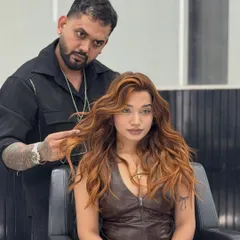
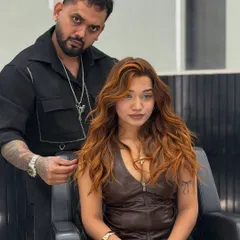
A stunning example of copper hair, which is a fantastic choice for Indian skin tones. The fiery tones add vibrancy and radiance.
A profile shot of the copper balayage, showing the seamless blend from the natural root into the vibrant lengths.
Step One for this copper look. I used Blondorplex to pre-lighten the hair to a pale yellow, creating the perfect canvas.
Step Two is the toning formula. I used different Koleston Perfect mixtures for the roots and lengths to create a natural, dimensional effect.
A beautiful fusion of brown and red tones. This look shows how you can create a custom color story by blending different shades.
The formula for this brown and red look. I used Wella Magma in alternate sections to lift and deposit color in one step.
About Wella Color Formulas: Reds, Coppers & Violets
Getting these tones right is all about controlling the lift before you even open the color tube. If your base isn't pre-lightened to the correct level, that vibrant copper or deep merlot will turn muddy instead of multidimensional. I always start with a proper analysis of porosity, as that decides whether your formula needs a 1:1 or a 1:1.5 mixing ratio.
Why Your Formulas Aren't Working
Many stylists struggle with red and copper tones because they treat them like every other color. But red pigments are notoriously difficult to control—they fade fast and can turn brassy if the foundation isn't set right.
The Golden Rules of Red & Copper:
- Understand Your Canvas: Never guess the lift. I use BlondorPlex to get the hair to the right stage—usually pale yellow for coppers or light orange for deeper reds. If you try to deposit over dark, un-lifted hair, you will never get that vibrant, luminous result.
- Mixing Ratios Matter: In my training, we stop relying on 'guesstimates.' Whether you are using Koleston Perfect or Magma, the ratio of developer to tint determines the longevity of the shade. 1:1 gives you maximum pigment deposit, while 1:1.5 is better for sheerer, glossier finishes.
- The Porosity Factor: A patch test isn't just for safety; it's for performance. High porosity hair will grab too much red, turning it into a dark, muddy violet. I teach you how to adjust your formulas specifically for porous ends versus virgin roots.
The 'Why' Behind the Look
Whether it's a deep Merlot, a bright Copper Balayage, or a subtle Coral Brown, the secret is in the layering. We often use different formulas for the roots and the lengths to maintain dimension and avoid that 'helmet' look.
In my 2-Day Color & Balayage Masterclass, we don't just watch videos. We work on high-quality mannequins to practice these exact formulations, focusing on:
- Neutralizing unwanted undertones before applying the final target shade.
- Creating 'color melt' transitions that look seamless as the hair grows out.
- Using bond builders like WellaPlex to keep the hair healthy despite heavy lifting.
Stop guessing your mixes. Learn the science of Wella color so you can finally achieve the results your clients bring to your chair.
Similar work from other experts
Browse through Curated picks from other experts on mytribe
 53
53
Vibrant Red, Violet & Copper Hair Color Transformations
 5
5
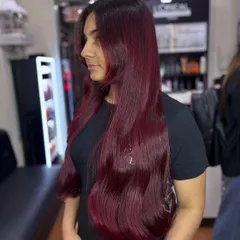
Bold & Vibrant Hair Colors for a Fresh Look
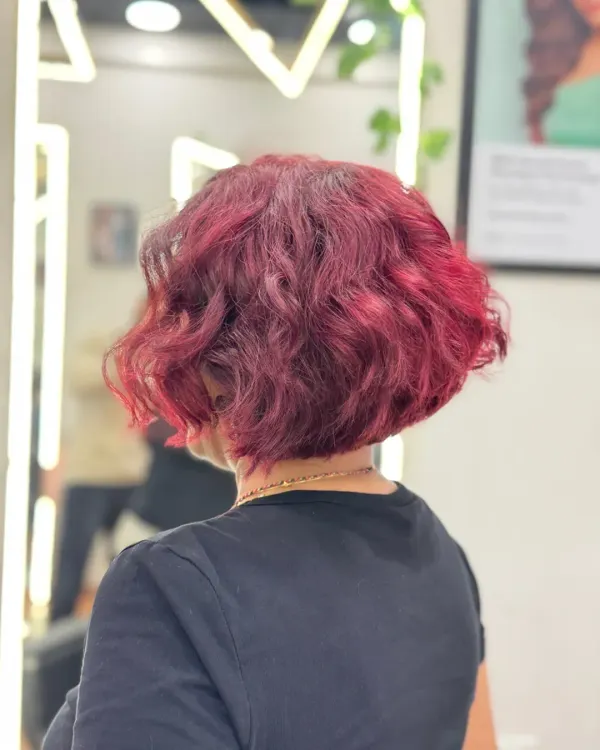 7
7


Vibrant Reds and Wine Hair Color Transformations
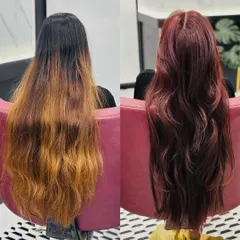

Bold Red and Copper Hair Colour Transformations
Bold Red, Purple, and Burgundy Hair Color Transformations

Bold Reds & Vibrant Coppers: Expert Hair Color in Palghar
More from Professional Hairdressing Education by Gaurav Gupta
More services by Gaurav Gupta