Chemistry and Biology Experiments for Students
We make biology and chemistry tangible by turning abstract school topics into hands-on lab work. See how we help kids understand life and matter through real experiments.
Success! This student is thrilled with his electrolysis experiment, where he used electricity to separate elements in a solution. It's a great hands-on introduction to chemistry.
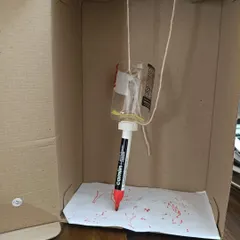
A student carefully uses a syringe to conduct a protein analysis test. This experiment teaches precise measurement and observation skills, just like in a real science lab.
A group of curious students gathered around a table full of beakers and test tubes. They are learning about chemical reactions by watching a live demonstration.
This video shows a variety of our camp activities, including a chemistry segment with colorful reactions happening in a rack of test tubes.
Here, a student is carefully mixing two liquids to observe the chemical reaction. This is how we learn about concepts like density and solutions in a practical way.
A close up of our electrolysis setup. You can see the electrodes submerged in the chemical solution, connected to a battery to start the reaction.
Students gather around to watch a demonstration of the water cycle. They are seeing evaporation and condensation happen right before their eyes in this simple setup.
Before we do the experiment, we break down the theory. This whiteboard drawing explains the key stages of the water cycle: evaporation, condensation, and precipitation.
About Chemistry & Biology Experiments
When we explore chemistry and biology, we move past theory and into practice. Whether it is analyzing protein content in common foods or modeling the water cycle, we teach students to use real laboratory equipment like syringes and beakers. This ensures they master the process of observation and measurement rather than just memorizing definitions.
Why Hands-On Science Matters
Science is often taught as a list of facts to be memorized, but we believe it should be experienced. In our chemistry and biology sessions, students in Bengaluru step away from their textbooks and into a real, experimental space. By interacting with the materials, children develop a deeper connection to the scientific concepts that govern the world around them.
Our Approach to Lab Work
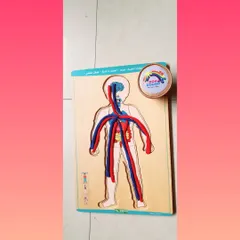
We focus on translating classroom curriculum into physical experiments. For biology, this means creating models to visualize processes like the circulatory system or the water cycle. By building these systems, students understand how variables like temperature, pressure, and biological inputs interact.
In our chemistry sessions, we emphasize safety and accuracy. When working with reactions, we guide students through precise measurements and careful observation. This is not about producing a perfect result but about understanding the why behind a chemical change. We ensure every student understands the 'how' so they can confidently explain the concept during school exams or viva sessions.
Common Topics We Cover:
- Protein Analysis: Using food samples to test for nutrients.
- The Water Cycle: Building models to track evaporation, condensation, and precipitation.
- Electrolysis: Separating elements in a solution using electrical current.
- Biological Systems: Creating functional models to understand anatomy and circulation.
Whether your child needs help with a specific school project or wants to build a curiosity for STEM, we provide the guidance and materials to make it happen. We offer one-on-one sessions and group workshops across Bengaluru to fit your schedule.
Similar work from other experts
Browse through Curated picks from other experts on mytribe
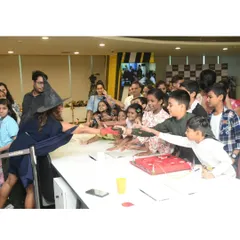
Hands-On Science Experiments for Young Explorers
 89
89
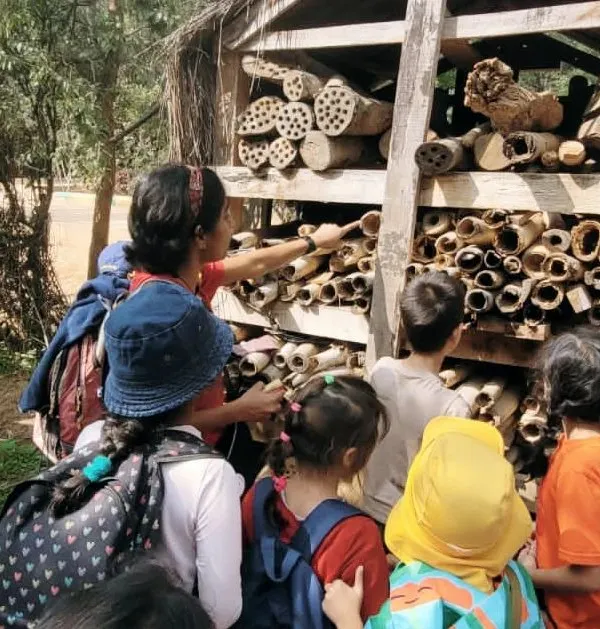
Little Scientists: Hands-On Nature Experiments
Hands-On Science Labs for Kids
Early STEM and Science Fun for Kids
Hands-on Science & STEM Projects
Hands-On Science & Nature Activities for Kids
More from Science Project & Tutoring by Fun in Science
More services by Fun in Science