Your Ultimate Guide to Choosing and Using Sunscreen
Sunscreen isn't just for beach days or summer. It is the single most important daily habit for clear, healthy, and aging-defiant skin. Let’s look at how to get it right.
As a dermatologist, I am obsessed with sunscreen for a reason. Sun exposure causes microscopic damage that leads to premature aging, pigmentation, and other skin disorders. I explain why you need a broad-spectrum sunscreen with a minimum SPF of 30 and how to choose the right formula, whether you have oily or dry skin.
Are you using enough sunscreen? I explain the "teaspoon rule" to ensure you are applying an adequate amount for full protection on your face, neck, and body. Using the two-finger length method for your face is an easy way to measure. Proper application is key to preventing photo damage.
With summer approaching, photo damage from the sun becomes a major concern, leading to skin darkening, photodermatitis, or photoaging. I give a quick reminder on the importance of using sunscreen in adequate amounts and at frequent intervals, along with other forms of sun protection, to keep your skin safe.
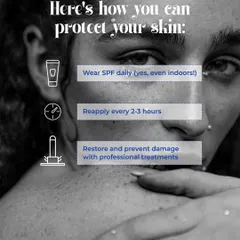
This is my most important message: sunscreen is a must. It is the best tool we have to protect our skin from sun damage every single day, no matter the season. Make it a non-negotiable part of your daily routine.
About The Ultimate Guide to Sunscreen
Most people struggle with consistency, not just application. If you are skipping sunscreen because you think it feels heavy, leaves a white cast, or causes breakouts, you are likely using the wrong formula for your skin type. Whether you have oily or dry skin, I can help you find a non-comedogenic, dermatologically tested option that actually protects you without feeling like a layer of grease on your face.
Why Sunscreen is Non-Negotiable
I see patients daily who think indoor lights don't affect them or that SPF 15 is enough. Both are myths. UVA and UVB radiation penetrate through window glass and bounce off tube lights, causing microscopic damage that leads to pigmentation, uneven skin tone, and premature aging long before you see the visible signs.
The 'Teaspoon Rule' Explained
Most people apply far too little. To get the SPF protection listed on the bottle, you need to use the right amount:
- Face and Neck: Half a teaspoon (roughly the two-finger length method).
- Body: One full teaspoon for each limb and trunk area.
If you aren't using this amount, you aren't getting the protection you paid for.
How to Choose Your Formula
Stop guessing at the pharmacy counter. Your sunscreen needs to match your skin barrier, not just the season:
- For Oily/Acne-Prone Skin: Look for 'gel-based' or 'mattifying' labels. These absorb quickly without clogging pores.
- For Dry/Sensitive Skin: Look for creams or lotions with moisturizing ingredients like ceramides or hyaluronic acid.
- The Baseline: Always look for 'Broad Spectrum' on the label and a minimum SPF of 30. If you are outdoors for long periods, SPF 50 is the gold standard.
Remember, no cream stays on your face for 8 hours. Reapply every 3 to 4 hours, especially if you are sweating or outdoors. If you notice persistent itching, rashes, or new dark spots, it is time to stop guessing and get a proper skin assessment.
Similar work from other experts
Browse through Curated picks from other experts on mytribe
Sunscreen is Non-Negotiable: The Truth About Daily Protection

Sun Protection Guide: Science-Backed Tips for Healthy Skin

Sun Protection Simplified: A Dermatologist's Daily Guide
Sun Protection Guide: Why SPF Is Your Non-Negotiable Daily Routine
Sunscreen School: Your Daily Defense Against Sun Damage
Sunscreen School: Expert Guide for Indian Skin
More from Bridal & Pre-Event Skin Preparation by Elegance Skin Clinic
More services by Elegance Skin Clinic