Your Guide to a Safe & Successful Hair Transplant Repair
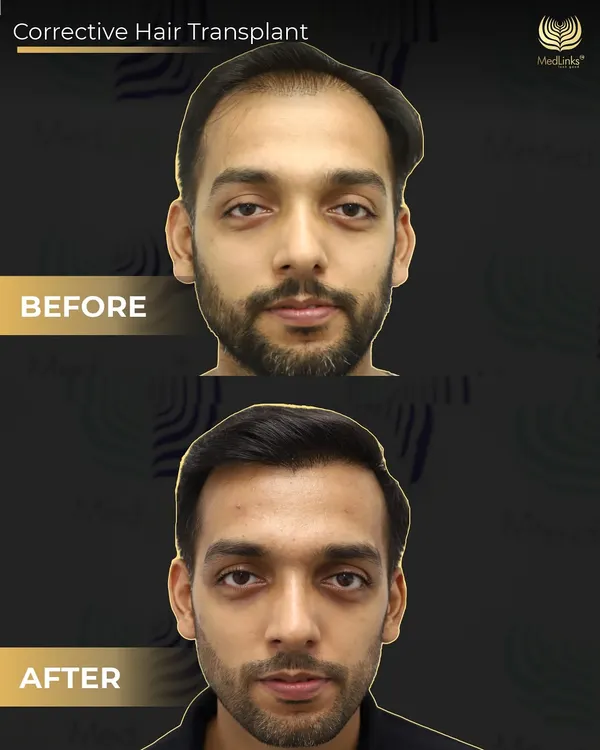
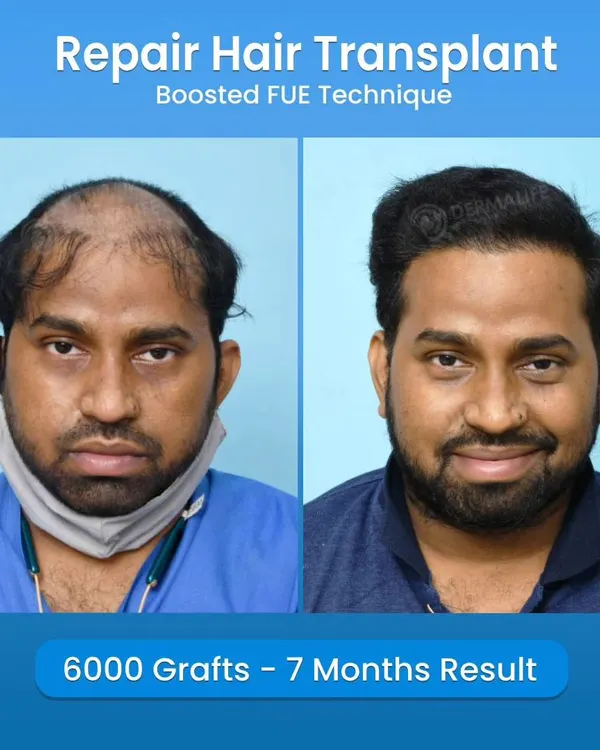
A failed hair transplant is not the end of the road. Whether it is an unnatural hairline, poor density, or wrong hair angles, a corrective procedure can fix it. Here is how we approach repairs safely.
The first step to a successful hair transplant is choosing the right doctor. There is no official degree called "Hair Transplant Surgeon". You must check if the doctor is a qualified Dermatologist or a Plastic Surgeon, as they are the only ones eligible to perform this surgery.
The risk of side effects starts with your choice of doctor. I have seen many people calling themselves hair transplant surgeons after just one or two months of training. Your safety depends on choosing a qualified dermatologist or plastic surgeon who performs transplants regularly.
Choosing a cheap hair transplant often means compromising on the result. A good doctor, trained staff, and quality instruments have a cost. I have spent years studying and perfecting corrective techniques. It is better to save up and go to the right doctor than to risk a bad result.
People often ask about the cost first, but that is not the right approach. First, find a doctor you trust. Check their degree, look at their results, and then have a consultation. Cost should be the last factor. It is better to wait and save than to compromise on your safety and the final outcome.
A hair transplant is a good camouflage, not a magic wand that gives you the hair you had at 18. A "super successful" result is possible with lower grades of hair loss and a good donor area, but for extensive baldness, the goal is to create a good, natural-looking improvement.
How long do transplanted hairs last? This is a common question. The hairs we transplant are taken from an area that is resistant to the hormones that cause male pattern baldness. While they are protected from this main cause of hair loss, they can still be affected by other factors like nutritional deficiencies or disease.
The hair from the back of the head is generally not affected by the hormones that cause baldness. While some studies suggest a minimal effect is possible over a very long time, these hairs are 95% more protected than your frontal hair. This is why they provide a long-lasting result.
Some people think they don't need to take antibiotics if they feel fine after surgery. This is a mistake. We prescribe antibiotics as a preventive measure to avoid the small but serious risk of infection. It is for your own safety, and you must complete the course.
Many gym-goers ask when they can resume their workouts. You should stop heavy exercise and supplements at least a week before surgery. After the transplant, you need to rest for at least two weeks before slowly returning to the gym to ensure proper healing.
You can start wearing a helmet about two weeks after your hair transplant, provided your scalp has healed well. I recommend using a loose, open-face helmet to allow for ventilation and reduce friction on the newly implanted grafts.
About Your Guide to a Safe & Successful Repair
Before you book a repair, understand that we are not just adding hair—we are fixing a previous surgical failure. This requires evaluating your remaining donor area, which is now limited. We will look at your scalp's condition, the severity of the scarring, and whether we need to harvest from your beard or chest to achieve a natural, undetectable result. This is a calculated, multi-step process, not a quick fix.
My 3D Repair Philosophy: Design, Density, and Direction
Most unsuccessful transplants fail because one of three things was ignored: the design of the hairline, the density of the grafts, or the direction in which those hairs were placed. My repair process starts with a thorough diagnosis. I do not just add more hair; I fix the 'doll-head' look and correct the unnatural angles left behind by previous procedures.
Why Corrective Work is Different
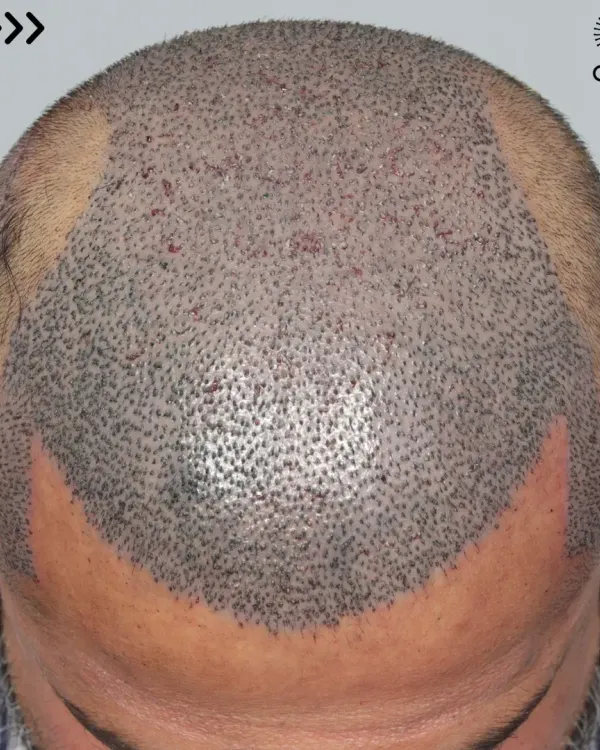
Corrective hair transplant surgery is more complex than a first-time procedure. You have limited donor availability, and I must work around existing scarring or fibrotic tissue.
- Scar Camouflage: I use precision techniques to place grafts directly into old FUE white spots or FUT linear scars to hide them.
- Strategic Harvesting: When scalp donor capacity is depleted, I often utilize beard or chest hair to add necessary volume to the mid-scalp or crown.
- EnRiched-FUE™: This proprietary method allows me to maximize graft survival even in challenging, previously operated tissue.
The Importance of 'Who' Does the Procedure
There is no medical degree for 'Hair Transplant Surgeon'. Do not be fooled by clinics that use this title. A safe surgery is performed by a qualified Dermatologist or Plastic Surgeon who understands the skin anatomy and the long-term biological impact of surgery.
Your Role in Recovery
Healing is part of the treatment. You must follow the post-op care protocol strictly. This means:
- Medication: Completing the full course of prescribed antibiotics to prevent infection.
- Activity: Avoiding heavy gym sessions and supplements for at least two weeks.
- Care: No heavy oiling for 6-8 months, and strictly following the saline mist and shampoo schedule I provide.
Remember, a transplant is a good camouflage, not a magic fix to bring back the hair you had at 18. My goal is for you to walk out with a natural-looking result that nobody, not even your barber, can spot.
Similar work from other experts
Browse through Curated picks from other experts on mytribe
Fixing Failed Hair Transplants in Delhi
 6
6
Corrective Hair Transplants: Fixing Unnatural Results
 4
4Hair Transplant Repair and Correction
 7
7
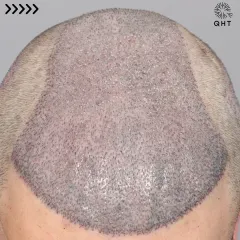
Fixing Failed Hair Transplants: Corrective Solutions
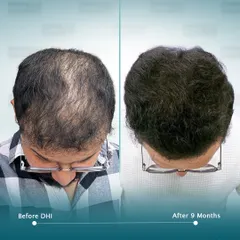
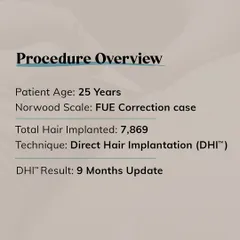
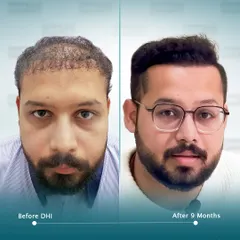
Repairing Failed Hair Transplants with Natural Results
Featured Hair Transplant Transformations & Corrective Cases
More from Hair Transplant Repair by Dr. Jangid
More services by Dr. Jangid