Corrective Hair Transplant: Fixing Failed Procedures
Unhappy with a previous hair transplant? See how I fix unnatural hairlines, poor density, and improper graft angles to restore a natural look.
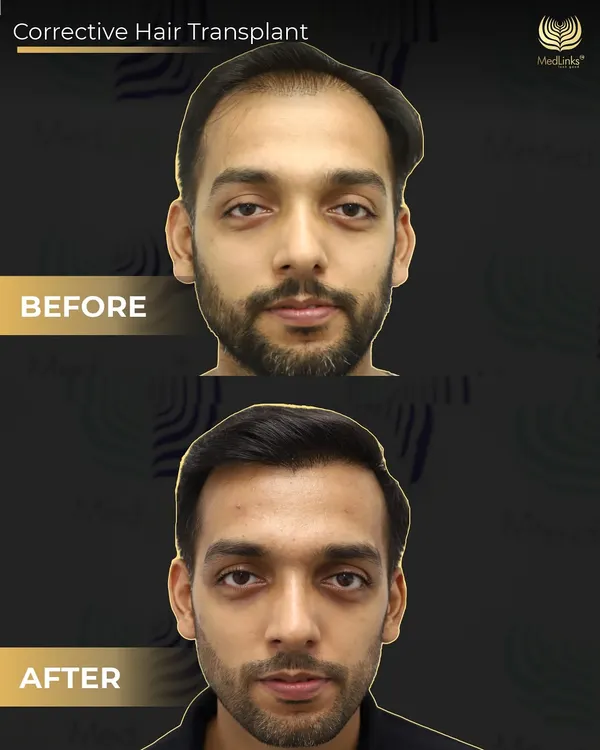
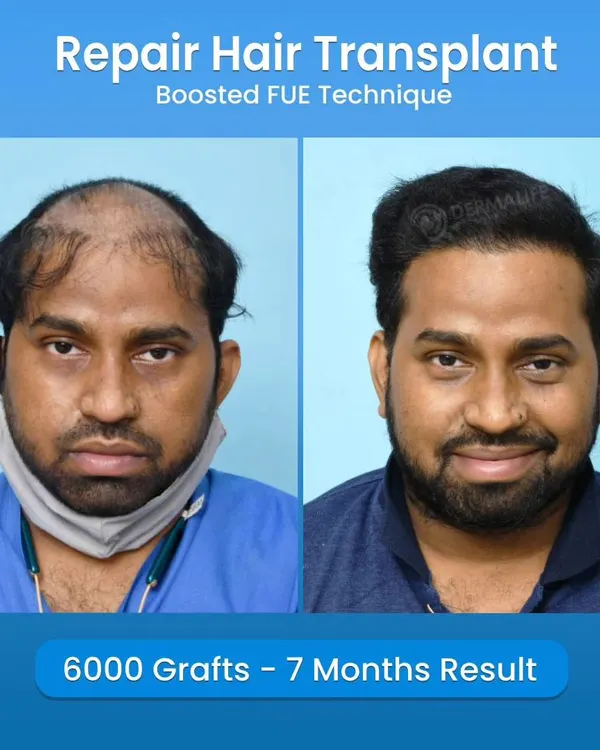
This patient's main concern was his temple hair loss, which was significant for his age. Simply filling the front would have looked like a cap. We had a detailed discussion and decided to reconstruct the temples, which is an advanced part of hair transplantation, to give him a completely natural look.
If you are unhappy with a previous transplant, it is important not to judge the results too early. A corrective procedure can only be planned after the hair has fully grown, which takes about six to eight months. This video provides advice for patients considering a corrective hair transplant.
Hair transplant is not a one-size-fits-all solution. While I publish my results, it is important to understand that every case is unique. A personal consultation is the only way to know what is possible for you, as online videos cannot capture the specifics of your case.
Many people see celebrity hair transplants and want the same results. However, it is crucial not to compare your potential results with others. Factors like your donor area quality and the extent of your hair loss determine the outcome, which is unique to every individual.
Many Indians consider going to Turkey for hair transplants, but often return for corrections. Indian doctors understand the nuances of Indian facial structures and hairline preferences. Staying local also ensures you have access to your doctor for essential follow-up care like PRP or GFC therapy.
I remember a case where a patient came to me with a good frontal transplant but very deep temples. This created an unbalanced look. We performed a temple correction with just 300-350 grafts, and the result was amazing because it brought perfect symmetry to his face.
I recall two memorable cases. One involved a patient who hadn't washed his scalp in two years, and another was a complex corrective case where we had to use hair from the beard, chest, and even thighs to restore hair on the scalp after a failed transplant elsewhere. These cases show the extremes we sometimes see.
Over the last 15 years as a dermatologist and surgeon, I have been involved in more than 5000 hair transplants. While I used to count in the beginning, my focus now is on delivering the best possible result for each person, whether I am involved in 10% or 100% of the procedure.
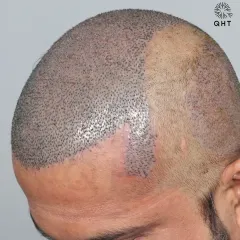
A side profile view of a successful corrective hair transplant after 8 months. We used 3220 grafts with the EnRiched-FUE™ technique to rebuild the hairline and restore density for this 33-year-old patient, correcting a previous unsatisfactory result.
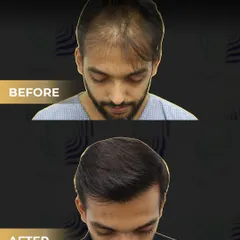
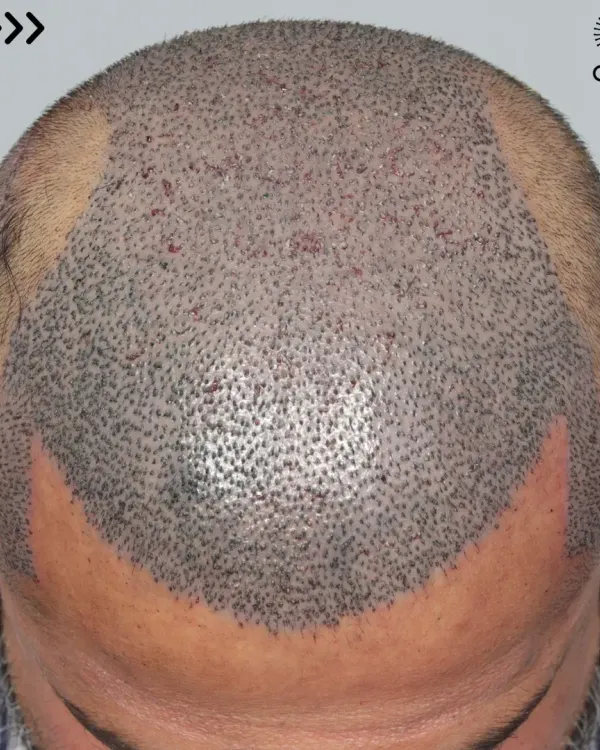
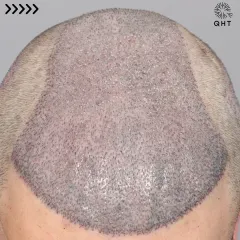
This top-down view shows the significant improvement in coverage and density 8 months after a corrective procedure. The patient, who had Norwood Grade 4 hair loss, now has a much fuller look thanks to the strategic placement of 3220 grafts.
About Corrective Transplant: Real Patient Results
Repairing a past procedure is not just about adding more grafts. It is about understanding why the first one failed—whether it was the hairline design, the graft direction, or poor donor management. Before we even talk about surgery, I evaluate your remaining donor area and scalp condition to see if we can safely improve your coverage. This is not a quick fix, but with a calculated 3D approach, we can often disguise old scars and soften an unnatural hairline to make it look like it was never touched.
Why Past Transplants Fail
Most cases of corrective hair transplant that I see involve one of three issues: an unnatural, straight hairline that looks like a cap, poor density that leaves a 'see-through' effect, or wrong graft angles that stand up like thorns. These aren't just aesthetic issues; they are technical errors in Design, Density, or Direction.
My Approach to Repair
Dekhiye, corrective surgery is more complex than a fresh transplant. You have limited donor hair left, so every graft counts. My goal is never to chase a 'perfect' head of hair that isn't biologically possible, but to create a natural-looking result that works for your specific facial structure and donor supply.
- Redesigning the Hairline: If your previous surgeon created a 'doll-head' look, I re-map the area, often using laser guidance to create a softer, more irregular, and natural transition zone.
- Density & Blending: I use the EnRiched-FUE™ method to add volume, specifically targeting the mid-scalp or crown to blend with the existing, misplaced hair.
- Scar Camouflage: For patients with visible white spots or linear scars from older FUT methods, I implant hair directly into the scar tissue to hide it effectively.
Managing Expectations
Correction is a form of camouflage. It won't give you the thick hair you had at 18, but it can significantly improve how your hair looks today. It is important to wait until the previous work has fully settled—typically 6 to 8 months—before we start planning a repair. This allows us to see exactly where the previous surgeon went wrong and what we need to adjust to give you a natural look that even your barber won't question.
Similar work from other experts
Browse through Curated picks from other experts on mytribe
 6
6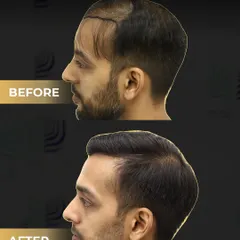
Corrective Hair Transplants: Fixing Unnatural Results
Fixing Failed Hair Transplants in Delhi
 4
4Hair Transplant Repair and Correction
 7
7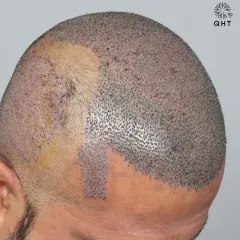
Fixing Failed Hair Transplants: Corrective Solutions
Repairing Failed Hair Transplants with Natural Results
Featured Hair Transplant Transformations & Corrective Cases
More from Hair Transplant Repair by Dr. Jangid
More services by Dr. Jangid