Teaching Kids to Code Through Hands-On Play
We believe coding isn't about staring at screens, it's about learning to think. See how we turn logic puzzles, origami, and floor games into the foundations of real programming.
This is why our hands-on approach works. By engaging in screen-free activities, kids build early tech vocabulary, improve logical thinking, and learn to see problem-solving as a fun and easy game.
What is an algorithm? We explain it as a simple set of steps to get something done. Here, you can see our students learning this core coding concept through a collaborative, hands-on block activity.
Did you know brushing your teeth is an algorithm? We connect coding concepts to everyday life to make them relatable and easy to understand. This helps children see that they already use logical thinking every day.
Learn today, lead tomorrow. This collage captures the focus and joy in our classrooms as students engage in various screen-free activities, from coordinate drawing to logical puzzles, building skills for the future.
Is a camera an input or an output? Watch our students learn the fundamentals of computer hardware using interactive worksheets. Our screen-free methods make complex topics clear and memorable.
Our dedicated teachers are the heart of our program. They guide, inspire, and create a nurturing environment where every child feels empowered to explore, ask questions, and grow their confidence.
Here is a glimpse into one of our sessions, where a student learns through a hands-on activity with guidance from her teacher. We foster a supportive environment that encourages focus and discovery.
A young student maps out a logical path on a whiteboard. We believe coding is a superpower, and we teach kids how to wield it by breaking down problems and designing solutions step-by-step.
From bot programming to card sequencing, this video gives you a quick look at the variety of engaging, screen-free coding activities we offer to build your child's logical thinking skills.
Step 4: Edit it up. This graphic shows a part of our unplugged stop-motion animation project. Here, kids learn about sequencing and logical reasoning as they arrange images to tell a story.
About Learning in Action: Our Hands-On Approach
Before our students ever touch a keyboard, they master algorithms on our floor grid mats. When a child physically sorts cards to solve a maze, they grasp sequencing and loops far better than by simply clicking blocks on a screen. This tactile approach makes the eventual transition to actual Python or Java much smoother because the core logic is already locked in.
Many parents ask us if coding really requires a computer. Our answer is simple: first, it requires a brain. That is why our foundational workshops focus on unplugged activities. Whether we are using origami to teach pattern recognition or baking mug cakes to demonstrate sequential steps, we are teaching the fundamental syntax of thought.
By removing the screen early on, we eliminate the distraction of passive clicking and encourage children to articulate their logic verbally. Our instructors guide small groups of 1-4, ensuring your child learns to decompose complex problems, a skill that applies far beyond computer science. Once this logical base is solid, we introduce Scratch, Python, or Java to build on those skills. This structured path ensures that by the time your child is writing actual code, they understand exactly why their program works or why it bugs out.
Similar work from other experts
Browse through Curated picks from other experts on mytribe
 4
4
STEM, Robotics, and Coding Classes for Kids
Unplugged Coding for Kids: Logic Without Screens
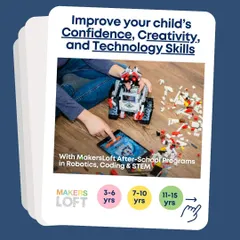
Young Engineers: Hands-on Robotics and Coding Classes
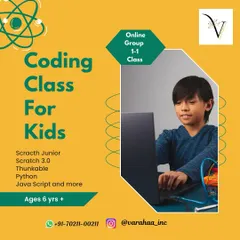
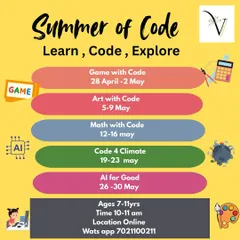
Coding & App Development Classes for Kids
Coding & Future Tech Skills for Kids
Hands-on Coding Classes for Kids and Teens
More from Online Coding Classes for Kids by Code-Riite
More services by Code-Riite