Why We Prioritize Screen-Free Coding for Kids
Coding isn't just about moving blocks on a screen. We teach computational thinking—the logic and problem-solving skills behind the code—using games, puzzles, and offline activities. Your child learns to think like a programmer before they ever write a line of code.
Coding is more than just a technical skill; it’s a powerful tool for personal development. We teach kids perseverance, creativity, teamwork, and the confidence to solve complex problems.
Critical thinking is the ultimate tool. Just as NASA trains astronauts with puzzles before technology, we build your child's problem-solving brain first. This foundational skill is essential because technology can fail, but thinking cannot.
Myth busted: Computational thinking is not just about coding. It's a powerful problem-solving method involving pattern recognition and logical design, skills that are valuable in every aspect of life.
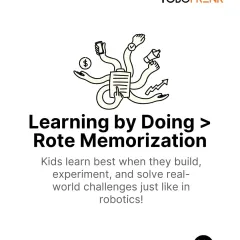
We focus on teaching children how to think, not just what to memorize. This image shows our core belief: true learning happens when kids understand how to solve problems, a skill that lasts a lifetime.
Myth: Coding is too complex for young children. Fact: Kids can start as early as age 5. Our programs are designed to build creativity and problem-solving skills in a fun, age-appropriate way.
You don't have to be a computer scientist to benefit from computational thinking. It's a versatile problem-solving approach that helps anyone analyze and solve complex challenges, no matter their background.
"The role of the teacher is to create the conditions for invention." This quote from Seymour Papert captures our mission perfectly. We don't give kids ready-made answers; we empower them to think, experiment, and invent solutions on their own.
Every great app started as a single idea. We empower your child with the foundational skills of computational thinking and coding, giving them the power to build their own incredible creations from the ground up.
Times have certainly changed. Today's kids are ready to learn the language of the future, and we make it fun and accessible with our unique approach to teaching coding fundamentals.
Think you need to be a math genius to solve a Rubik's Cube? Not at all. It's about learning algorithms and practice, which is a perfect analogy for how we teach coding.
About Our Philosophy: Beyond the Screen
Before your child touches a keyboard, they need the mental models to understand how technology works. In our sessions, kids spend active floor time using physical items—like grid maps and sorting cards—to solve problems manually. This helps them internalize concepts like loops, sequences, and pattern recognition without the distractions of a screen.
Why 'Screen-Free' Matters
Most coding programs have children dragging blocks on a laptop within minutes. We believe that creates 'code-copyers' rather than 'coders.' By removing the screen, we force children to visualize the algorithm. They must plan their steps, explain their logic verbally, and debug their physical 'code' before they ever open an editor.
What is Computational Thinking?
It is the problem-solving methodology that computer scientists use to tackle complex challenges. It involves four pillars that we teach through play:
- Decomposition: Breaking a big problem (like baking a cake or solving a maze) into smaller, manageable steps.
- Pattern Recognition: Spotting similarities within problems to solve them faster.
- Abstraction: Focusing on the important information while ignoring irrelevant details.
- Algorithm Design: Creating a step-by-step list of instructions to reach a goal.
How We Make it Fun
Our workshops for kids aged 5-12 don't feel like a math class. We use origami to teach folding patterns, baking to demonstrate step-by-step sequences, and floor mazes to teach directional logic. This hands-on approach builds confidence. When a child solves a physical puzzle, they realize they have the power to create, not just consume. This foundation makes transitioning to Scratch, Python, or Java much smoother, because they already understand the logic behind the syntax.
Similar work from other experts
Browse through Curated picks from other experts on mytribe
Unplugged Coding for Kids: Logic Without Screens
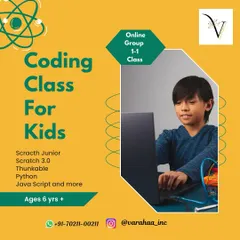
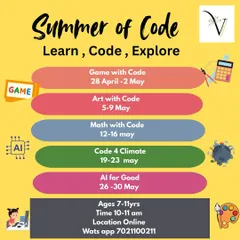
Coding & App Development Classes for Kids
Why Coding is a Superpower for Kids
 4
4
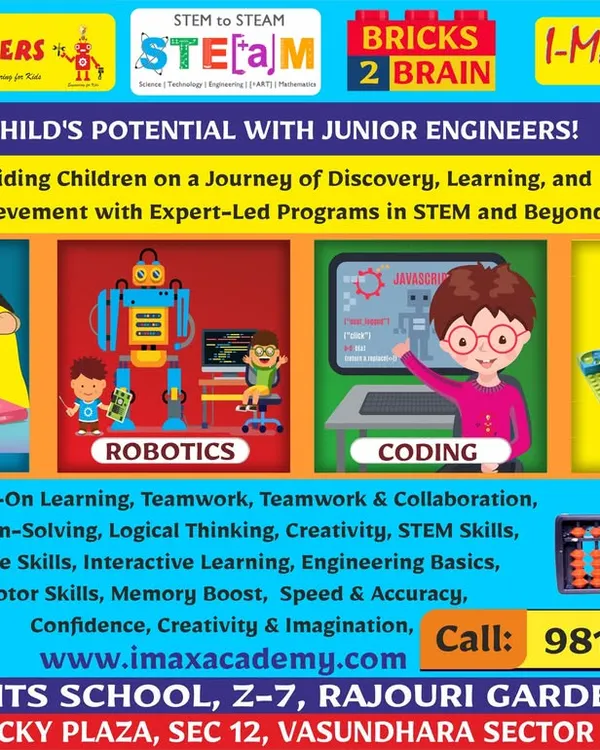
STEM, Robotics, and Coding Classes for Kids
Young Engineers: Hands-on Robotics and Coding Classes
 52
52
Empowering Future-Ready Minds Through Robotics
More from Online Coding Classes for Kids by Code-Riite
More services by Code-Riite