Science-Based Strength & Injury Prevention for Runners
Running is simple, but staying injury-free requires more than just logging miles. My science-backed exercises focus on the Soleus, lateral stability, and core strength—the foundations every runner needs to stay on the road.
Many runners focus on standing calf raises, but the Soleus muscle is just as important for preventing injuries. Here is a simple way to perform seated calf raises, even without a machine, to build strength and avoid issues like shin splints and heel pain.
The Soleus muscle is often neglected by runners, yet its weakness can lead to many injuries. Seated calf raises are the most effective way to strengthen this muscle, helping you build resilience for long-distance running.
Lateral stability is often overlooked but is crucial for injury prevention and efficient running form. I am demonstrating two simple drills you can add to your gym routine to improve side-to-side strength and stability.
A strong and stable core is essential for maintaining good running posture. The hanging L-sit is an excellent bodyweight exercise that builds core strength, stability, and the isometric strength needed to hold your form during long runs.
A stable core allows you to control your arms and legs for better running economy. Here are three simple but effective exercises, including planks and cross crunches, that you can do anywhere to build a strong foundation.
Balance is key not just for improving running performance, but also for maintaining overall fitness and independence as we age. This is an exercise I recommend to all my runners to start working on their balance today.
Good balance is fundamental to running well. In this video, I demonstrate four simple tests you can do at home to check your balance. If you find any of them difficult, it is a sign that you need to incorporate balance work into your training.
Here are two more exercises I use to help runners improve their balance. The first drill involves a dumbbell press while holding a knee-up position, and the second incorporates a dumbbell fly to challenge your stability.
Mastering the push-off is crucial for improving your pace. A powerful push-off increases your stride length and reduces ground contact time. This requires strong calf muscles, so remember to include calf-strengthening exercises in your routine.
To improve your stride and cadence, you first need to build strength and agility. This simple jumping exercise, done in two sets of 40 before a workout, is great for firing up your muscles and improving your running performance.
About Science-Based Strength & Injury Prevention
Many runners struggle with persistent calf strain or heel pain, and often the issue isn't the distance—it's a neglected soleus muscle. While your main calf muscle gets all the attention, the soleus is the workhorse that stabilizes your lower leg through every impact. I recommend adding seated calf raises to your weekly routine; it is one of the most effective, low-effort ways to bulletproof your legs against common running injuries.
Why Strength Training is Non-Negotiable
I tell my runners this often: if you want to run for years, you cannot treat strength training as an optional extra. It is the foundation. My training programs are designed to correct muscle imbalances before they turn into forced time off.
The Science of Staying Injury-Free
My approach focuses on functional, science-based movements. It is not about bulking up in a gym—it is about training your muscles to handle the repetitive, high-impact stress of running. We look at three key pillars:
- Soleus Strength: As demonstrated in my videos, the soleus muscle bears significantly more load than the gastrocnemius. Strengthening this is your primary defense against shin splints and heel pain.
- Lateral Stability: Runners move forward, but we often forget to train for lateral forces. Neglecting side-to-side stability is a leading cause of knee and hip misalignment.
- Core & Cadence: A stable core allows you to control your arms and legs more efficiently. It saves energy and prevents the form breakdown that usually happens during the final kilometers of a race.
My 'Common Sense' Method
I believe in keeping it simple. Whether you are training for your first 10K or an ultra-marathon, your strength routine should be:
- Consistent: Twice a week is plenty if you are consistent.
- Accessible: Most of these exercises can be done with body weight or minimal equipment like a stool and a dumbbell.
- Specific: We focus on drills that translate directly to your running gait—things like lunges, calf raises, and balance work.
Running is for everyone, as I always say, 'Neevu Odabahudu' (you can also run). The goal is to build a body that lets you do it without pain.
Similar work from other experts
Browse through Curated picks from other experts on mytribe
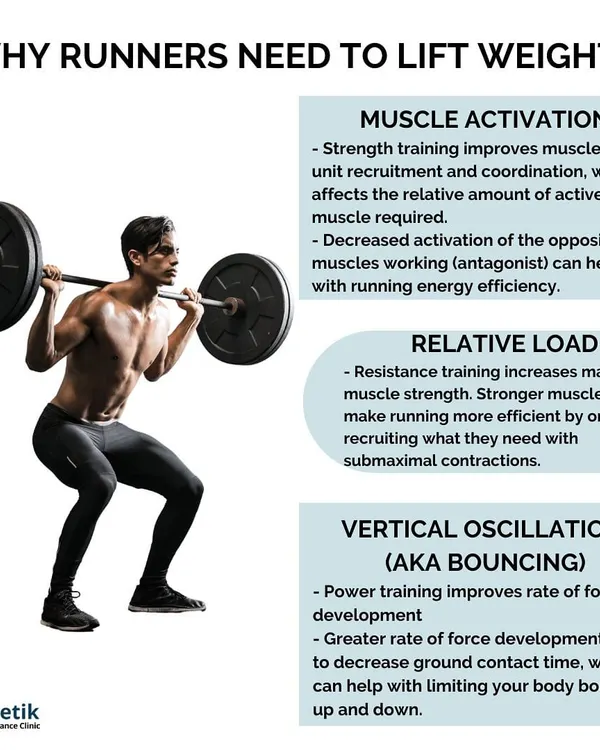
Strength & Conditioning for Runners | Build Power & Prevent Injury
Strength Training for Runners: Build Power & Prevent Injuries
 9
9

Strength & Conditioning for Runners
 7
7


Running Strength, Form, and Injury Prevention
Science-Based Lower Body and Core Strength Training
Strength & Conditioning: The Foundation of Fast Miles
More from Specialized Fitness Bootcamps & Workshops by Pramod Deshpande
More services by Pramod Deshpande