Realistic Pencil Drawing Fundamentals for Beginners
Before you can sketch a portrait, you must learn to see the world in shapes. I teach you the 3D fundamentals that make realism possible, not just a guess.
This is the core of my teaching method. Watch how a simple capsicum is first constructed with basic forms before any shading is applied. Understanding structure is the first step to believable realism.
A demonstration of light and shadow on a cone and sphere. Mastering these basic geometric forms will give you the skills to draw almost anything you can imagine.
A student's practice work from one of my workshops, showing their understanding of how light falls on basic shapes.
Another student's submission, focusing on creating smooth tonal transitions on a cone and sphere using pencil.
A study of a matte sphere. This exercise helps you understand how to create a soft, non-reflective surface texture using only pencil strokes.
A study of a metallic sphere. Here, the focus shifts to creating sharp highlights and reflections to give the illusion of a shiny, polished surface.
A stone sphere study. This drawing combines form shading with texture work to create the appearance of a rough, porous stone surface.
A study of a small ceramic cup. This exercise focuses on capturing the subtle curves and smooth finish of a ceramic object.
A different angle of the ceramic cup study, emphasizing the deep shadow inside the cup to create a sense of volume.
A demonstration drawing of an ear. This complex form is broken down into simpler shapes and shadows, making it easier to understand and draw accurately.
About The Fundamentals: From 3D Shapes to Realism
Most people jump straight into shading, but that is why drawings often look flat. In my classes, we spend time breaking down complex objects like a simple capsicum or a sphere into 3D structures first. If you can draw a box and a ball, you can draw anything. It is about training your eyes to understand volume before your pencil even touches the paper.
Realism is often misunderstood as just 'good shading.' True realism starts with structure. Whether you join my online batch or come to the Kandivli studio, we start from the very basics.
My Approach to Fundamentals
I use a technique I call the '5 Pillar Method' of observation. We do not just copy a photo; we analyze it. You will learn to construct an object on paper, apply light and shadow logic, and build texture layer by layer. It is a slow, methodical process that requires patience, but it removes the guesswork that leads to frustration.
What You Will Learn
- Breaking down objects: We transform complex forms into simple 3D shapes.
- Light and Shadow: Understanding how light hits a surface is what creates the illusion of depth.
- Texture: Whether it is metal, ceramic, or stone, we learn to represent different finishes using only graphite and charcoal.
Join the Classroom
If you are in Mumbai, you can join my in-person Sunday sessions at my studio in Thakur Village, Kandivli. We have small cohorts where I can physically correct your grip and pencil pressure. For those outside the city, my live online classes via Zoom offer the same structured curriculum with real-time feedback. I also provide recordings for every session because I know life gets busy.
Learning to draw is a journey of persistence. You do not need to be perfect from day one, you just need to be willing to start. ।। श्री कृष्ण सदा सहायते ।।
Similar work from other experts
Browse through Curated picks from other experts on mytribe
Drawing and Sketching Classes in Bangalore
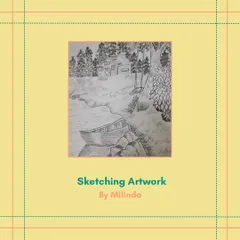
The Art of Sketching
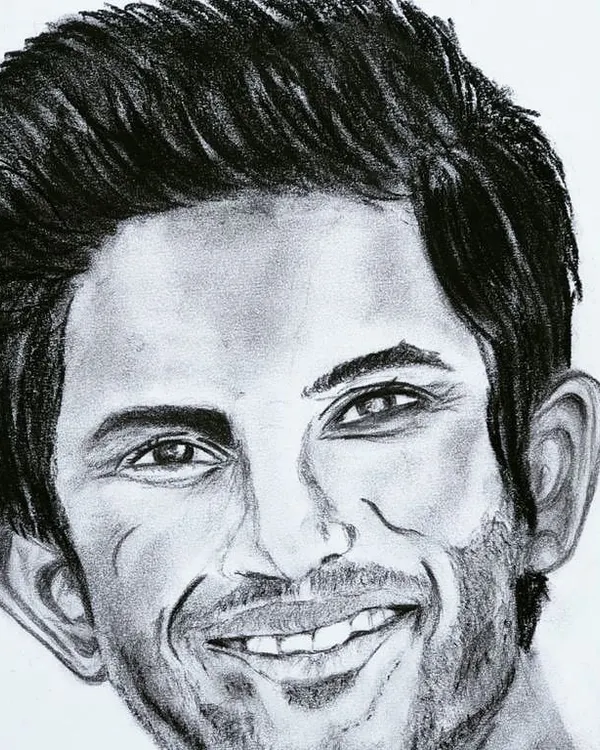 4
4

Pencil & Charcoal Portrait Drawing for Kids
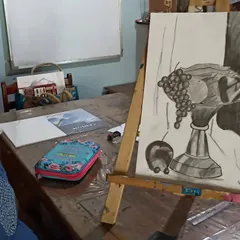
Sketching and Shading Classes in Bengaluru
 42
42Still Life & Diverse Subject Drawing Classes
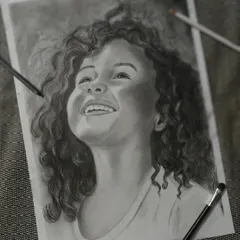
Pencil and Charcoal Drawing Foundations
More from Drawing Classes for Beginners by Komal Thoria
More services by Komal Thoria