Yoga with Props: Deepen Your Asana Practice in Koramangala
Using props is not a shortcut; it is a way to unlock poses and move with integrity. From chair-supported backbends to rope wall inversions, these tools make the practice accessible and safe for everyone, whether you are just starting or refining advanced alignment.
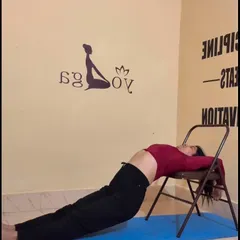
This video demonstrates a supported backbend using a yoga chair. I break down how to safely enter and exit the pose, using the chair to support the spine. This technique allows for a deeper opening of the chest and shoulders than one might achieve without support.
Using a chair for a deep backbend like this variation of Urdhva Dhanurasana provides stability and allows the practitioner to focus on opening the thoracic spine. It's a perfect example of how props can transform and deepen your asana practice.
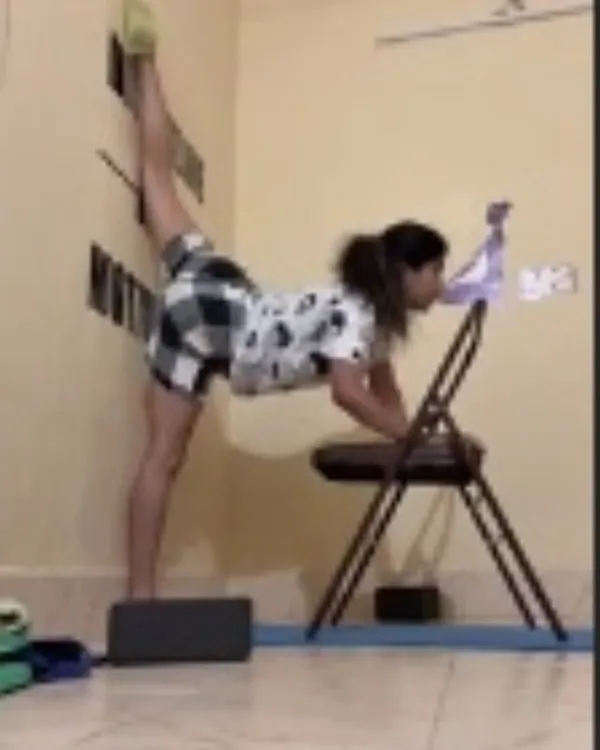
Here, I demonstrate how to use a chair to build strength for Shalabhasana, or Locust Pose. The chair supports the body weight, allowing you to focus on engaging the back muscles and lifting the legs, preparing you for the full, unsupported expression of the pose.
The chair can also be a tool for building arm balance strength. This is a preparation for Mayurasana, or Peacock Pose, where the chair provides a stable base to practice lifting the legs and finding your center of gravity.
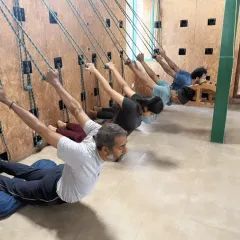
Our students practice Ardha Chandrasana, or Half Moon Pose, using blocks for support and ropes for stability. This setup, inspired by Iyengar yoga, helps maintain alignment and balance, allowing for a fuller and more stable expression of the pose.
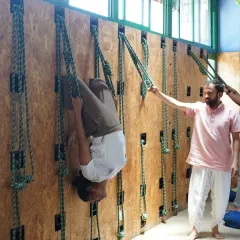
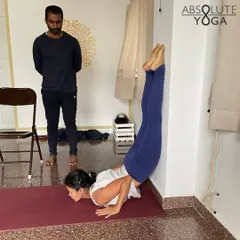
Inversions using the rope wall are a signature part of our practice. This supported version of Sirsasana, or Headstand, helps decompress the spine and improve circulation without putting pressure on the neck, making inversions accessible to more students.
Using blocks under the hands in Urdhva Dhanurasana can help create more space for the shoulders and upper back to open. This modification is excellent for those working on shoulder flexibility and building the strength to press up.
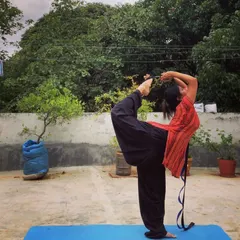
This video shows how a strap can be used to work towards deep backbends. By securing the feet, the strap helps to intensify the stretch in the quadriceps and hip flexors, which is key for poses like this variation of Bhekasana (Frog Pose).
A demonstration of how to use a strap and the wall to deepen a backbend. This supported practice helps to open the shoulders and upper back safely, building the flexibility needed for more advanced postures.
Here I am demonstrating Poorna Bhujangasana, or Full Cobra Pose, with the aid of a strap. The strap helps to draw the feet towards the head, deepening the spinal extension while maintaining control and engagement.
About Yoga with Props: Deepening Your Practice
Think of props as extensions of your own reach. Whether we are using a chair for a stable backbend or the rope wall to decompress your spine, these tools allow you to hold postures longer, find deeper alignment, and move safely without strain. You are not just 'doing' a pose; you are learning how your body should feel in it, which is the foundation of a sustainable practice.
At our Koramangala shala, we do not treat props as crutches. They are, in fact, the keys to unlocking potential. Many students come to me thinking they cannot do a certain pose because of tight hips, weak shoulders, or limited back flexibility. When we introduce a block, a belt, or the rope wall, that frustration often disappears.
We take inspiration from the Iyengar tradition, which emphasizes precision and alignment. Using a chair for backbends like Urdhva Dhanurasana provides the thoracic support you need to open your chest safely. If you have never tried inversions, our rope wall is a game-changer. It takes the pressure off your neck and shoulders, letting you enjoy the benefits of going upside down with complete stability.
For those joining our 200-hour Teacher Training Course, learning to teach with props is non-negotiable. You will learn how to modify poses for students who might have injuries or different body types. It is about making yoga sustainable. You are not forcing your body into a shape; you are inviting it to open up. Practice is everything—once you understand the technique, you can take it anywhere.
Similar work from other experts
Browse through Curated picks from other experts on mytribe
The Art of Alignment: Precision Yoga with Props
 18
18
Yoga with Props: Precision and Safety in Your Practice
Yoga with Props: Precision for Deeper Alignment
 22
22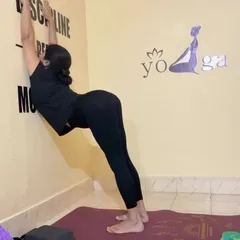
Master Difficult Yoga Poses with Essential Props
Yoga with Props: Accessible Practice for Every Body
Accessible Yoga: Practice with Props and Alignment
More from 200-Hour Yoga Teacher Training Course (TTC) by Nirakula Yoga
More services by Nirakula Yoga