Advanced Asana: Strength & Arm Balances
Arm balances require focus and core stability, not just raw power. I use props and precise alignment to help you build this strength safely, whether you are beginning your journey or refining your practice.
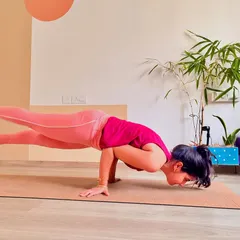
This is a single-hand balance, an asana that requires immense concentration, core stability, and wrist strength. It is a testament to what becomes possible with dedicated and consistent practice.
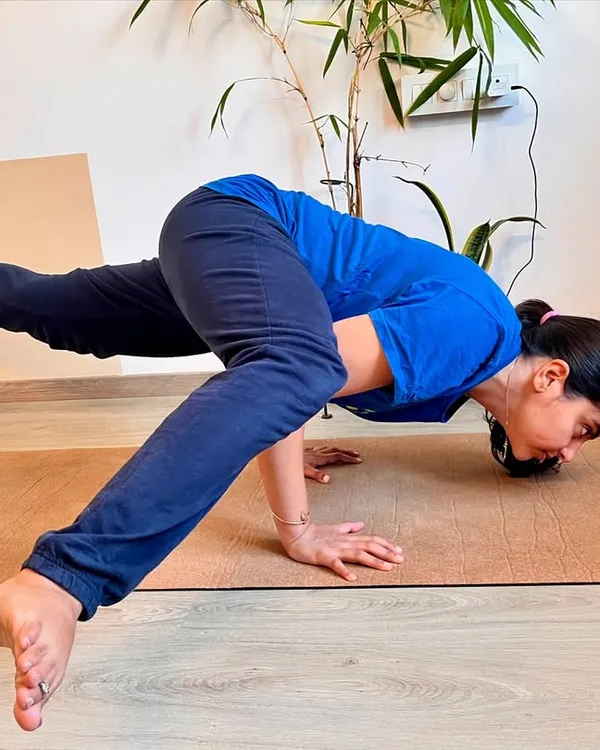
A fluid transition from Tripod Headstand into Eka Pada Bakasana (One-Legged Crow Pose). Sequences like this build control and grace, linking inversions and arm balances together seamlessly.
Chakorasana, an advanced arm balance that combines elements of a leg-behind-head pose and an inversion. This asana challenges balance, strength, and flexibility simultaneously.
"In whatever position one is in... one must find balance." This quote from B.K.S. Iyengar perfectly captures the essence of this complex arm balance, a variation of Astavakrasana.
A dynamic flow into Eka Pada Koundinyasana II from a twisted chair pose. This transition demonstrates how twisting and arm balancing can be powerfully combined.
Another look at the Eka Pada Bakasana transition. This pose is a fantastic way to build unilateral strength and improve your balance and focus.
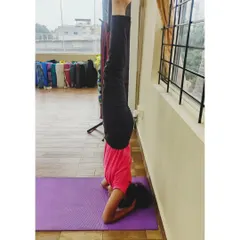
Niralamba Sirsasana, or headstand without the support of the hands. This advanced inversion requires incredible neck and core strength, as well as a deep sense of balance.
Pincha Mayurasana, or Forearm Stand, practiced outdoors. Taking your practice outside adds a new dimension, challenging your balance on uneven surfaces and connecting you with the elements.
Practicing Pincha Mayurasana by the sea. The sound of the waves and the open sky create a powerful backdrop for this invigorating inversion.
"I move, therefore I am." This video shows a creative movement sequence that flows into an arm balance, highlighting the exploratory and dynamic nature of an advanced practice.
About Advanced Asana: Strength & Arm Balances
If you think arm balances are only for the flexible or the already-strong, let me stop you right there. In my Koramangala studio, I use blocks, ropes, and wall support to break these poses down into manageable mechanics. It is not about lifting your feet off the ground on day one; it is about learning how your shoulders engage and where your center of gravity actually lies, so you build the strength to hold these poses without injury.
Arm balances often intimidate practitioners, but they are essentially a study in geometry and awareness. My approach to teaching them centers on alignment and the intelligent use of props, an influence I draw from the Iyengar lineage.
Core Engagement and Safety
It is not just about arm strength; it is about the bandhas (internal locks) and pelvic control. Wrist health and shoulder girdle stability are non-negotiable. I teach how to 'set' your shoulders before attempting any lift to ensure you are protecting your joints while building tension.
Overcoming Common Hurdles
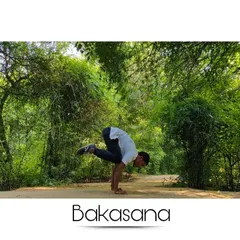
Many people struggle with the fear of falling or persistent wrist pain when starting. We address this by using props like blocks to elevate the floor, which builds confidence before you transition to full-flight poses like Bakasana or Eka Pada Koundinyasana.
My Methodology
Whether you are working on your first Crow pose or refining a single-hand balance, we start with the foundations. I do not believe in jumping into advanced variations without understanding the basic kinetic chain. You will learn to use your breath to stabilize during effort, ensuring that even the most demanding balance feels grounded and controlled.
My 200-hour TTC and workshops in Koramangala focus on this technical breakdown. You learn to teach these poses by understanding the mechanics, not by simply demonstrating them. This is how we progress from static holds to dynamic transitions, bringing the same mindfulness we find on the mat into every movement.
Similar work from other experts
Browse through Curated picks from other experts on mytribe
Mastering Handstands & Arm Balances: Alignment-Based Yoga
Master Advanced Arm Balances & Inversions in Bengaluru
 10
10
Advanced Yoga Practice: Arm Balances & Inversions in Bengaluru
Advanced Yoga: Arm Balances & Inversions
Build Real Strength with Advanced Yoga Poses in Bangalore
Mastering Arm Balances: Strength, Control, and Poise
More from 200-Hour Yoga Teacher Training Course (TTC) by Nirakula Yoga
More services by Nirakula Yoga