Cheque Bounce and Banking Dispute Legal Solutions
Dealing with a bounced cheque or banking issue can be stressful and confusing. I provide practical, no-nonsense legal advice to help you understand your rights under the Negotiable Instruments Act and beyond.
What happens if someone gives you a cheque and then closes their bank account? I clarify that this is treated just like a standard cheque bounce case. You can file a case against them under Section 138 of the Negotiable Instrument Act to recover your dues.
If your bank freezes your account and a cheque you issued bounces as a result, you may not be liable under the NI Act. I explain a Delhi High Court ruling on this matter, which provides a valid defense in cheque bounce cases where the dishonor is due to a frozen account, not insufficient funds.
If your cheque book is lost or stolen and someone forges your signature to withdraw money, the liability often falls on the bank. I explain the Kerala High Court's stance on this, detailing how the bank is responsible for verifying signatures and protecting your account from such fraudulent activity.
Your bank locker has specific rules you need to know. I explain what you can and cannot legally store, such as cash, drugs, or hazardous materials. I also detail the RBI's compensation policy, which entitles you to 100 times the annual locker rent in case of theft, fire, or robbery.
The RBI's ban on Paytm Payments Bank was a major event. I break down the reasons behind it, including non-compliance with KYC norms, linking single PANs to multiple accounts, and allowing transactions beyond permissible limits, which raised concerns about potential money laundering.
About Cheque Bounce & Banking Disputes
If a cheque you issued bounces because your bank account was frozen, you may have a strong defense. According to Delhi High Court rulings, if the dishonor is due to an account freeze rather than insufficient funds, it might not be considered an offense under Section 138 of the Negotiable Instruments Act. However, this doesn't mean you ignore the legal notice; you need to respond effectively to protect yourself from unnecessary litigation.
Understanding Your Legal Standing
Legal trouble with banks can escalate quickly. Whether you are the one holding a bounced cheque or you have received a legal notice, understanding the law is your first step.
Section 138 Cases: The Reality Many people panic when they receive a legal notice for a cheque bounce.
- Account Closure: If a cheque is issued and the account is closed afterwards, it can lead to legal complications. It is vital to know that simply closing the account does not absolve you of liability if the cheque was issued intentionally.
- Forged Signatures: If your cheque book was stolen or lost and someone forged your signature, the bank may be held liable for not verifying the documents correctly. The Kerala High Court has noted that banks must exercise reasonable care in signature verification.
Common Banking Issues I Handle:
- Bank Locker Rules: Did you know that in the event of theft, fire, or robbery in a bank, the bank is liable to pay 100 times the annual rent of the locker? You are protected, provided you are storing legitimate items. Cash and hazardous materials are strictly prohibited.
- Account Freezes & Paytm Bans: With recent RBI actions on payment banks, many users have faced confusion regarding their funds. Understanding KYC compliance and the risks of money laundering is essential for every account holder.
How I Work I don't believe in using jargon to make things sound complicated. My approach is to review your documents, check the merit of your case against current High Court and Supreme Court precedents, and give you a clear roadmap. Whether we need to draft a formal reply or file a criminal complaint, I stick with you through the process, ensuring you are never lost in the legal maze.
Similar work from other experts
Browse through Curated picks from other experts on mytribe
Cheque Bounce: A Practical Legal Guide
Legal Strategy for Cheque Bounce & Financial Disputes
 4
4


Financial Dispute Resolution Services in Delhi NCR
 5
5
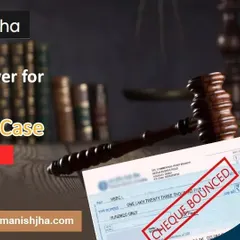
Legal Support for Cheque Bounce and Money Recovery
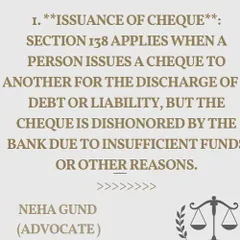
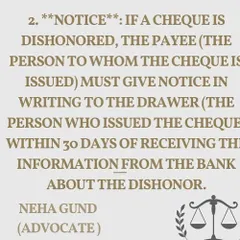
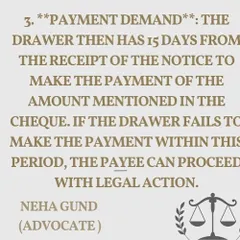
Cheque Bounce Recovery: Legal Steps & Defense
Defending Financial and Business Allegations
More from Civil & Commercial Litigation by Himani Kataria
More services by Himani Kataria