Protecting Your Rights as a Homebuyer and Consumer
Facing builder delays, bank fraud, or deceptive service? You have more power than you think. I help you navigate laws like RERA and the Consumer Protection Act to get real results, not just empty promises.
As a homebuyer, you have significant rights under laws like RERA, the Consumer Protection Act, and even the Insolvency and Bankruptcy Code. In this video, I break down the three main legal avenues you can pursue if a builder delays your project, fails to provide promised amenities, or goes bankrupt. My goal is to help you seek compensation, get a full refund, or initiate insolvency proceedings to protect your investment.
Can a property seller legally forfeit the "bayana" or token money you paid? It depends on whether it was "earnest money" or an "advance payment." I explain the Supreme Court's distinction: earnest money given as a commitment can be forfeited, but an advance payment which is part of the total sale price generally cannot be forfeited without the seller proving actual losses.
Can a company be considered a "consumer" in a real estate dispute? The Supreme Court says yes, if the "dominant purpose" of the purchase was personal. In this video, I discuss a case where a company bought a flat for its director's residence. The court ruled it was a consumer transaction, giving the company protection under the Consumer Protection Act.
Banks and agents sometimes mis-sell insurance policies or even forge signatures to deduct money from your account without consent. This is an unfair trade practice and a deficiency in service. I outline the three-step remedy: file a written complaint with the bank and insurer, escalate to the insurance ombudsman, and if needed, file a case in the consumer court to seek a full refund.
According to RBI circulars, you have zero liability for an unauthorized transaction if it results from the bank's negligence or a third-party data breach, provided you report it within three working days. In this video, I explain the rules that protect you from financial loss due to bank fraud and when the bank is required to refund your money.
Many apps use "dark patterns" like fake countdowns, hidden fees, and pre-selected items to manipulate you into making choices you otherwise wouldn't. I explain how these deceptive designs are prohibited under guidelines from the Central Consumer Protection Authority (CCPA). I help consumers identify these unfair trade practices and take action against companies that use them.
In consumer cases, who has to prove what? I break down the "burden of proof" as clarified by the Supreme Court. Initially, the complainant must prove they are a consumer. Then, the service provider must prove the service was for a commercial purpose. If they do, the burden shifts back to the complainant to show it was for earning their livelihood.
About Protecting Your Rights as a Consumer & Homebuyer
The first step isn't shouting at the builder or bank, it is gathering the right documentation to prove your case. Whether you are dealing with a delayed possession or a misleading insurance policy, your success depends on choosing the correct legal forum. I help you identify whether your issue belongs in RERA, the Consumer Commission, or the NCLT, and ensure your complaint is built on solid evidence rather than just emotion.
Many people reach out to me only after they have already lost significant money or signed a contract they did not fully understand. The law is designed to protect you, but only if you use it correctly.
Knowing Your Legal Avenues
-
Real Estate & RERA: If your builder has missed possession dates, RERA is often the fastest route for refunds or compensation. However, if the company has gone insolvent, we need to file before the NCLT under the IBC. Getting the forum right is half the battle.
-
Bank & Online Frauds: From unauthorized debits to hidden 'dark patterns' on apps, you have specific protections under RBI circulars and CCPA guidelines. You do not have to accept unfair charges just because an app interface made it look normal.
-
The Importance of Evidence: Courts decide on facts, not just feelings. Whether it is proving the 'dominant purpose' of your property purchase or documenting forged signatures on an insurance policy, I help you draft the legal notices and complaints that force the other side to respond.
I focus on practical solutions. Before we file a suit, I analyze your documents to see if we can resolve the matter through a strong legal notice or negotiation. My goal is to save you from years of court visits by ensuring your case is legally bulletproof from day one.
Similar work from other experts
Browse through Curated picks from other experts on mytribe
 7
7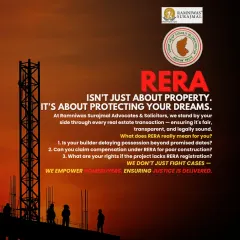
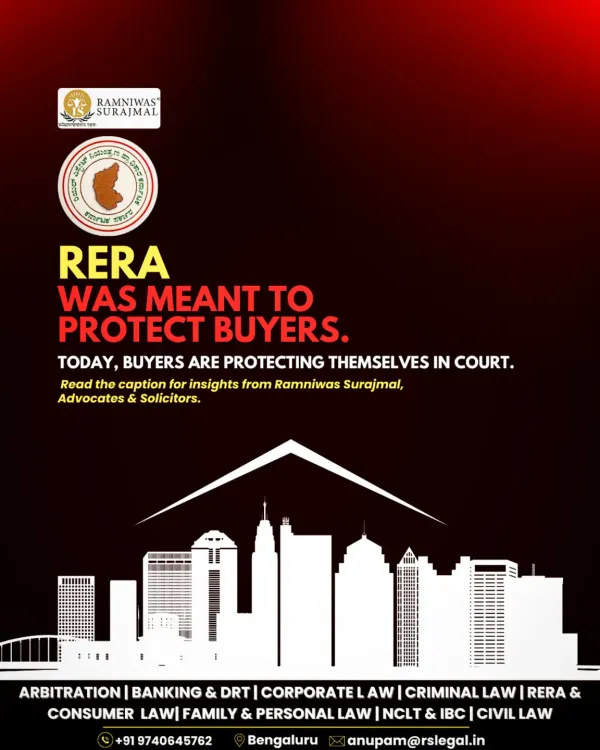
RERA Legal Services & Homebuyer Protection
Holding Builders Accountable: Legal Action for Homebuyers
 4
4


Advocacy and Legal Support for Homebuyers
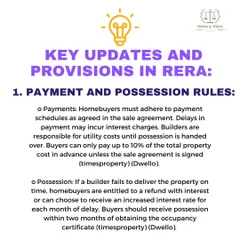
RERA Legal Guidance for Homebuyers
 5
5


Consumer Rights and Dispute Resolution
Legal Guidance for Property Transactions and Disputes
More from Corporate & Commercial Litigation by Abhishek Tiwari
More services by Abhishek Tiwari