Mastering Realism: Behind the Brush
Art is both a final product and a quiet journey. This collection offers a window into my studio, showcasing the foundational sketches and techniques that bring my portraits to life.
A quick time-lapse of an ear painting demonstration from my online watercolor course. The ear is a complex subject that teaches us how to observe light, shadow, and values.
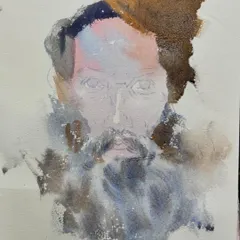
A close-up of an eye painted in watercolor from an online session. Every tiny detail, from the eyelashes to the iris reflections, is a lesson in patience and layering.
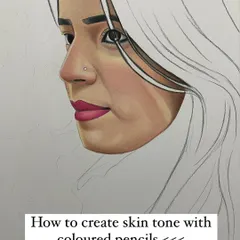
A quick demo from my watercolor course, focusing on painting a nose and lips. The magic here is in the edges: using soft, hard, and lost edges to create realism and depth.
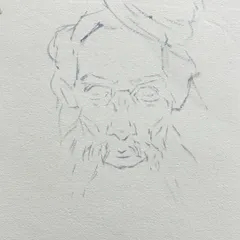
A pencil study from an online workshop, focusing on structure, values, and expressive shading. A strong foundation in drawing is key to great portrait painting.
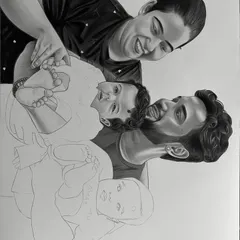
A four-panel grid showing the progression of a graphite portrait sketch. It starts with a basic outline and builds up through layers of shading to a finished, realistic drawing.
A page from my sketchbook, featuring graphite studies of lips and an ear. These anatomical studies are crucial for understanding the form of facial features.
The final painting of the watercolor eye study. This piece is a testament to the power of layering washes to achieve hyper-realism.
A different angle of the watercolor eye, showing the texture of the paper and the subtle color shifts in the skin tones.
The nose and lips demo, shown on my easel. This view gives context to the workspace and the tools used.
The final version of the nose and lips study. The soft transitions and highlights make the skin look soft and realistic.
About Behind the Brush: The Artistic Process
To achieve lifelike realism, I rely on a strict layering process rather than quick fixes. In my watercolor work, I use 300 GSM cotton paper to handle multiple translucent glazes. If you look at my eye studies, the depth comes from building these layers slowly, allowing the paper to provide the light from beneath. This is exactly how I guide my students in my live workshops—teaching them to see values before they worry about color.
Building the Foundation
Before I pick up a brush, I look at the structure. Many students want to start with color immediately, but without a strong graphite study, the painting often lacks depth. In my practice and workshops, we start with monochrome value studies. Whether it is charcoal or a simple grayscale watercolor wash, this step trains the eye to see how light and shadow define a face, not just the lines.
The Role of Technique
Realism is about patience and observation. When I paint a portrait, I am looking for the soft, hard, and lost edges. A hard edge creates focus, while a lost edge lets the form turn away into the shadows. My online workshops are designed around these technical pillars. We work in small groups, painting live so you can see how I mix my pigments and how I manage the water-to-pigment ratio on the paper.
Why Live Feedback Matters
Watching a video is easy, but learning happens when you make a mistake and correct it. That is why I teach live. You paint with me, and you show me your progress. We talk about why a shadow might look 'muddy' or why a highlight looks flat. If you are serious about moving from simple sketches to realistic portraiture, this is where we start.
Similar work from other experts
Browse through Curated picks from other experts on mytribe
Behind the Scenes: The Creative Process
Behind the Brush: An Inside Look at My Creative Process
The Artistic Process: From Sketch to Finish
From Blank Page to Masterpiece: My Creative Process
Studio Work and Artistic Process
Behind the Art: My Creative Process
More from Custom Realistic Artwork by Uday Bhan
More services by Uday Bhan