The Magic of Raku Firing
Experience the unpredictable beauty of fire, smoke, and clay. Raku is a performance where we take glowing, red-hot pieces from the kiln to create one-of-a-kind metallic sheens and crackles.
A Raku workshop in action at a school in Dehradun. Here, a student is carefully removing a glowing hot piece from the kiln with tongs, ready for the next stage of the process.
The critical moment in Raku firing. A piece, still glowing from the heat, is being moved from the kiln. The smoke and steam are all part of the exciting and hands-on experience.
Preparing the reduction chamber for Raku. We use combustible materials like sawdust or newspaper, which ignite when the hot pottery is placed inside, creating a smoky, oxygen-starved atmosphere for the glazes to develop.
A leaf-shaped platter before Raku firing. The veins are carved into the raw clay. At this stage, you can only imagine the colors that the fire and smoke will create.
The moment of transformation. A Raku-fired leaf, glowing with an iridescent sheen, is quenched in water. This rapid cooling helps set the colors and crackle patterns.
The final result of a Raku-fired leaf platter. The glazes have produced a stunning mix of metallic greens, blues, and coppers. The result is always a beautiful surprise.
A Raku-fired bowl from one of my workshops. The participant's carved textures are highlighted by the metallic and crackled glaze effects, creating a piece that is truly unique.
A participant holding their finished Raku piece. The smoky, carbon-blackened clay contrasts beautifully with the white crackle glaze, a signature look of the Raku technique.
A textured pot after Raku firing. The unglazed clay body has absorbed the smoke, turning it a deep, matte black, while the carved lines add a beautiful tactile quality.
A stunning Raku-fired wall piece made by a workshop participant. The white crackle glaze and pierced holes create a dramatic effect against the carbon-blackened clay.
About The Magic of Raku Firing
When you pull a piece out of the kiln at red-hot temperatures, the clay is still alive. We plunge it immediately into a reduction chamber filled with sawdust or newspaper. The oxygen-starved atmosphere forces the glaze to react, creating those signature metallic sheens and crackles. It is a terrifying, beautiful moment of chaos, and that is the specific thrill of every Raku firing we do here.
Raku firing is less about control and more about collaboration with the elements. Unlike standard stoneware firing where everything is predictable and measured, Raku is an exercise in letting go. In my Jonapur studio, we use this technique not for everyday dinnerware, but for pieces that need to hold a certain energy—vases, sculptural wall art, or one-off decorative objects.
Why Raku?
The thermal shock of moving clay from a 1000°C kiln to an open-air reduction bin creates a porous body and a unique aesthetic. The smoke penetrates the unglazed areas of the clay, turning it a deep, matte black, while the glaze captures the flash of the fire. Every piece that comes out is different, even if they were fired together. This is why I love it—you cannot replicate the result in a factory.
The Workshop Experience
Many people visit my studio specifically to learn this. Raku is the most hands-on pottery class you can take. We do not just watch; we actively manage the fire. Participants get to handle the tongs, move the red-hot pieces, and scrub away the soot to reveal the colors hidden underneath. It is messy, exciting, and usually leaves everyone covered in a little bit of ash. If you are in Delhi and want to try something that feels less like a class and more like an art experiment, this is it. We handle all safety protocols, so you just need to bring your curiosity.
Similar work from other experts
Browse through Curated picks from other experts on mytribe
The Magic and Mess of Finishing Your Pottery
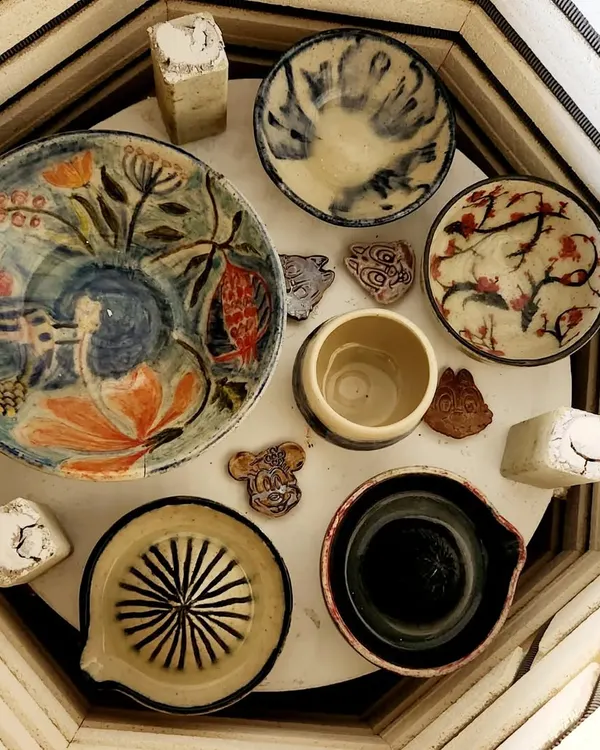 10
10From Clay to Kiln: The Final Masterpieces
Earthy and Elemental Pit-Fired Pottery
Master Pottery Glazing & Surface Decoration
The Potter’s Process: A Behind-the-Scenes Look
Behind the Scenes of Handmade Pottery
More from Custom Pottery Creation by The Potter's Life
More services by The Potter's Life