Shotokan Karate Belt Grading & Student Achievements
Witness the dedication of our students as they progress through the ranks of Asai-ryu Shotokan Karate, building strength, discipline, and community spirit across our Mumbai branches.
A fantastic group photo from our belt and certificate distribution at the Virar branch. It is wonderful to see such a large and enthusiastic community of students of all ages training with us.
A group of my senior students at the Virar branch, proudly displaying their certificates. These black and purple belt holders are role models for our newer members.
Students who have just earned their green belts at our Virar dojo. This is a testament to their consistent training and focus on improving their karate skills.
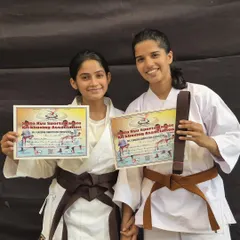
A proud moment for these brown and black belt students at our Virar branch. Reaching these advanced levels requires years of dedication, discipline, and a true warrior spirit.
A group of our youngest members at the Virar branch celebrating their new yellow belts. Their journey in Asai-ryu Shotokan Karate is just beginning, and I am excited to guide them.
Some of our beginner students at the Virar branch, all in their white gis. This is where every karate journey starts, with learning the first basic stances and punches.
These students have just received their orange belts at the Virar branch. They are building a strong foundation in the fundamentals of Shotokan Karate.
A mixed group of students from our Virar dojo, from white belts to black belts. This photo represents the supportive, family-like atmosphere where everyone trains and grows together.
A collage celebrating our students who have earned their orange belts. Each picture captures the pride and sense of accomplishment that comes with advancing to a new rank.
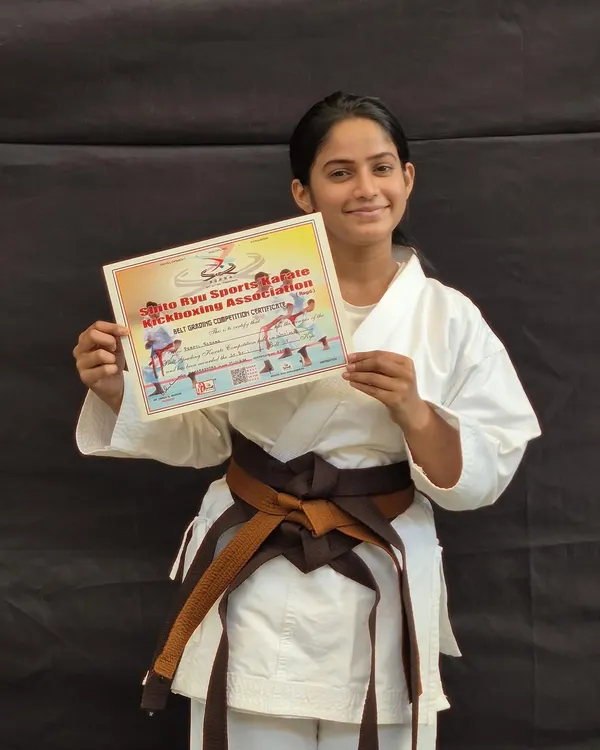
This collage showcases our students who have achieved the rank of brown belt. This is an advanced level that demonstrates a deep commitment to the art of karate.
About Our Students' Journey: Belts & Achievements
Every belt promotion here is earned through consistent effort, not just attendance. Students don't just receive a new color; they are required to demonstrate Kihon basics, precise Kata forms, and Kumite control before being approved for advancement. This ensures that every student who wears a belt truly understands the progression and technique behind it.
Our Belt Grading Philosophy
At AISKF, we view grading not as a test of speed, but as a measure of character and technical maturity. Whether a student is moving from white belt to orange, or pushing toward black belt, they must show they have internalized the Asai-ryu Shotokan principles I learned from Shihan Kousaku Yokota.
The Path to Advancement
Our training focuses on three core pillars:
- Kihon (Basics): The foundation of every stance and strike. Without strong basics, progress is impossible.
- Kata (Forms): This develops rhythm, focus, and body control. It is how we teach students to think as much as they move.
- Kumite (Sparring): We practice controlled combat to teach reaction and distance, ensuring students can apply what they learn in a practical, safe environment.
More Than a Dojo
From our Virar branches to our classes in Borivali and Kandivali, we maintain a standard where students support each other. You will often see seniors helping juniors refine their blocks or perfect their stances. This isn't a competitive environment where students tear each other down; it is a collaborative space where everyone is focused on their own improvement, guided by the discipline of the warrior spirit. If you are ready to sweat, learn, and grow with us, come visit a class and see the energy for yourself.
Similar work from other experts
Browse through Curated picks from other experts on mytribe
 38
38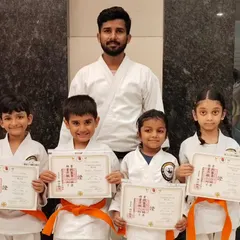


Shotokan Karate Belt Grading and Certification
 14
14
Karate Belt Exams and Martial Arts Progression
 8
8

Official Karate Belt Grading and Certification
Karate Belt Graduations and Progression
The Path to Shodan: Celebrating Every Milestone
 11
11
Karate Training, Technique & Belt Gradings
More from Shotokan Karate Training by Amit Khatri
More services by Amit Khatri