Mastering Core Motorcycle Riding Techniques
Break down complex riding physics into simple, actionable steps. Whether you are on the street or the track, learn how to refine your braking, cornering, and body position with techniques from National Champions.
Why do I teach you to squeeze the brake, not grab it? It's all about physics. A smooth, progressive squeeze allows the suspension to settle and the tire to grip the road, giving you maximum control and stopping power.
For street riding, I recommend using one or two fingers on the brake, not four. This allows you to maintain a secure grip on the handlebar. The technique is a small pull to set the suspension, then a progressive squeeze.
When touring, your braking is less aggressive than on the street. I teach you to rely more on your front brake, applying about 30-40% initially and then squeezing as needed, using the rear brake mainly for stabilization.
On the track, braking is a different game. First, turn off the ABS. I teach you to apply 60% of the front brake initially and squeeze to 100%, while the rear brake is used only to stabilize the motorcycle, not to stop it.
Our braking drills are designed to build your trust in the tires and help you understand the motorcycle's limits. We also focus on unlearning bad habits, like locking the rear brake or not closing the throttle completely.
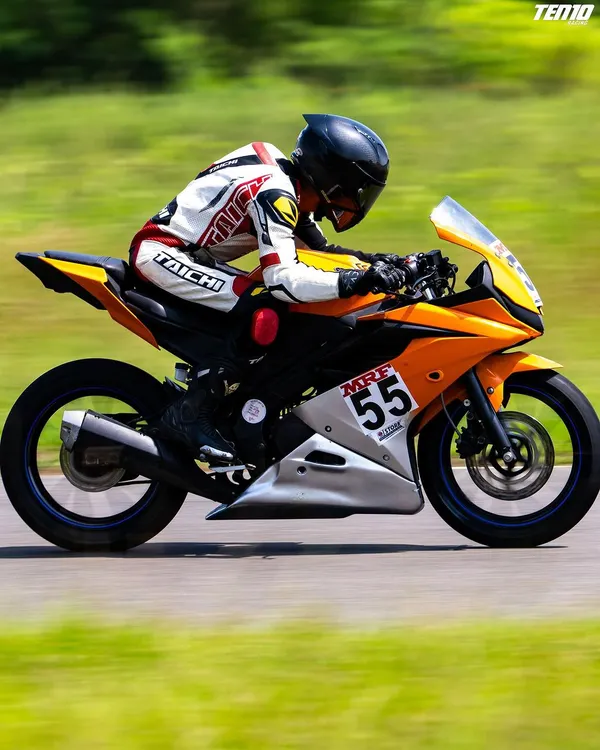
Feeling exhausted after just a few laps? You might be holding the handlebars too tight. I teach you to grip the tank with your legs and keep your upper body relaxed, using counter-steering for inputs instead of muscling the bike around.
Correct foot position is crucial for control and safety. I'll show you why placing the ball of your foot on the peg is essential on the track, and how to adjust for street riding to avoid accidentally dragging your toe or engaging the rear brake.
How do you know which gear to be in on the track? I teach you to stay in the top 30% of your bike's RPM range. If you're hitting the rev limiter, you're in too low a gear. If the RPMs are too low, you're in too high a gear.
Why can't you go full throttle everywhere? It's about understanding the limits of the bike and your own comfort zone. My approach is to add skills that expand your comfort zone gradually, so speed becomes a natural byproduct of confidence.
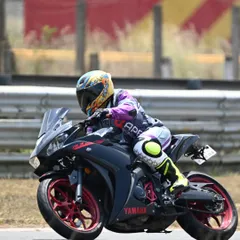
This is our counter-steering drill in action. It's a fundamental skill that might feel counterintuitive at first, but it's the key to stable and effortless turning, especially at speed.
About Core Riding Techniques Explained
Most riders grab the brake, which upsets the suspension and ruins your entry. I teach a two-step process: pull slightly to set the suspension, then squeeze to build traction. It works on the street and on the track because it gives your tires time to grip before you ask for maximum stopping power.
Braking: The Two-Step Approach
Your brake is not an on-off switch. It is a gradient. On the track, we turn off ABS and practice applying 60% of the front brake initially, then squeezing to 100%. This allows the suspension to settle. On the street, use two fingers to maintain a secure grip on the handlebar while applying a small 20% pull to set the suspension before you squeeze. Avoid locking the rear brake, as this often leads to instability.
Cornering & Counter-steering
Many riders try to steer the bike by muscling the handlebars. That is the wrong way. To initiate a turn, we use counter-steering: push the handlebar slightly in the opposite direction of the turn. It feels counterintuitive, but it is the fastest way to get the bike to lean and stay stable at speed.
Body Positioning & Vision
If your arms feel tense or your heart rate spikes after a few laps, you are holding the bars too tight. Use your legs to hug the tank and keep your upper body free. This reduces fatigue and gives you better steering input.
Regarding vision, don't just stare far ahead. At 100 km/h, your eyes need to scan the track dynamically. Look at your entry, your apex, and your exit points in rapid succession. If you stare at one point too long, you will fall behind your bike's pace. We drill these movements until they become muscle memory.
Why Practice Matters
We focus on these fundamentals because they define safety. Whether you are touring, commuting in Bengaluru, or competing in the INMRC, these skills allow you to understand the limits of your motorcycle and expand your comfort zone safely.
Similar work from other experts
Browse through Curated picks from other experts on mytribe
 12
12
Mastering Motorcycle Cornering Techniques on Track
Professional Motorcycle Track Riding Coaching
Master Your Spin Technique and Riding Power
 8
8
Professional Karting Training & Race Team Management
 69
69
2-Day Royal Enfield Beginner's Camp
 12
12
Getting Started: Your First Rides in Mumbai
More from Motorcycle Track Riding School by PRN Motorsport
More services by PRN Motorsport