Navigating Insolvency and NCLT Proceedings for Homebuyers
When a developer enters insolvency, your investment is at immediate risk. I specialize in representing homebuyers before the National Company Law Tribunal to secure your rights under the Insolvency and Bankruptcy Code.
This graphic serves as an urgent alert for homebuyers affected by a developer's insolvency, as was the case with Supertech. My office acts swiftly to help clients file the necessary claim forms with the appointed Insolvency Resolution Professional (IRP).
I encourage my team to analyze and understand major legal precedents. This write-up by one of our interns details the specifics of the Supertech insolvency case, a landmark event for the NCR real estate market that impacted over 25,000 homebuyers.
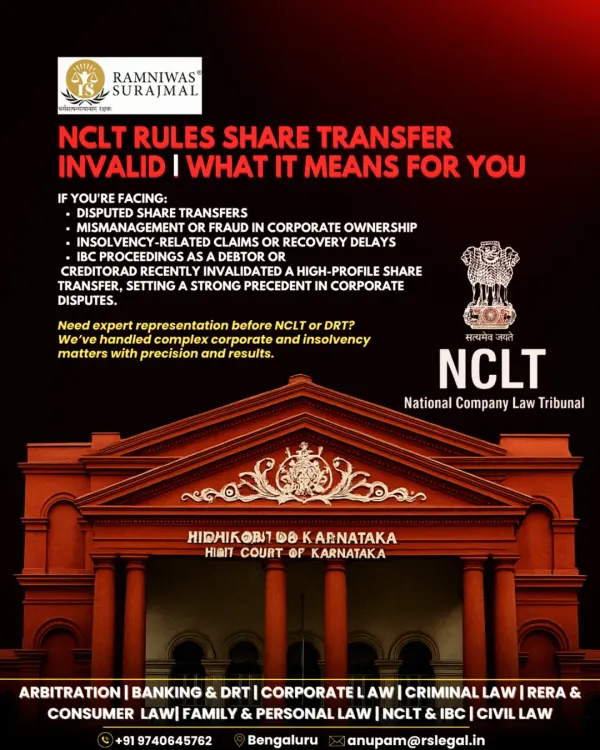
The legal landscape of the IBC is constantly evolving. I provide clients with critical updates, such as this NCLT Jaipur Bench ruling, which clarifies how the threshold for default is calculated for homebuyers filing as financial creditors.
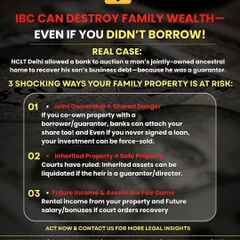
My practice is deeply involved in the nuances of the Insolvency and Bankruptcy Code. I actively advocate for reforms to ensure homebuyers and other operational creditors receive fair treatment during corporate restructuring processes.
About Navigating Insolvency & NCLT
The most critical step when a developer is declared insolvent is the timely submission of your claim. Do not wait for the developer or the Insolvency Resolution Professional to contact you. You must proactively file your claim using Form CA with the IRP as soon as the NCLT admits the insolvency petition. This filing establishes your standing as a Financial Creditor and ensures you are included in the distribution of assets, should the project undergo liquidation or a resolution plan.
Understanding Your Rights Under the IBC
The landscape of the Insolvency and Bankruptcy Code (IBC) shifted significantly for homebuyers after being formally recognized as Financial Creditors. However, this recognition does not automatically guarantee a refund or possession. The process is complex, involving strict adherence to timelines and documentation.
The NCLT Process
Once the NCLT initiates Corporate Insolvency Resolution Process (CIRP), a moratorium is imposed, effectively freezing the developer's ability to divert funds or assets. My role is to navigate this window to protect your interests. This involves:
- Claim Verification: Ensuring your payment records, allotment letters, and buyer agreements are legally sound to maximize the weight of your claim.
- Committee of Creditors (CoC) Representation: If a significant number of homebuyers unite, we can assert influence within the CoC to advocate for a resolution plan that prioritizes project completion over liquidation.
- Monitoring IRP Actions: We keep a close watch on the actions of the appointed IRP to ensure transparency and prevent asset stripping.
Why Documentation Matters
Even in bankruptcy proceedings, your claim's validity rests on the paper trail. We rigorously audit your property documents, including the Builder-Buyer Agreement, payment receipts, and any correspondence regarding possession delays. This preparation is essential when challenging the developer or negotiating with an incoming resolution applicant. If you are part of a project facing insolvency, do not assume your silence will protect your interests. Proactive legal representation is the only mechanism to safeguard your capital.
Similar work from other experts
Browse through Curated picks from other experts on mytribe
 37
37

Navigating IBC and NCLT Insolvency Proceedings
Your Guide to Legal Action Against Builders
Legal Help for Insolvency, Bankruptcy & Loan Recovery

Insolvency and Bankruptcy Law Litigation
 5
5


NCLT and Company Law Legal Representation in Delhi
 4
4


Landmark Insolvency Litigation & Client Victories
More from Real Estate Law for Homebuyers by Pranav Gupta
More services by Pranav Gupta