Building Fine Motor Skills Through Play
From pincer grip practice to hand-eye coordination, see how we turn everyday play into the foundation for your child's learning and growth.
This "Feed the Chicken" activity is a fun way to develop the pincer grip, a crucial pre-writing skill. Using tongs to pick up pom-poms and "feed" the chicken helps children coordinate their thumb and index finger without even realizing they're learning.
The hands and feet challenge is a fantastic workout for the brain and body. By matching their hands and feet to prints on the floor, children develop gross motor skills, balance, spatial awareness, and motor planning.
Who knew pulling "noodles" made of yarn could be such great practice? This noodle-pulling activity helps children develop fine motor coordination and concentration as they use both hands to roll up the yarn.
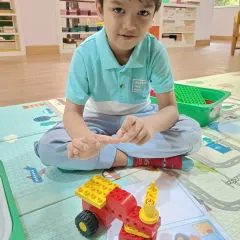
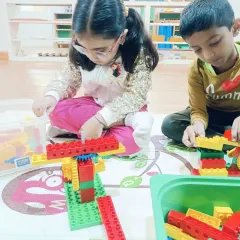
It may look like just playing with blocks, but this activity is packed with learning. Children build habitats for animals, learning about shapes, sizes, and concepts like height and volume, all while refining their fine motor skills and creative thinking.
We make learning numbers an active game. Here, children jump through a number path on the floor and then match number cards. This activity combines gross motor movement with number recognition and sequencing, proving that learning can be full of energy.
Crafting bird nests and going on a bird-watching adventure. This activity combines fine motor skills in building the nest with the joy of discovery, connecting children to the nature around them.
About Little Hands, Big Skills
When your child uses tongs to 'feed' a chicken jar or rolls yarn to make 'noodles', they are not just playing. They are actively training their pincer grip, which is the exact muscle coordination they need to hold a pencil later on. We turn these developmental goals into simple, engaging moments so your child builds strength and focus without even realizing they are learning.
At Openhouse, we focus on purposeful play. It is not enough for a child to be busy; we want them to be challenged in ways that match their current developmental stage. Fine motor skills are the foundation for future success, and we help children build them through activities that feel like an adventure.
Why Fine Motor Skills Matter
These skills involve the coordination of small muscles in the hands and fingers. Mastering them is essential for tasks like writing, drawing, using cutlery, and buttoning shirts. In our sessions, we introduce activities like threading, pouring, and manipulating small objects to build the finger strength and precision required for these daily tasks.
The Science Behind the Fun
In our 'Little Hands, Big Skills' sessions, we use everyday objects like yarn, kitchen tongs, blocks, and recyclables to teach complex concepts.
- Pincer Grip Training: When children use tongs or pick up small pom-poms, they develop the thumb and index finger coordination necessary for holding a pencil.
- Hand-Eye Coordination: Activities like matching handprints on the floor or building animal habitats force children to scan their environment, plan their movements, and execute them with control.
- Cognitive Integration: When children build habitats for animals, they learn about geometry, weight, and volume. When they jump through a number path, they connect physical movement with numeracy.
This approach takes the pressure off the child. They focus on the fun of the activity—like the satisfaction of successfully rolling a 'noodle' of yarn or balancing a block—while we ensure they are hitting their developmental milestones. Our facilitators are there to guide them, offer encouragement, and help you understand exactly which skill is being nurtured in every session.
Similar work from other experts
Browse through Curated picks from other experts on mytribe
Hands-On Sensory & Fine Motor Play for Toddlers
 34
34
Developing Capable Hands: Early Numeracy & Fine Motor Skills
Play-Based Learning Activities for Toddlers
 22
22Fine Motor & Pre-Writing Skills Development
Simple Montessori Activities to Try at Home
 13
13
LEGO Building Activities for Toddlers and Preschoolers
More from Parent & Toddler Programs by Openhouse
More services by Openhouse