Mastering Yoga Props for Alignment and Depth
At Nirakula, we don't just practice asanas—we deconstruct them. Using ropes, blocks, and chairs isn't a shortcut; it is a technical toolset to understand alignment, safety, and the mechanics of a pose in your own body.
Our TTC students are seen here using straps and wall ropes to deepen their practice of Baddha Konasana (Bound Angle Pose). Props allow for a longer, more passive hold, helping to release deep-seated tension in the hips and groin safely.
The wall is one of the best props for understanding alignment. Here, students use the wall to assist with chest-opening backbends, ensuring proper form and allowing them to build strength and flexibility without compromising the lower back.
A student practices Brahmacharyasana using blocks and a strap. This challenging arm balance requires immense core and arm strength. Props provide the necessary support and stability to build confidence and work towards the full expression of the pose.
The smile says it all. Using a strap in Brahmacharyasana allows this student to focus on lifting and balancing without worrying about holding the legs. This is how props make the journey into advanced asanas more joyful and accessible.
This student shows great focus while practicing Brahmacharyasana with a strap. The prop helps maintain the connection between the feet, allowing her to concentrate on engaging her core and pressing through her hands to create lift.
Here, a student uses both blocks and a strap to practice Brahmacharyasana. The blocks elevate the hands, making the lift more accessible, while the strap secures the legs. This demonstrates how props can be combined to deconstruct a complex pose.
This student is working on the foundational strength for Brahmacharyasana. Using blocks under the hands and a strap around the feet, she is learning to engage the correct muscles for this powerful arm balance.
The rope wall is an incredible tool for exploring deep stretches. Here, a student joyfully practices Samakonasana (Center Splits), using the ropes for support to allow gravity to gently open the hips without strain.
This image showcases the freedom and openness that can be found with rope-assisted Samakonasana. The support from the ropes allows the student to relax into the pose, achieving a deeper stretch than might be possible on the floor.
Eka Hasta Bhujasana (Elephant's Trunk Pose) is a journey. This student is using blocks to build the strength and muscle memory required for this arm balance. We celebrate every stage of the process, knowing that consistency is the key.
About Mastering with Props: Deepening Your Practice
Think of props not as crutches, but as your most honest teachers. When you use a rope wall to pull your body into a deep Samakonasana or a block to stabilize a challenging arm balance like Brahmacharyasana, you aren't just 'modifying' the pose. You are learning how your muscles actually work in that shape, building the stability and memory to eventually practice with the same precision without them. It is the fundamental difference between blindly forcing your body into a posture and truly mastering it.
Precision Through Purpose
In our Teacher Training Course, we approach asana with the analytical mind of a scientist. We follow the tradition where props are essential for specific reasons: alignment, accessibility, and exploration.
Why We Use Props in TTC:
- Alignment: Sometimes, the body cannot reach the correct anatomical alignment due to tightness or structural limitations. A block or strap bridges that gap, allowing the spine and limbs to be positioned exactly as they should be, not just where they can 'reach'.
- Depth and Sensitivity: Props like the chair or rope wall allow you to hold a pose for longer periods. This passive hold is not about relaxation; it is about allowing the deep connective tissues to open while you remain conscious of your breath and alignment.
- Deconstruction: We use blocks under the hands in arm balances to create leverage. This provides the necessary height for students to understand the mechanics of the lift, ensuring they don't develop bad habits or injury-prone compensations while trying to build strength.
The Teacher's Perspective
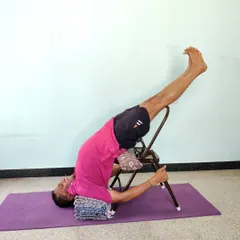
As a student, using props helps you grasp the nuance of a posture. As a teacher, understanding these tools allows you to guide your own future students safely. We don't teach you to hide behind props. We teach you to use them to unlock the full potential of your practice. Whether it is using a belt to maintain the integrity of the shoulders or chairs to safely experience the benefits of inversions, you will learn the 'why' behind every adjustment.
This is not a passive practice. It requires the same intensity—and often more—than a 'flow' class. You will sweat, you will work, and you will come to understand the science behind every stretch.
Similar work from other experts
Browse through Curated picks from other experts on mytribe
Yoga with Props: Deepen Your Asana Practice in Koramangala
 33
33
Master Your Alignment with Iyengar Yoga Props
 22
22
Iyengar Yoga with Props: Precision and Alignment
 4
4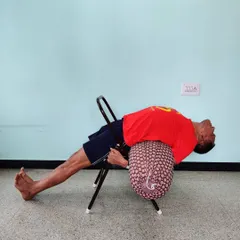
Iyengar Yoga Props for Precision
 34
34
Master Advanced Yoga with Creative Prop Work
Yoga with Props: Precision for Deeper Alignment
More from 200-Hour Yoga Teacher Training (RYT 200) by Nirakula Yoga
More services by Nirakula Yoga