Mastering Advanced Inversions and Arm Balances
Advanced inversions are not about defying gravity for a photograph. They are about the discipline, the alignment, and the quiet strength you build on the mat every day.
Sirsasana (Headstand) is the king of asanas. Here, a student receives support from an instructor to find balance and stability in the inversion. This one-on-one guidance is crucial for learning advanced poses safely.
Our advanced arm balance workshops push students to explore their potential. This clip shows a student working on Adho Mukha Vrksasana (Handstand) with assistance, building the strength and confidence needed for this challenging inversion.
Partner work can make advanced poses more fun and accessible. Here, two TTC students are blissfully practicing Sirsasana (Headstand) together, showing off their coordination and balance in a playful way.
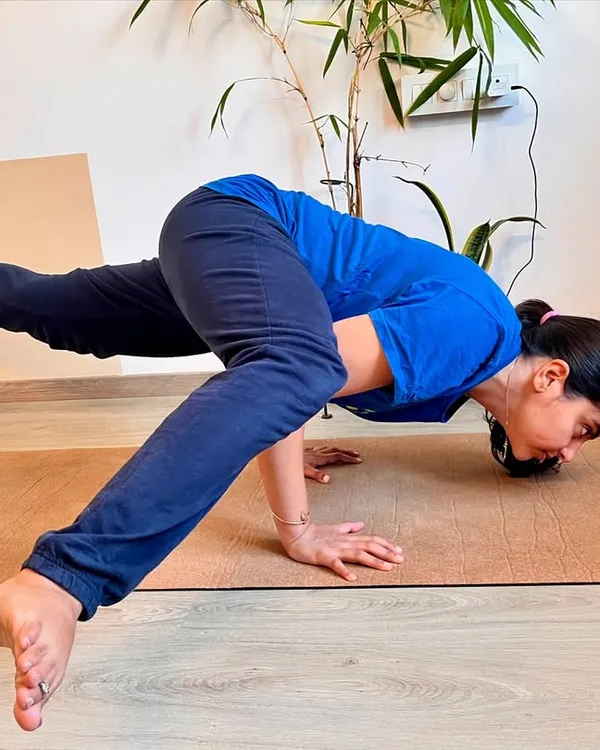
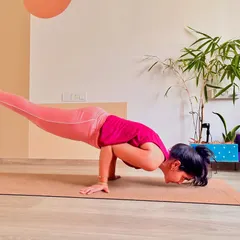
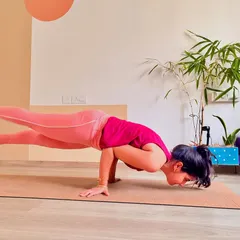
Eka Hasta Bhujasana (Elephant's Trunk Pose) is a journey. This student is using blocks to build the strength and muscle memory required for this arm balance. We celebrate every stage of the process, knowing that consistency is the key.
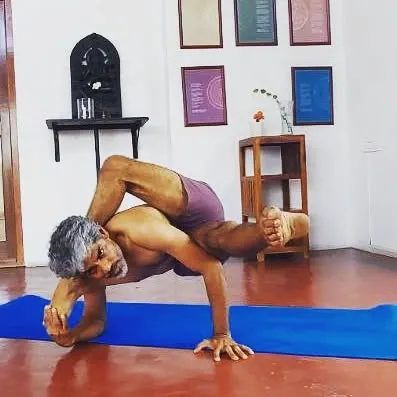
This advanced hip-opening posture demonstrates a deep external rotation of the hip combined with a spinal twist. Such asanas are explored progressively in our training, requiring patience, consistent practice, and a deep understanding of one's own anatomy.
Niralamba Sirsasana (Unsupported Headstand) is a testament to mastery over balance and core control. This advanced inversion is practiced only after building a strong foundation, demonstrating the potential that lies within a dedicated and disciplined sadhana.
Taking the practice outdoors connects us with nature. Here, an instructor demonstrates a handstand on the beach at sunrise. This shows that the strength, balance, and focus cultivated on the mat can be taken anywhere.
Our student Niranjan demonstrates his progress after a year of consistent practice, moving from a handstand into a backbend. This is a testament to the transformative power of dedication and disciplined Hatha yoga practice.
Adho Mukha Vrksasana (Handstand) is an exhilarating inversion that builds upper body strength and confidence. Here, a student receives support from a teacher, ensuring safety while learning the mechanics of balancing on the hands.
Mandalasana, or circling the headstand, is an advanced practice that requires immense control and spatial awareness. It represents the continuous flow of energy and the ability to remain centered while in motion.
About Advanced Sadhana: Inversions & Arm Balances
Most students rush into inversions and end up injured because they skip the foundation. We use blocks, wall ropes, and chairs in our studio not to make the work easier, but to force your body to build the correct muscle memory. If you are not willing to spend weeks practicing Eka Hasta Bhujasana with a block under your hand to support your weight, you are not building the strength required to perform the pose safely when the prop is removed. We prioritize safety and alignment over the final shape of the asana.
The journey to mastering poses like Adho Mukha Vrksasana (Handstand) or Niralamba Sirsasana (Unsupported Headstand) is a lesson in patience. In our 200-hour Teacher Training and advanced workshops in Koramangala, we strip away the ego. You will not find us teaching you how to 'kick up' against a wall for the sake of a video. Instead, we deconstruct the mechanics of the shoulder girdle, the engagement of the core, and the stabilization of the spine.
We borrow from the Iyengar tradition here, emphasizing that if an asana is performed purely from the front brain, you lose the inner sensation. We teach you to work from the back of the brain, creating a sensitivity that electrifies the body with life force rather than just mechanical tension.
Whether you are working on your first handstand or refining a complex arm balance, the process remains the same:
- Establish the base: Use props to understand the engagement of your hands, wrists, and shoulders.
- Understand the anatomy: Recognize the hip rotation and spinal twist required for deeper variations.
- Consistent practice: As with any sadhana, there are no shortcuts. We observe your progress, provide hands-on adjustments, and guide you until the alignment is ingrained in your nervous system.
By the time you move into free-standing inversions, the fear will be gone, replaced by a deep understanding of your own center of gravity.
Similar work from other experts
Browse through Curated picks from other experts on mytribe
Advanced Asana Training
Advanced Asana and Strength Building
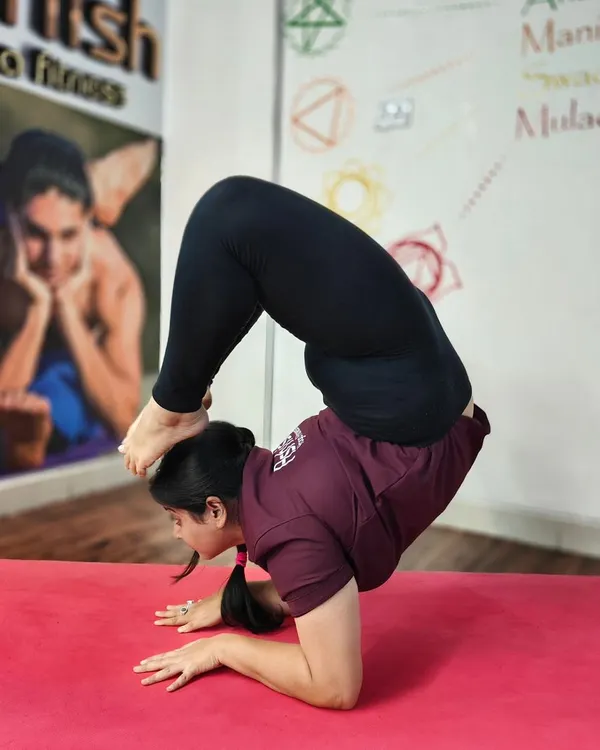 52
52
Mastering Advanced Asanas and Inversions
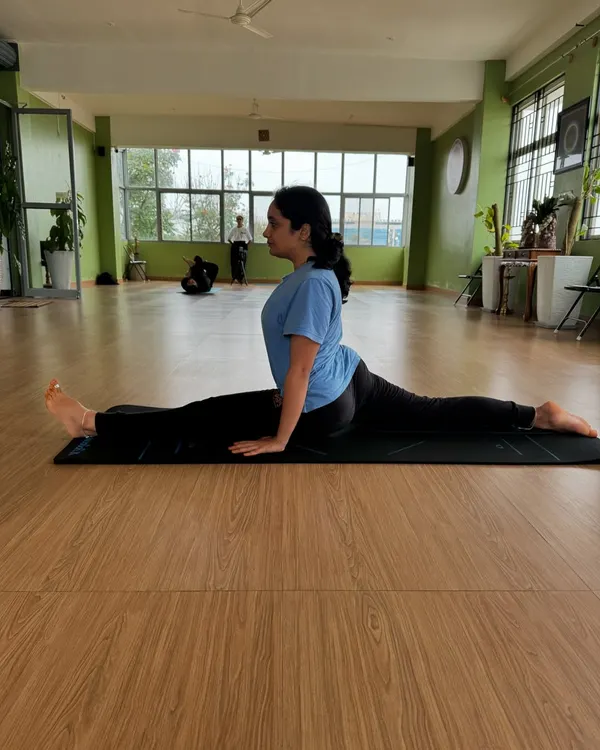 21
21
Mastering Advanced Yoga Postures with Safe Alignment
 10
10
Advanced Yoga Practice: Arm Balances & Inversions in Bengaluru
 16
16Advanced Arm Balances & Inversions: Finding Strength & Stillness
More from 200-Hour Yoga Teacher Training (RYT 200) by Nirakula Yoga
More services by Nirakula Yoga