Arm Balances and Inversions: Building Real Strength
Inversions are not just about looking cool upside down. They are about building core stability, mastering your focus, and learning to trust your own strength. Let’s find your power together.
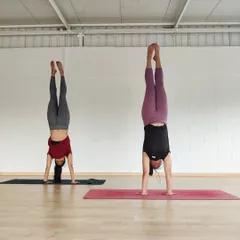
A moment of stillness, upside down. A wall-supported handstand like this is an excellent way to build the shoulder and core strength needed for freestanding inversions while getting comfortable with a new perspective.
Finding my sukoon, or peace, in a slow and mindful flow. This video shows the controlled entry into Ashtavakrasana, or Eight-Angle Pose, proving that strength in arm balances comes from grace, not just force.
Bakasana, or Crow Pose, is often the first arm balance we learn, and it teaches us so much about core engagement and focus. This pose is a powerful reminder that what seems impossible is achievable with consistent practice.
This sequence combines a deep backbend with a wall-assisted handstand. It's a powerful practice for building spinal flexibility and upper body strength simultaneously, showing how different elements of yoga support each other.
Taking my practice outdoors with a headstand flow. Inversions like Sirsasana challenge our balance and build core strength, and practicing with my dog nearby always adds an element of joy.
This is a challenging variation of Parsva Bakasana, or Side Crow Pose. Twisting arm balances require immense core strength, flexibility in the spine, and a deep sense of focus to maintain stability.
This core challenge, a walking plank drill, is fundamental for building the stability required for all arm balances and inversions. A strong center is the foundation of a powerful yoga practice.
Creating shapes that challenge both balance and strength. This creative variation of a standing balance incorporates elements of a twist and a bind, requiring full-body awareness and control.
Here I am exploring a variation of Eka Pada Koundinyasana II, or Flying Splits, with wall support. The wall helps stabilize the pose, allowing me to focus on hip opening and arm strength.
The Funky Flying Crow is an asymmetrical arm balance that plays with your center of gravity. It’s a fun and challenging pose that builds serious arm and core strength while teaching you to embrace the wobble.
About Arm Balances & Inversions: Finding Your Power
Arm balances and inversions can feel intimidating, but they are usually a matter of mechanics rather than just raw muscle. In my sessions, we focus on breaking these poses down into small, digestible steps, using walls and blocks to support you while you learn how to engage your core properly. We do not chase perfect shapes; we build the foundational stability needed for poses like Crow or Handstands, so you can safely progress at your own pace.
Why Inversions Matter
Beyond the aesthetic of a handstand, these poses are incredible for building core strength and, more importantly, trust in your own body. They shift your perspective and challenge you to find your sukoon (peace) even when you are upside down.
My Approach to Safety and Strength
I use a specific mix of props to ensure your practice is safe and sustainable. We use walls for handstand confidence, blocks to raise the floor for Crow pose, and straps to help with shoulder alignment. If you are struggling with a specific transition or managing a past injury, I modify the approach. You are not left to figure out complex transitions alone. I provide hands-on spotting and verbal cues during sessions to ensure your alignment is safe.
What to Expect
- Foundational Drills: We start with core stability work to build the foundation needed to protect your spine.
- Learning to Fall: We practice how to safely come out of an inversion. Knowing how to fall is more important than holding the pose.
- Real-Time Corrections: My group classes are kept small, capped at 8-12 students, so I can provide individual form correction during the flow.
Whether you are looking to conquer your first headstand or refining your Flying Splits, the goal is always sustainable progress through consistent abhyaas. It is not about how fast you get there, but how steady you feel while doing it.
Similar work from other experts
Browse through Curated picks from other experts on mytribe
Build Core Strength & Master Inversions
Mastering Handstands & Arm Balances: Alignment-Based Yoga
Master Advanced Arm Balances & Inversions in Bengaluru
Build Real Strength with Advanced Yoga Poses in Bangalore
Master Advanced Inversions and Arm Balances in Bengaluru
Advanced Yoga: Arm Balances & Inversions
More from Yoga for Strength, Flexibility & Power by Richa Kumar
More services by Richa Kumar