Understanding Your Rights as a Consumer
Consumer law is not just about filing complaints; it is about knowing where you stand before a conflict starts. From stopping aggressive loan recovery agents to challenging arbitrary school fees, you have more protection than you think.
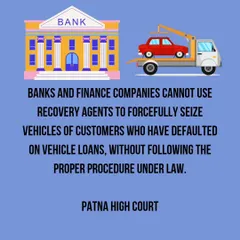
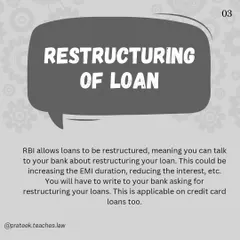
If you are facing harassment from loan recovery agents, know that their methods are regulated by the Reserve Bank of India. I explain what constitutes unethical recovery practices and the steps you can take, including notifying the bank and reporting the issue to the RBI, to protect yourself from unauthorized actions.
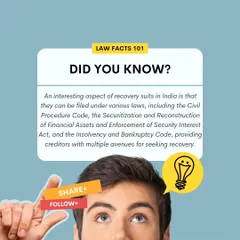
The seizure of a hypothecated vehicle for loan default must follow the legal procedure outlined in the SARFAESI Act of 2002. I explain the mandatory notice periods and your right to object or file an application with the Debt Recovery Tribunal.
Banks cannot levy penal charges for non-maintenance of minimum balance on inoperative or non-performing asset (NPA) accounts. I clarify the RBI's rules on this matter, defining what an NPA account is and ensuring you are not being charged unfairly by your bank.
Even without a written agreement, you can legally recover money you have lent to someone. I explain a strategic approach that involves obtaining an admission of the loan on social media, followed by a legal notice and, if necessary, a civil suit for recovery.
It is illegal for a hospital to detain a deceased person's body over non-payment of bills, as stated in the Charter of Patients' Rights. I shed light on this unconstitutional practice and affirm your right to perform last rites without being subjected to such pressure.
Under a 2017 directive, hotels and restaurants are obligated to provide free drinking water and access to their toilet facilities to the public, particularly women and children. I explain this consumer right and the consequences for establishments that refuse compliance.
Private educational institutions in Karnataka are regulated by the District Education Regulating Authority, which can impose penalties for overcharging fees. I explain the legal provisions under the Karnataka Education Act that empower you to seek a refund if a school has charged more than the prescribed amount.
The Maternity Benefit Act of 1961 provides specific paid leave entitlements for working mothers, including provisions for miscarriage and surrogate mothers. I detail the duration of leave, eligibility criteria, and the protection of your job position during this period.
The Telecom Regulatory Authority of India (TRAI) has introduced new rules to enhance consumer protection. I discuss the implementation of mandatory caller identification and new guidelines to curb SIM swap fraud, which restrict porting a new SIM within seven days of replacement.
About Your Rights as a Consumer
Did you know that any hotel or restaurant is legally required to provide you with free drinking water and washroom access? If an establishment denies you these basic rights, they risk having their operational license questioned. You do not need to be a paying guest to use these facilities, you simply need to know your rights as a consumer.
Knowing your consumer rights is about shifting the balance of power. Whether you are dealing with a bank, a builder, or a service provider, the law offers specific tools to protect your money and your peace of mind.
Financial and Banking Rights
Aggressive loan recovery tactics are a major source of stress, but they are not above the law. Under RBI guidelines, recovery agents cannot harass you. If they cross the line, you have the right to file a formal complaint and notify the Reserve Bank of India. Similarly, if you are being charged penalties for non-maintenance of minimum balance in an inoperative account, you can challenge these charges. The law is clear: banks cannot arbitrarily penalize you.
Access to Essential Services
Many institutions operate under the assumption that they are beyond questioning. This is rarely true.
- Educational Institutions: Under the Karnataka Education Act, schools cannot charge exorbitant fees outside government norms. You have the right to petition the District Education Regulating Authority for a refund.
- Hospitals: Detaining a deceased person's body for non-payment of bills is not only illegal but against the Charter of Patients' Rights. You have the legal standing to demand the release of the body to perform last rites.
Practical Steps to Enforce Your Rights
- Document Everything: Whether it is a conversation with a bank manager or a brochure from a builder, keep records. Emails and messages are valid evidence.
- Understand the Statute: From the SARFAESI Act for hypothecated vehicle disputes to the Maternity Benefit Act, identifying the relevant law transforms your grievance into a legal argument.
- Formalize Your Demand: A legal notice on firm letterhead signals to the opposite party that you are serious and prepared to escalate to the Consumer Forum or Civil Court if necessary.
My approach is to strip away the confusion so you can act with confidence. Whether it is verifying an agreement or drafting a notice to force a refund, the goal is always to resolve the issue effectively.
Similar work from other experts
Browse through Curated picks from other experts on mytribe
Know Your Consumer and Financial Rights
Legal Rights Against Loan Recovery Harassment and Bank Practices
Business, Loan aur Consumer Kanoon: Apna Haq Samjhein
Know Your Consumer Rights: Legal Guidance to Protect Yourself
Protecting Your Rights as a Homebuyer and Consumer
 31
31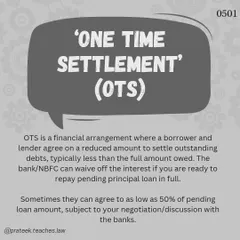
Navigating Civil and Commercial Disputes
More from Property & Consumer Law by Kamaluddin Ahmed
More services by Kamaluddin Ahmed