Fun & Games: Developing Young Minds Through Play
Play is the serious work of childhood. We transform simple games into cognitive exercises that sharpen logic, focus, and curiosity for early learners. ✨
Let's play a word game. How many words can you make from the letters in this grid? Share your answers in the comments below.
Time for a puzzle. Take a close look and see if you can find the missing piece to complete the pattern. Let me know your answer.
Can you crack the code and guess the missing word? Look at the pattern of shapes and see if you can figure it out. Comment with your guess.
Here's a fun biology question for you. What is the largest organ in the human body? Is it the liver, brain, skin, or heart?
Put on your thinking cap. Which of these options shows the correct top view of the tower? Let's see who can get it right.
About Fun & Games
At EuroKids, we do not view these puzzles as simple time-passers. They are 'Visible Thinking' routines, a core component of our Heureka curriculum inspired by Harvard's Project Zero. When a child solves a pattern or identifies a top view, they are actively building neural pathways for focus, visual reasoning, and problem-solving. This is the foundation of our play-based learning approach.
We believe early years are like wet clay, and every interaction shapes a child's cognitive development. These brain teasers act as mini-lessons in logic. By asking a child to find a missing piece or complete a pattern, we encourage them to observe details, test hypotheses, and articulate their thought process.
The Science Behind the Play
Our curriculum integrates 'LitQuest' for reading readiness and 'MathLab' for numeracy, but games like these bridge the gap between abstract concepts and real-world application.
Why Practice Matters
- Focus: Puzzles require sustained attention, which is a muscle we build daily.
- Pattern Recognition: This is the precursor to both algebraic thinking and reading fluency.
- Confidence: Solving a 'tricky' problem on their own gives a child a massive boost in self-assurance.
Integrating Learning at Home
You do not need expensive toys to replicate this. Use daily routines to ask questions. Instead of just reading a book, ask your child to predict what happens next. When playing with blocks, ask them to build a tower and then draw it from the side. Small, intentional questions turn routine play into powerful learning moments that prepare children for the structured environment of a formal classroom.
Similar work from other experts
Browse through Curated picks from other experts on mytribe
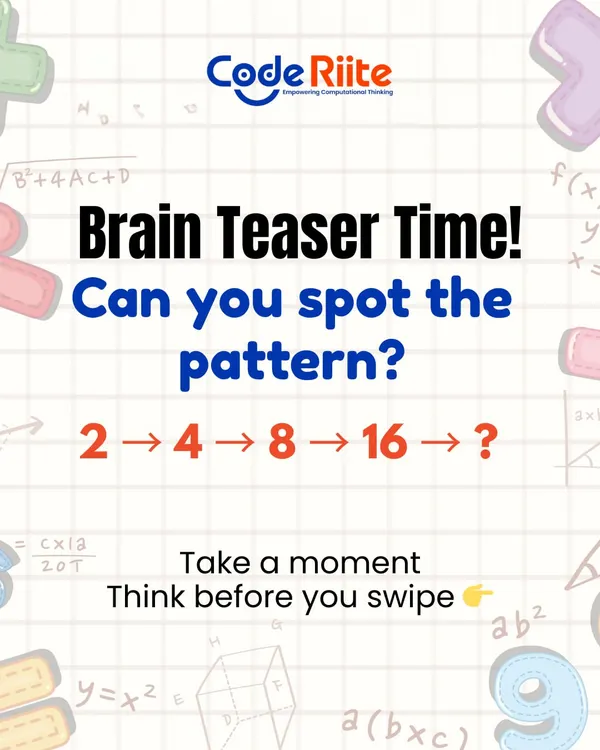
Brain-Boosting Games & Puzzles for Kids
Fun Brain Teasers and Puzzles to Spark Math Curiosity
 61
61
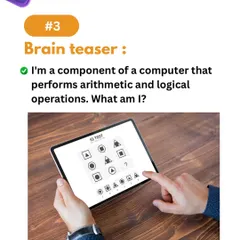
Brain Teasers and Logic Puzzles for Kids
Brain-Boosting Math Challenges for Kids
 34
34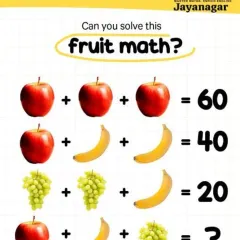
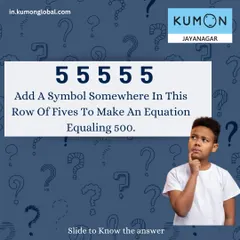

Fun Math Challenges & Brain Teasers
 9
9
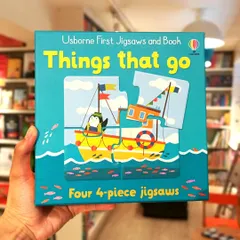
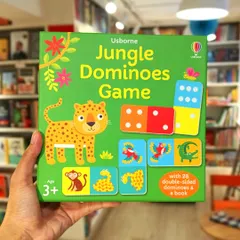
Interactive Puzzles and Activity Books for Kids
More from Preschool Program by EuroKids
More services by EuroKids