Eco-Printing Workshops: Learn to Print Fabric with Nature
Transform leaves, flowers, and kitchen waste into permanent art. I'll teach you how to transfer nature's shapes and colors directly onto your fabric.
I made this beautiful leaf-printed table mat using all-natural pigments. The green is from a leaf print, and the border is colored with coffee and madder. It's sustainability meeting artistic expression.
Have you ever tried printing with basil leaves? I use a double print technique to capture the delicate textures of the leaves, creating beautifully detailed botanical prints.
This is a showcase of how different leaves and natural paints look when combined on fabric. Each leaf has its own unique shape and texture, creating a beautiful collage of nature's patterns.
In one of my free workshops, I taught how to eco-print socks using onion peels. It's amazing how you can turn kitchen waste into a beautiful, wearable piece of art.
Eco-printing is a journey of learning, exploring, and creating. Here, I'm using natural materials to print heart shapes onto socks, just in time for February.
This is the process of bundle dyeing, where I roll fabric with natural materials like these red petals to create beautiful, abstract patterns. The final reveal is always a surprise.
Here's a quick look at the process of eco-printing socks with Sappan wood. It involves mordanting the fabric, bundling it with the wood chips, and steaming it to release the beautiful pink color.
I'm preparing a new pair of socks for February by eco-printing with Sappan wood. It's a wonderful way to add a personal, handmade touch to everyday items.
If you're not printing your clothes with temple marigold, you're missing out. It's one of the most widely available flowers and gives such a beautiful color. Let me teach you how.
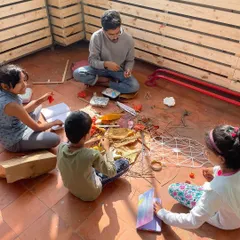
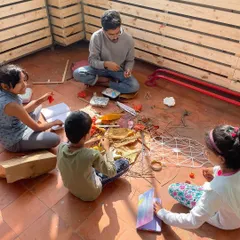
To celebrate our community, I hosted a free session on natural dyeing and tie-dye techniques. It was a joy to share my passion for turning flowers and natural materials into colorful fabrics.
About Eco-Printing: Capturing Nature on Fabric
Eco-printing is more than just arranging leaves on cloth; it relies on a specific chemical process called mordanting. During my sessions, we focus on the bundle-steaming technique, which allows the natural pigments from marigold petals or Sappan wood to bond permanently with your fabric. It requires patience and attention to the steam temperature, but mastering this step is the only way to ensure your prints don't wash away after the first rinse.
Whether you are using marigold from the temple, onion peels from your kitchen, or Sappan wood for those vibrant pinks, the process is deeply rooted in nature. Many beginners worry about color fastness, which is why I break down the specific mordants like alum or iron required to lock the color. We cover the full journey: scouring the fabric to remove impurities, selecting the right botanicals for the best print clarity, and the crucial steaming phase. This is not just about crafts; it is about shifting your perspective on what is 'waste.' By the end of our time together, you will know how to turn plain socks, scarves, or tote bags into one-of-a-kind, botanical-printed pieces. We keep our workshops accessible, teaching you how to build a setup at home using simple stove-top steaming methods, so you can continue creating long after the session ends.
Similar work from other experts
Browse through Curated picks from other experts on mytribe
Eco-Printing Workshops & Botanical Dyeing Classes
Natural Dyeing and Tie-Dye Workshops
 25
25
Natural Dyeing and Sustainable Textile Workshops in Bangalore
The Art of Hand Block Printing: Our Process
Sustainable Art: From Pulp to Pigment
Creative Fabric Printing and Dyeing Techniques
More from Natural Art & Craft Workshops by Dyehome