The Art of Making: Hand-Built Pottery and Ceramic Techniques
A peek into my studio—where raw, earthy clay transforms into functional art, one pinch and coil at a time.
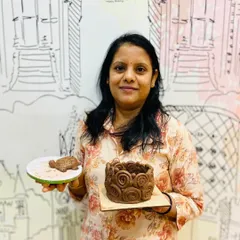
I made this piece for my studio, which can be used as a fruit bowl or a lamp. It was created by draping a slab of clay over a bowl and then carving out a texture. I love how the light will play through the patterns once it's fired.
I don't often use the pottery wheel, as most of my work is hand-built, but I've been practicing more lately. This video shows me throwing a lidded jar and then sculpting a tiny pumpkin knob for it. It’s always good to step out of my comfort zone.
Have you ever wondered why ceramic colors change so much after firing? This video shows a koi fish sculpture before and after it goes in the kiln. The underglaze pigments we use only mature at very high temperatures, revealing their true, vibrant colors.
Many people think pottery can only be made on a wheel, but hand-building is an incredibly versatile technique. This video shows how you can make a beautiful lace-textured vase in a few simple steps using just your hands and a few tools.
I'm experimenting with a new carving technique on this multipurpose vase. It can hold water or a tealight. I'm enjoying exploring new forms and textures while my studio is getting set up. I can't wait to see how this piece fires.
This is the first part of a tutorial on how I make my miniature roosters using the pinch pottery method. It's one of the oldest techniques, where you just use your fingers to shape the clay. It’s a slow process, but so rewarding.
In part two of my rooster tutorial, I show how to join the different hand-pinched parts together. Each rooster I make is unique, with its own character and expression. That's the beauty of handmade pottery; no two pieces are ever exactly the same.
Here is the final part of my miniature rooster tutorial, where I add the last details like the eyes and comb. It was fun to shoot this impromptu video, and I hope it inspires you to try making one yourself.
I'm excited to be trying out a new recycled clay mix from Earth Tatva. The process of making pottery is not always sustainable, so I'm always looking for ways to reduce my footprint. It's incredible to turn waste ceramics into something new and beautiful.
Peeling clay off the bats is so oddly satisfying. I had to get these jars off before leaving for the day to prevent them from over-drying and cracking. It was a very productive day in the studio.
About The Art of Making
Most people assume pottery is only about the wheel, but my real love is hand-building. Whether I am pinching a miniature rooster into existence or carving intricate patterns into a slab-built vase, I find beauty in the asymmetrical, the wobbly, and the distinctly handmade. It is not about perfect symmetry; it is about the story left by my hands in the clay.
When I set up my studio in Kalyan, I knew I did not want a rigid classroom environment. I wanted an 'adda'—a place where people could slow down and disconnect. My process is heavily centered on hand-building techniques like pinching, coiling, and slab construction.
Why Hand-Building?
Unlike mass-produced ceramics, these methods allow me to create one-of-a-kind pieces. For instance, I make my templates from waste paper, which forces me to work in limited batches. This means I rarely replicate the exact same form twice; the clay demands a new relationship each time.
My Process
- Pinch Pottery: One of the oldest methods, perfect for small, expressive pieces like my miniature roosters.
- Slab Construction: This allows me to create sharper, geometric, or architectural forms that are difficult to achieve on a wheel.
- Coiling: Essential for building taller, more organic vessels.
Everything I create goes through a meticulous process—from raw clay to trimming, glazing, and the double-firing stage in my kiln. The transformation is unpredictable, which is why I teach these techniques to my students. I want them to understand that the clay has a mind of its own. Whether you are looking for custom-made stoneware or want to get your hands dirty in a workshop, my focus remains on the joy of making rather than just the final product.
Similar work from other experts
Browse through Curated picks from other experts on mytribe
Creative Hand-Building Pottery Workshops in Mumbai
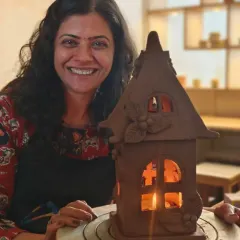
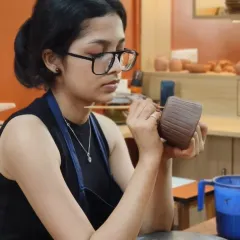
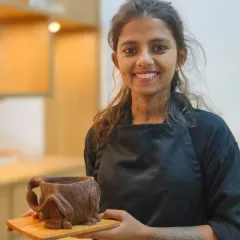
Hand-Building and Sculpting Pottery Workshops in Mumbai
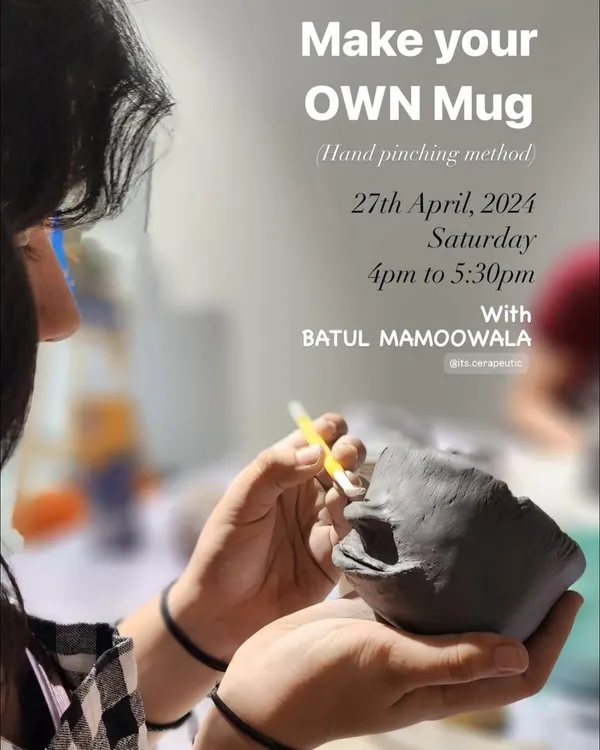 15
15
Hand-Building Pottery Workshops: Mugs, Trays & More
Hand-Building Pottery Workshops in Mumbai
Behind the Scenes: The Art of Pottery at Clay Explore
 6
6
Hands-On Pottery and Clay Workshops
More from Pottery Workshops & Classes by Curiocity by Lidwin
More services by Curiocity by Lidwin