Building the 'Thinking Cricketer'
Talent is common, but game awareness is rare. We teach you how to read the pitch, handle match pressure, and make smart decisions when the game is on the line.
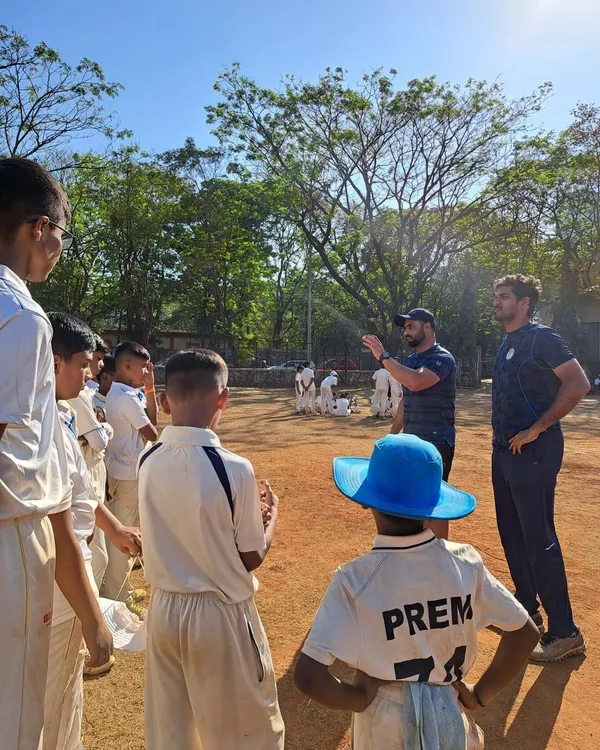
Demonstrations are a powerful teaching tool. They engage learners, spark curiosity, and help them remember what they see and do, fostering a deeper understanding of the game's nuances.
It's not what you know as a coach, it's what the players know. Our process involves learning, revision through demonstrations, execution, and reflection to create thinking players, not robots.
In this interview, I explain what separates good athletes from great ones. It's about game awareness, learning from mistakes, and knowing when to do what, not just repeating skills in the nets.
My advice to young players is to focus on becoming the best player in your team, not on selection. A complete player has skill, a great mindset, and the right temperament to handle pressure.
The mental aspect is key. I encourage players to play with freedom and love for the game, rather than the pressure of proving themselves. A clear mind leads to better decisions and performance.
The second floor of building a player is handling success and failure. At this stage, they are skilled but require more mentorship than coaching to navigate the mental challenges of the game.
The first floor of building a player is the physical part. Between 14 and 17, players grow physically strong and quick, and our training focuses on harnessing this development.
I believe you build a player like you build a house, floor by floor. It starts with a strong foundation and progresses through different stages of physical, mental, and emotional development.
The top floor is the player's own desire to be successful. If a player is self-motivated and willing to come for training without being pushed, they will achieve great things regardless of talent.
This is an advanced drill to connect the conscious and subconscious mind. Our 17-year-old athlete practices playing with her eyes closed at the point of impact to trust her instincts and sharpen her reactions.
About Building the 'Thinking Cricketer'
It is not enough to hit perfect cover drives in the nets if you cannot adapt when a bowler changes their line. In our sessions, we pause, debrief, and simulate real match scenarios to ensure you are not just training your muscles, but your brain. You will learn how to read a bowler's intent before the ball is even released.
At Cricket Explained, we treat player development like building a house. It starts with a strong physical foundation, but the 'top floor' is always the mindset. Most academies focus on repeating the same shot a thousand times. We focus on the one shot that actually matters in the game.
We operate out of our Dombivli facility with a specific goal in mind: creating athletes who are indispensable to their team's playing eleven. If you are just a net player, you disappear when the pressure is on. If you are a 'Thinking Cricketer,' you know exactly when to defend, when to strike, and how to manage the game's momentum.
Our process includes:
- Match Simulations: We don't just bowl; we create scenarios where the required run rate is high or the wicket is turning, forcing you to think under stress.
- Feedback Loops: After every drill, we talk. You need to articulate why you played a shot or why you bowled that line. If you can't explain it, you don't own it.
- Decision Training: We use unconventional drills, like batting with eyes closed at the point of impact, to force you to trust your instincts and read the ball earlier.
We push you to treat every mistake as a lesson, but we have a strict rule: never repeat the same mistake twice. Whether you are 12 or 22, the game is 90 percent mental. If you are ready to stop being a robot and start being a player, this is where you belong.
Similar work from other experts
Browse through Curated picks from other experts on mytribe
Master Your Cricket IQ: Mental Game & Tactical Training
 5
5
Coaching Beyond the Crease: Mentorship and Strategy
 6
6
The Mental Game: Beyond Technique
The Achievers Cricket Coaching Method
Batting Under Pressure: From Nets to Match Day
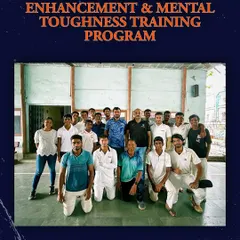
Mental Toughness & Performance Training for Cricketers
More from High-Performance & Off-Season Camps by Cricket Explained
More services by Cricket Explained